Is There A Relationship Between Babies And Tax?
China has raised taxes on condoms and birth control pills to boost birth rates, can government policy truly influence family choices, the economic cost of raising children? and read about what population decline really means for China’s future.

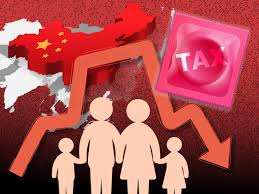
China is doing something that sounds like a punchline on the news headlines but it is a very real policy that is on the road to being implemented: it has raised taxes on condoms and birth control pills in a bid to encourage people to have more children. Yes, in 2026, one of the world’s most populous countries is looking at population decline and saying, “Maybe fewer condoms will fix this.”
A 13 percent VAT has now been imposed on condoms and oral contraceptives. The logic, at least on paper, is simple: make contraception more expensive, and people may think twice before using it, more thinking, less protection, more babies. Problem solved or should i say that is the logic behind the tax.
Except life, children, and family planning do not work like a spreadsheet.
For three consecutive years, China’s population has declined. Birth rates are falling, the workforce is aging, and the economic implications are beginning to show.
Fewer young people today means fewer workers tomorrow, fewer taxpayers, and more pressure on social welfare systems. This is the anxiety driving policy experiments like this one.
But anxiety-driven policy does not always produce rational outcomes.

China is already one of the most expensive places in the world to raise a child. According to estimates by the YUWA Population Research Institute, raising a child to age 17 costs an average of 75,700 dollars. That figure does not include university education, housing pressure in major cities, or the emotional cost of raising a human being in a hyper-competitive society.
So when the government raises the price of condoms by a few yuan and expects a baby boom, many parents are understandably confused.
From a post I saw on Instagram by BBC, one Chinese man, Daniel Luo, bluntly put it: “I have one child and I don’t want any more. A box of condoms may rise by 5, 10, or at most 20 yuan.
Over a year, that's only a few hundred yuan. Still affordable.” His conclusion is simple: he is sticking to one child, regardless of government policy.

And that statement, more than any tax reform, captures the real issue at the heart of China’s population problem.
When Governments Try to Nudge Biology
China’s relationship with birth control has always been complicated. For decades, the government actively restricted childbirth through the one-child policy. Now, it is desperately trying to reverse the consequences of that era.
The shift from “please stop having children” to “please have more children” has been swift, but people’s lived realities cannot shift at the same speed that the government is proposing.

Previously, China introduced child subsidies, offering up to 1,544 dollars in total per child. It relaxed birth limits, promoted family-friendly messaging, and encouraged local governments to support parents. None of this has significantly reversed the trend.
The condom tax feels like a more forceful nudge, and that is where discomfort begins.
Because why do you want to force people to give birth after telling them not to?
Demographer Yi Fuxian has already pointed out the flaws, arguing that this policy is unlikely to make people want more children.
Instead, it may lead to more unintended pregnancies and potentially higher risks of HIV and other sexually transmitted infections.
In other words, fewer condoms do not automatically translate into more planned families. They may simply translate into more problems.
This raises an uncomfortable question: where does government responsibility end and personal choice begin?
Birth control is not just about preventing children. It is about health, timing, financial readiness, and emotional stability. For many couples, contraception is not a luxury but a necessity.
Making it more expensive does not remove the underlying reasons people delay or avoid childbirth. It only adds friction to already complex decisions.
China’s policymakers are not wrong to worry about population decline. A shrinking population can slow economic growth, reduce innovation, and strain pension systems.
An aging society needs a steady base of younger workers to sustain productivity. In that sense, the fear is valid.
But policy that focuses on symptoms instead of causes often misses the mark.
People are not avoiding children because condoms are cheap.
They are avoiding children because housing is expensive, childcare is demanding, work-life balance is poor, and the cost of education is high.
Some people just want to live their best lives free from family drama
Raising a child is usually a long-term financial commitment that many feel they cannot afford without sacrificing personal stability.
Because let's not even lie, no amount of condom taxation can compete with a 75,700-dollar child.
The Collision of Policy and Personal Choice
At the very basis, this debate is not really about condoms. It is about control, autonomy, and the limits of state influence over private life.
Can a government encourage childbirth? Yes, through supportive policies. Can it force people to want children? No. Desire does not respond well to pressure.

China’s situation highlights a broader global issue. Many developed and developing countries are facing declining birth rates. People are marrying later, prioritizing careers, and questioning traditional family timelines. Governments everywhere are struggling to adapt to these shifts.
The danger lies in framing childbirth as a civic duty rather than a personal choice.
When policies start to feel coercive, even subtly, they risk backlash. People may comply outwardly while disengaging inwardly. Worse, such policies can erode trust between citizens and the state.

There is also the moral dimension. Is it fair to manipulate access to contraception in the name of economic goals? Should population targets override individual health and family planning decisions? These questions do not have easy answers, but they deserve serious consideration.
The irony is that China remains one of the most populous nations on earth. Yet population size alone is no longer the issue. The concern is demographic balance: too many elderly citizens, too few young workers. That is not a problem solved by surprise pregnancies. It is solved by long-term investment in quality of life.
Affordable housing, flexible work arrangements, accessible childcare, and cultural shifts around parenting responsibilities do more to encourage childbirth than any tax on condoms ever could.
In summary, this policy tells us more about the state’s anxiety than citizens’ behavior. It reveals a government searching for quick fixes to a slow-burning problem. It also shows the limits of economic nudges when they collide with deeply personal decisions.
People will have children when they feel safe, supported, and hopeful about the future. Not when protection becomes slightly more expensive.
What does it all mean? It means population decline is not just a numbers problem. It is a trust problem, a cost problem, and a lifestyle problem. Until those are addressed, condoms will remain affordable, children will remain expensive, and birth rates will continue to fall, tax or no tax.