Pezeshkian Rebukes US and Israel at UN, Warns Over Strait of Hormuz
Iranian President Pezeshkian has voiced strong criticisms regarding Israel's nuclear program and military actions in Gaza, advocating for equal treatment under international law. He affirmed Iran's commitment to diplomacy while refusing negotiations under military pressure, especially amid heightened tensions with the United States and concerns over the Strait of Hormuz.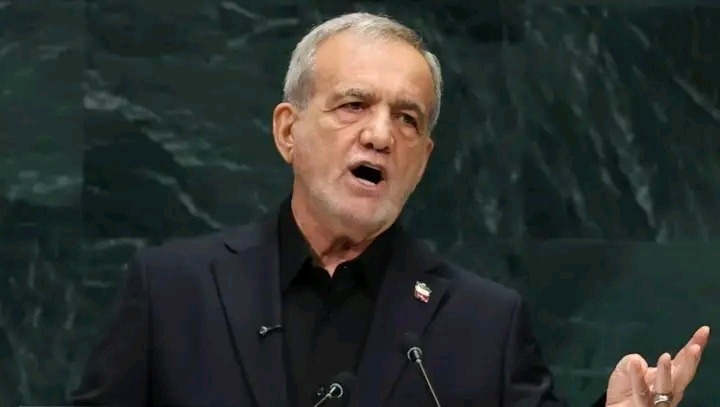
Iranian President Masoud Pezeshkian has criticised the United States and Israel over Iran’s nuclear programme and their approach to the Middle East, while defending Tehran’s right to peaceful nuclear technology.
Speaking at the 81st United Nations General Assembly on September 23, 2026, Pezeshkian accused Israel of benefiting from what he described as international double standards, pointing to Israel’s undeclared nuclear arsenal and Iran’s nuclear inspections and sanctions. “The atomic bomb is in Israel, but the inspectors are in Iran,” he said, while insisting that Iran was prepared for diplomacy but would not negotiate under what he called the “language of force.”
Pezeshkian also condemned Israel’s military campaign in Gaza and accused the United States and Israel of attacks against Iranian civilians and infrastructure, portraying Iran as the victim of terrorism rather than its perpetrator. He rejected US President Donald Trump’s warning that Washington could “annihilate” Iran if no agreement was reached, declaring that Tehran would not surrender while maintaining that diplomacy remained the route to ending the conflict.
The US delegation walked out of the General Assembly chamber during Pezeshkian’s address, while Israeli officials also did not attend the speech. Pezeshkian also warned against using the Strait of Hormuz as an instrument of pressure against Iran, arguing that Tehran must retain access to its own waterways.
The strategically important shipping route has become a major point of contention amid the conflict, with Iran previously indicating that it could reopen the strait if the United States reduced military pressure and lifted its blockade of Iranian ports. The remarks came as Washington and Tehran remained divided over how to end the conflict, even as both sides continued to signal that diplomacy had not been abandoned.