“If You Were Fair, You'd Be Fine”: The Colourism Nigerian Girls Grow Up With
This searing essay unpacks the deeply rooted colourism Nigerian girls grow up with — from childhood taunts to media bias and bleaching culture — and challenges the myth that fair skin equals beauty. It’s time to redefine what it means to be “fine” in every shade.
“Fair-skinned equates to beauty” — sounds like a crazy theory, right?
But wait till you see how primary school pupils throw around “blackie” like an insult. Wait till you hear children call their classmates “dirty”, not because they actually are, but because their skin is dark.
Wait till you see aunties lean in with half-smiles and backhanded concern: “What happened to you?… you were fairer before na.” Wait till you realise grown people still say, without flinching, “If you were fair, you'd be fine.”
And then, wait till you see what it does. What it does to girls, to women.
Wait till you realise that entire generations of Nigerian girls have grown up thinking that being beautiful means being lighter. That being “fresh” means you don’t play in the sun and being dark-skinned means you are going through a lot.
That being “clean” means your skin reflects light like glass. That “glowing” doesn’t mean healthy — it means closer to white.
It is not just a beauty standard; it is a belief system.
And it is time we asked where it came from and who it really serves.
Who Is a Fine Girl?
In Nigeria, the “Fine Girl” has a standard description. Maybe the face changes, the accent changes, the body shape fluctuates depending on the trends, but the skin tone stays the same. She is fair — the lighter, the better.
She has “fresh” skin, untouched by the sun. She walks into a room and commands attention, not just because of her features but because her complexion is a silent marker of beauty.
This is the image girls are handed early, sometimes before they even understand how to spell their own names.
In school, classmates whisper mean things, calling the darker girls “roasted”, “blackie”, or “dirty”. These aren’t just schoolyard taunts; they are rehearsals for a society that will later tell them the same thing with fancier language.
On social media, comment sections praise a woman not for her smile or style or even grace but for being “fair and fine”. Skin tone becomes currency, a way to be easily noticed, to be wanted, to be validated.
Social Insight
Navigate the Rhythms of African Communities
Bold Conversations. Real Impact. True Narratives.
Aunties and Uncles Are Not Innocent
Let’s be honest: the adults around us didn’t do much better.
Aunties would squint at you in church or family gatherings, trying to remember if you were “lighter” the last time they saw you.
“You used to be fair,” they would say, like you lost something, as if your worth is attached to a tone.
When you hear Yoruba uncles say “Omo ye n pupa”, the instant deduction is “beautiful”. These uncles would joke, sometimes not even quietly, that they preferred fair women. Not because of anything deep or meaningful, but because “they are just finer.”

They say it like it is a fact. Like it is not a preference poisoned by decades of colonisation, media saturation, and a deep-seated inferiority complex that we don’t talk about enough.
The Bleaching Boom
You see it in the markets — shelves stacked with products promising to “lighten”, “glow”, “brighten”. The ingredients are hidden behind flowery names, but the goal is clear: lighten your skin. Be closer to beauty, be closer to acceptance.
Some don’t even hide it.
“3 days whitening cream.”
“7 days lightening shower gel.”
The names alone should tell you how far we have fallen. And while there is a growing movement of skincare influencers preaching self-love and melanin pride, they are often drowned out by a louder, more profitable industry: the bleaching business.
People will tell you it is just skincare. “I’m just maintaining my tone.” You’d see people casually admit in TikTok comment sections that they combine bleaching creams with dermatologically tested skincare products. They will assert that healthy products will darken you, masking their inferiority complex in their skin tone with laughing emojis.
But if we are being honest, it is about erasure — erasing the parts of us that have been labelled “less than”.
Social Insight
Navigate the Rhythms of African Communities
Bold Conversations. Real Impact. True Narratives.
The Twist: What Fair-Skinned Girls Face
Yes, you got it wrong. It is not only dark-skinned girls who are at the receiving end of colourism. In fact, it is safe to say that both skin tones and their different variants go through equal amounts of colourism.
You'd hear people casually throw comments like, “You're not pretty. You're just fair,” or when people automatically assume they get all the praise because they are fair-skinned.
The fair skinned grow up being complimented based on their complexion, and it is a different kind of burden. The one that boxes their entire personality and prowess into their skin tone.
When she speaks, her words are sometimes dismissed, her competence quietly doubted.
When she is in a relationship, people assume her beauty did all the work. When she excels, they say, “That skin opened doors for her.
In a twisted way, even those at the so-called “top” of the colourist pyramid are made to feel like their value is shallow. That they didn’t earn admiration, they were born into it, like a cheat code.
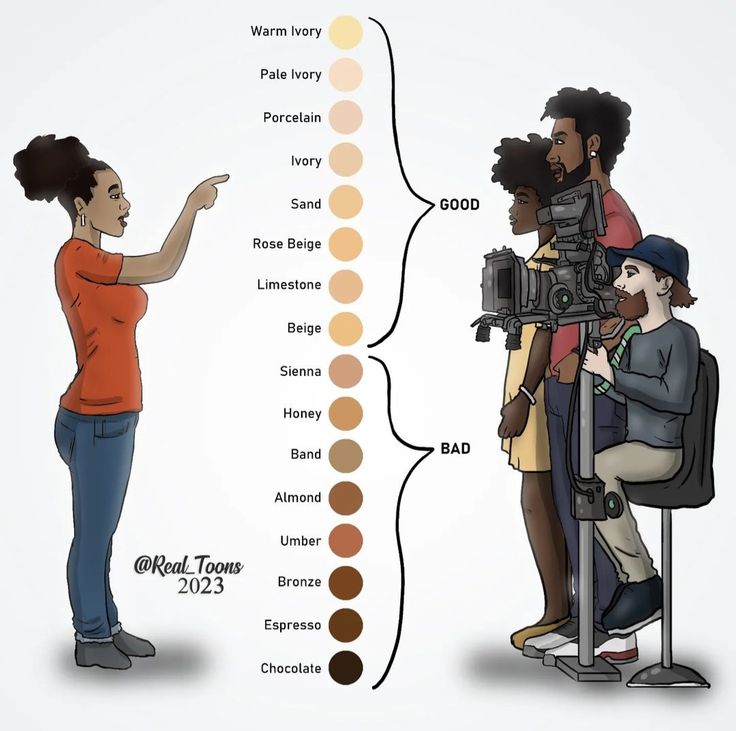
Photo Credit: Pinterest
The Media Mirrors It
Turn on the TV. Watch a Nollywood film from any era. Who plays the love interest? Who gets the rich husband? Who gets the glow-up in the story?
More often than not, it is the light-skinned girl. She is seen as desirable, classy, and elite. The dark-skinned girl? She is the loud best friend. The comic relief.
Mercy Johnson, a popular Nollywood actress, in an interview with PUNCH in 2016, admits that she was told she might not excel because “she is too dark.” This mirrors the colourist society we are in.
Music videos are no better. Lyrics from top artists casually drop lines like “yellow pawpaw” and “fine fair babe” as the ultimate compliment. Dark-skinned girls are present, ye,s but often pushed to the background or fitted into more "exotic" or hyper-sexualised roles.
When beauty is constantly portrayed as light-skinned, what message are we sending? That there is a hierarchy. And we all know where darker girls fall on it.
What It Does to a Girl
Social Insight
Navigate the Rhythms of African Communities
Bold Conversations. Real Impact. True Narratives.
It starts young. She learns to avoid the sun, not because of the heat, but because someone said she is “getting darker”.
She starts comparing herself to classmates with lighter skin, wondering why they get more attention, more compliments, more freedom to be soft and feminine.
She grows up unsure whether to love her skin or lighten it.
Some eventually find their way back to self-love, to confidence, to pride, but many don’t. They settle into a discomfort they carry for life, smiling in photos while secretly wishing their skin tone could be edited away.
Who Does This Serve?
Here is the question we must ask: Who benefits from a society where beauty is ranked by skin tone?
Not the girls, not the women forced to use harmful products, dodging skin damage and cancer for the sake of looking “acceptable”.
Not the men either, who are taught to love only one kind of beauty and miss out on the vast spectrum of real, raw, radiant blackness.
The truth is, colourism is a colonial hangover— a deliberate weapon used to divide, control, and condition. And we have inherited it like tradition.
It was used to create classes during colonisation. The lighter you were, the closer to the masters and the more “civilised” you appeared. Those ideas didn’t just fade; they evolved. Evolved into school insults, into aunties’ gossip, into bleaching creams and into how we define beauty today.
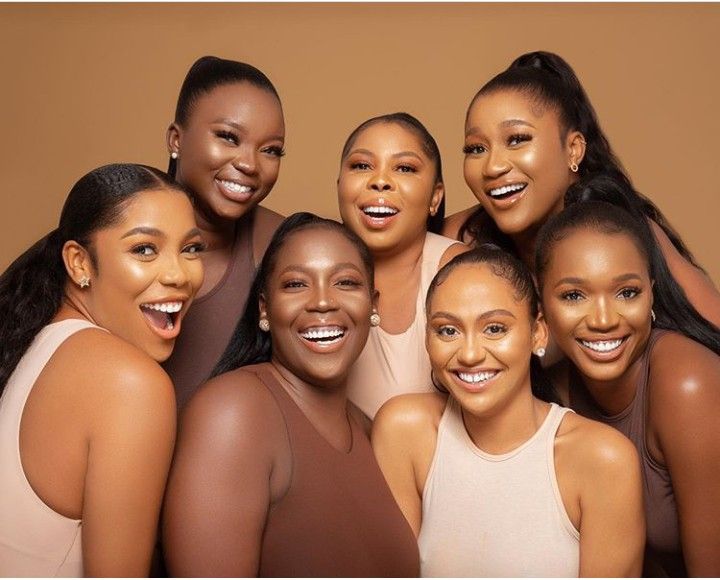
Photo Credit: Pinterest
Time to Unseat The Mindset
We need to start unlearning — at home, at school, in conversations. We need to tell our girls early: you are enough. Your skin is not a flaw to be corrected. It is a heritage, a history, a canvas of strength.
Meanwhile, representation matters. We need more dark-skinned women in leading roles, not just as activists or side characters, but as love interests, CEOs, soft girls, beauty icons.
We need influencers, brands, and storytellers to stop catering to colourist ideals under the guise of “market demand”.
Social Insight
Navigate the Rhythms of African Communities
Bold Conversations. Real Impact. True Narratives.
And most importantly, we need to start complimenting beauty in all its shades.
So, next time someone says, “If you were fair, you’d be fine,” tell them, “No. I’m fine because I am who I am — in this skin, in this shade, in this tone.”
Because light isn’t the only way to glow. And dark was never the opposite of beauty.