How Much Heat Does an AI Data Centre Produce?
Every time you use ChatGPT or Claude, a data centre somewhere absorbs the cost. A Cambridge-led study found land temperatures near AI facilities rise by up to 9°C. Over 340 million people are already feeling it.
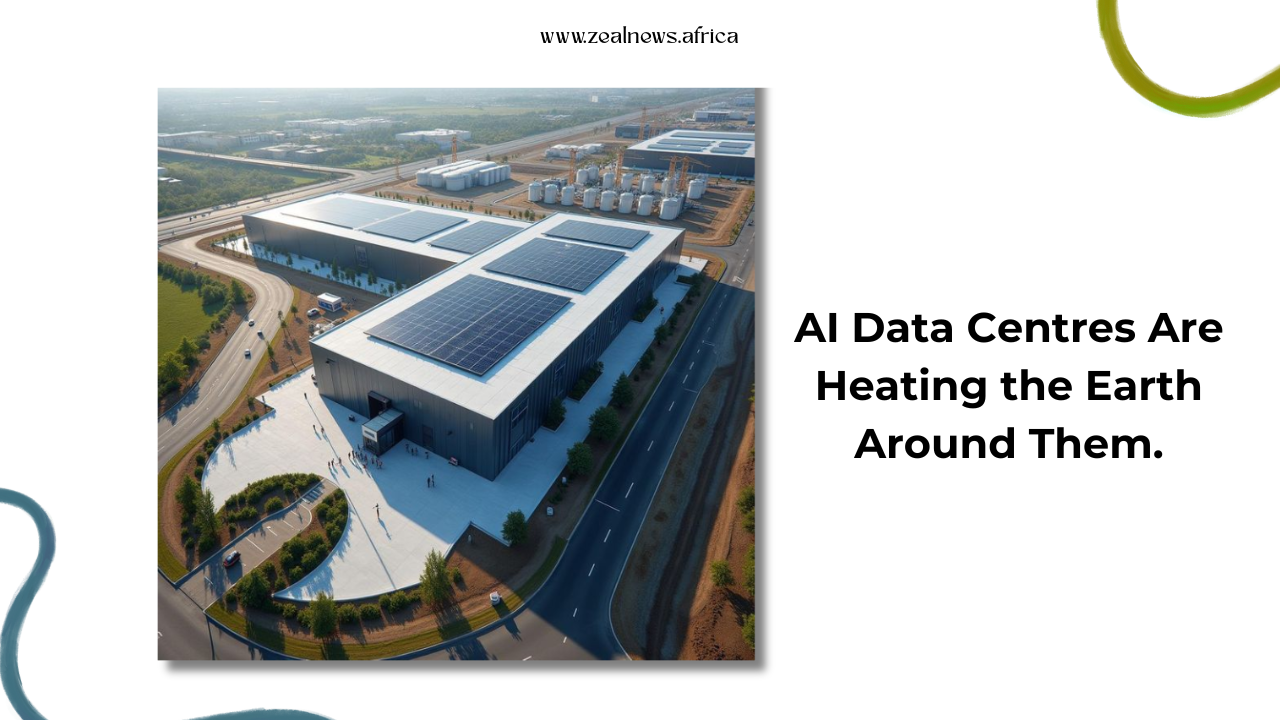
Data centres don't just consume vast amounts of water and electricity. A growing body of evidence shows they are warming the ground around them too.
Every time someone sends a prompt to ChatGPT, Gemini, or Claude, that request travels to a data centre, a facility running thousands of specialised computers around the clock.
AI data centres are significantly more energy-hungry than standard servers because the chips powering large language models perform thousands of calculations simultaneously, continuously, without rest.
According to the International Energy Agency, data centres consumed approximately 415 terawatt hours of electricity globally in 2024, roughly 1.5 per cent of the world's total electricity supply.
That figure has been growing at about 15 per cent annually over the past five years and is projected to nearly double to 945 terawatt hours by 2030.
The largest of these facilities, known as hyperscale data centres, are built by major tech companies to support cloud computing and artificial intelligence at a global scale.
A single hyperscale facility typically houses at least 5,000 servers, occupies a minimum of 10,000 square feet, and requires between 100 and 300 megawatts of electricity to operate continuously, enough to power hundreds of thousands of homes at once.
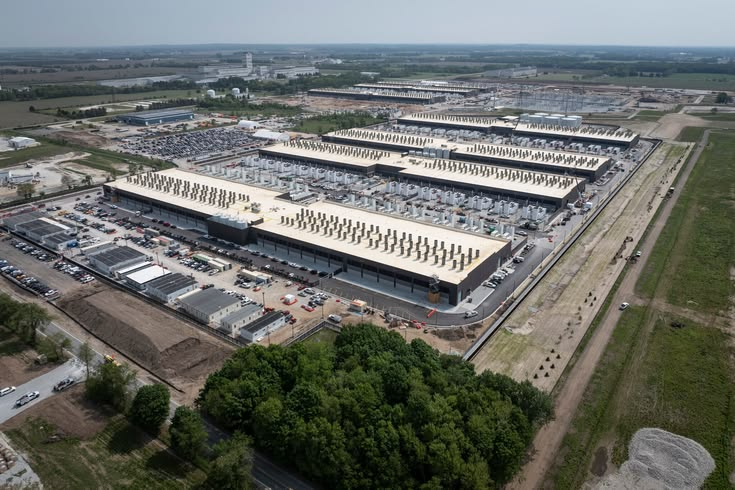
All of that energy generates enormous heat, which must be managed through advanced liquid cooling systems that consume water at a scale most people would find staggering.
A UK government digital sustainability report found that a single 100-megawatt hyperscale data centre can consume approximately 2.5 billion litres of water per year, the equivalent of the annual water needs of 80,000 people.
The Data Heat Island Effect
A study by researchers from Cambridge, Nanyang Technological University, and others has put a name and a number to what this heat generation does to surrounding communities.
Using NASA satellite data collected between 2004 and 2024, the researchers measured land surface temperatures at more than 11,000 data centre locations worldwide and found that temperatures in those areas rise by an average of 2 degrees Celsius after a facility opens, with some locations recording increases as high as 9.1 degrees Celsius. The warming effect can be detected up to 10 kilometres from the facility.
The researchers described this as the "data heat island effect," drawing a direct parallel to the urban heat island effect, the well-documented phenomenon where concentrated human activity causes cities to run warmer than surrounding rural areas.
The difference is that data centres are frequently built in industrial areas outside dense population centres, meaning communities that did not sign up for proximity to a major tech campus are nonetheless absorbing its thermal output.
The study estimated that more than 340 million people living within 10 kilometres of a data centre could be affected by these temperature increases, with downstream consequences for health, energy demand, and general wellbeing in those communities.
Where the Centres Are
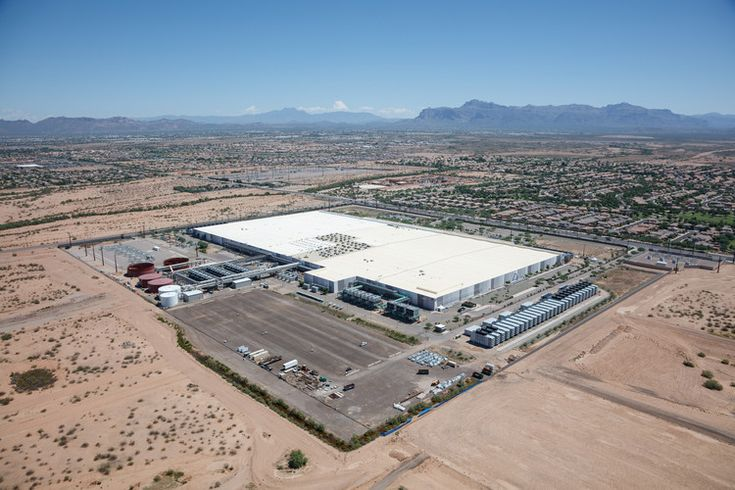
As of June 2026, more than 11,600 data centres are active worldwide, and their distribution is anything but even.
The United States dominates the map with more than 4,300 facilities. Europe is the second-largest hub, led by the United Kingdom with over 540 facilities clustered heavily around London, followed by Germany with more than 520 and France with over 390.
Across Asia, China and India lead the region at 360 and 300 facilities respectively, while Southeast Asia has emerged as one of the fastest-growing markets for data centre capacity globally.
According to Synergy Research Group, the number of hyperscale data centres worldwide has nearly doubled since 2021, rising from 700 to 1,297.
The Investment Pipeline
Goldman Sachs projects a combined $5.3 trillion in capital expenditure between 2025 and 2030 from the four largest hyperscalers: Microsoft, Amazon, Alphabet, and Meta.
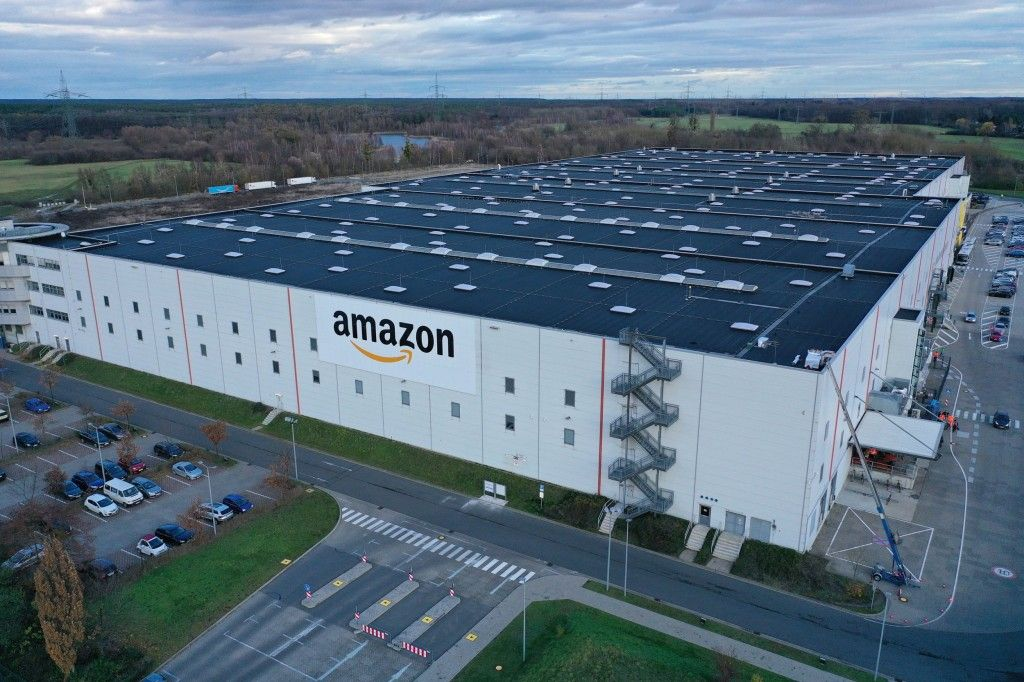

Major projects currently underway or announced include Meta's $27 billion Hyperion campus in Louisiana, Microsoft's $20 billion multi-phase data centre expansion in Wisconsin, Amazon's $25 billion investment in Mississippi, Google's $15 billion Project Spade campus in Missouri, and Oracle's Project Stargate in Abilene, Texas, a dedicated AI supercluster for OpenAI with a projected capacity of between 1.2 and 2 gigawatts.
The infrastructure race powering artificial intelligence is accelerating faster than the regulatory and environmental frameworks designed to govern it.
The Cambridge-led researchers have been explicit that the data heat island effect belongs in the global conversation about sustainable AI, not as a footnote, but as a central variable in where these facilities are built, how they are cooled, and who bears the cost of living nearest to them.