How Long Can Iran Keep Weaponising the Strait of Hormuz?
The Strait of Hormuz remains at the center of global energy tensions, with shipping disruptions keeping oil markets volatile. But as countries adapt, can Iran continue using the waterway as a geopolitical weapon?
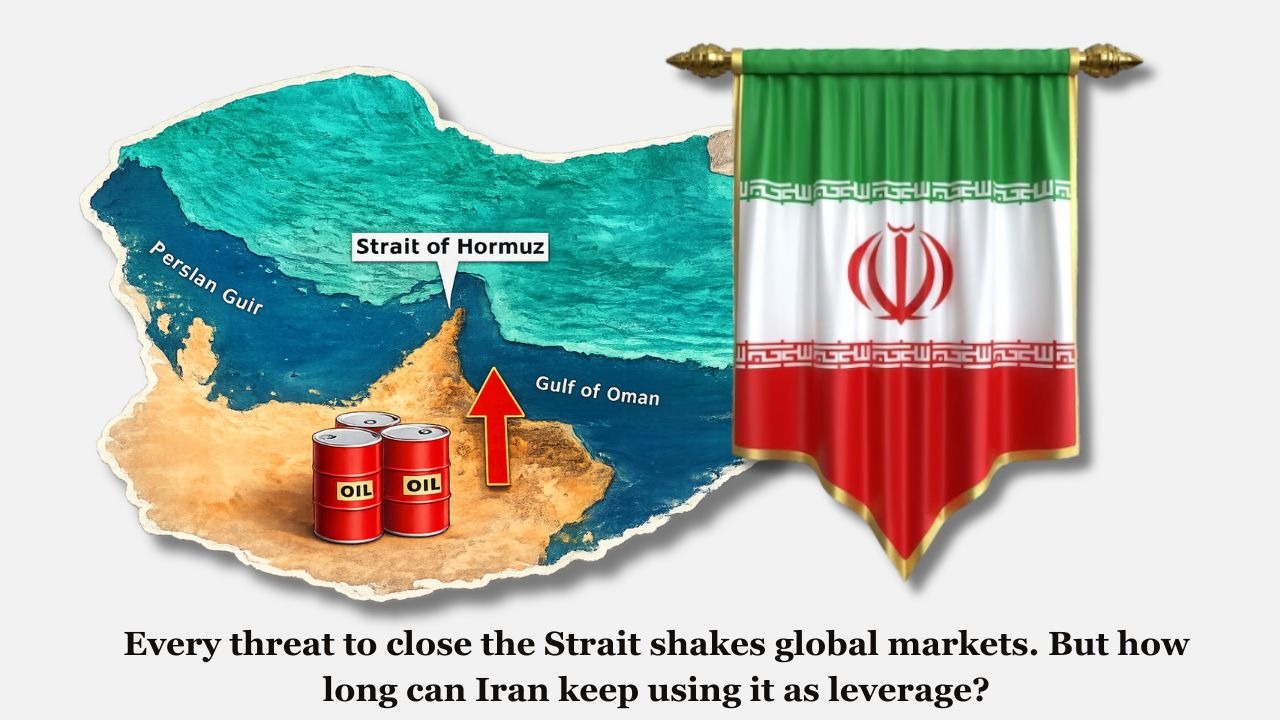
Every threat to disrupt the world's most important oil chokepoint shakes global markets. But can Iran realistically keep using it as leverage in a world already learning to adapt?
The most effective weapon is not always the one that is fired. Sometimes it is the one that convinces everyone it can be fired.
A weapon's force, the military strategist Carl von Clausewitz argued in On War, only achieves its purpose when the will to use it is credible.
Remove that credibility and the threat becomes performance. Keep it credible long enough without using it and the world begins to adapt around it.
Somewhere in early 2026, motorists across different countries watched fuel prices rise before breakfast. Manufacturers recalculated production costs overnight.
Governments thousands of kilometres away from the Middle East convened emergency energy meetings, not because missiles were falling on their cities, but because one narrow stretch of water had once again become the centre of global attention.
Oil price spikes were no longer unusual. One way or another, the tension reached almost everyone. Shipping companies rerouted vessels. Insurance premiums on tankers climbed to levels that made passage economically irrational before a single decisive blow was struck.
None of the officials in those emergency rooms were standing anywhere near the Middle East to feel its impact and neither of them needed to be.
This is hardly the first time. For decades, every serious confrontation involving Iran has brought back the same warning: the Strait of Hormuz could become the next battlefield and it would be closed.
Iran has threatened to close the Strait of Hormuz repeatedly over the decades, in 2011, 2018, and multiple times in between, but every prior threat remained rhetoric or brief tactical harassment. No full closure was ever executed before the 2026 conflict, not even during the Tanker War of the 1980s when over 400 vessels were attacked in the Gulf."
Sometimes the threat is explicit. Sometimes it is implied. Either way, financial markets rarely wait to find out whether the disruption will fully materialise.
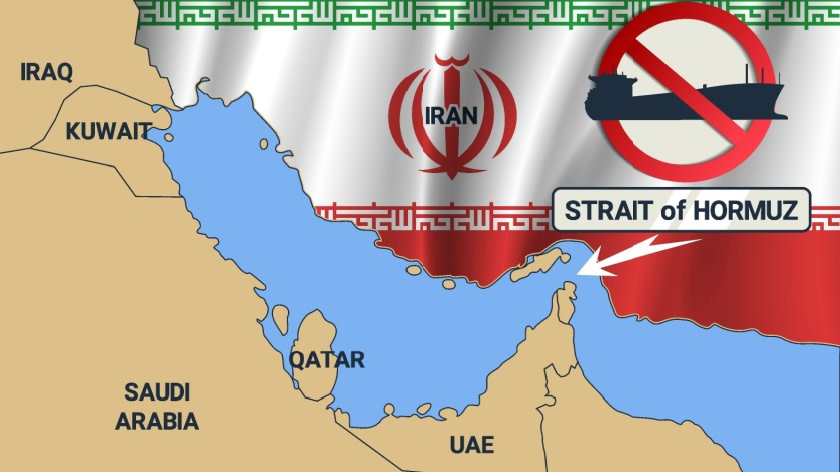
Beginning on March 4, 2026, Iranian forces declared the Strait "closed," threatening and carrying out attacks on ships attempting to transit it, following US and Israeli military operations against Iran that began on February 28.
The physical strait remained navigable in parts. The economic strait closed the moment the declaration was made.
That is the real lesson, the real power and perhaps the real problem. The bigger question is whether that power can keep working for as long as Iran needs it to?
The Strait Is Valuable Probably Because the World Made It Valuable
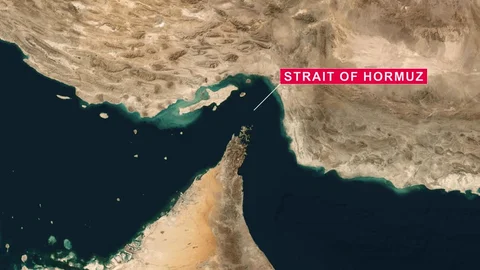
Geography gave the Strait of Hormuz its location and relevance in nature, but the global economy gave it its influence.
At its narrowest point, the Strait measures only about 33 kilometres across, yet it connects the energy-rich Persian Gulf to international markets through the Gulf of Oman and the Arabian Sea.
According to data from the US Energy Information Administration, an average of 20.9 million barrels per day of crude oil and refined products transited it in 2023 alone, the equivalent of about 20% of global petroleum liquids consumption .
Qatar's LNG exports, feeding Europe and Asia, move through it. Saudi Arabia, Iraq, the UAE, and Kuwait all depend on it as their primary export corridor.
That dependence has transformed Hormuz into one of the world's most consequential geopolitical pressure points. When QatarEnergy declared force majeure on its Ras Laffan facility amid the 2026 crisis, natural gas prices in Asia rose 54% and in Europe 63% within a single week.

Analysts at ING warned that a full closure could push oil to $140 per barrel in a worst-case scenario. Markets did not wait for a complete closure before reacting and just sometimes, uncertainty alone is enough.
A statement from Tehran, military exercises in nearby waters, or reports of heightened naval activity can trigger immediate movements in commodity markets because traders price risk long before they price reality. The expectation of disruption often becomes almost as influential as the disruption itself.
Iran does not need to sink dozens of tankers. It only needs the world to believe it might, a belief that has seeded by decades of rhetoric and intermittent action.
Power, after all, rarely exists only in physical force. It also exists in perception. Once belief begins to weaken, influence starts fading long before the weapon itself disappears.
Iran's greatest leverage may not be the Strait itself. It may be the uncertainty surrounding it and the perceived influence around it. But every form of leverage has a lifespan, especially once the people it is meant to influence begin adapting to it.
Closing Hormuz Sounds Powerful. Keeping It Closed Is Another Story
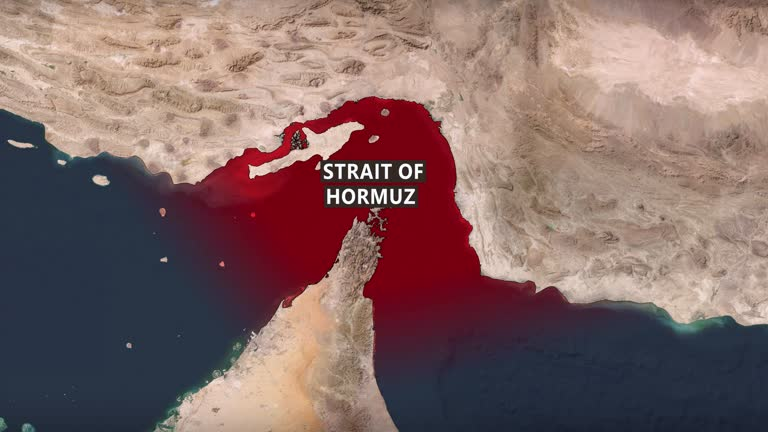
There is an important difference between threatening disruption and sustaining it. The first creates headlines. The second creates consequences.
The US Fifth Fleet is permanently stationed in Bahrain. International naval coalitions patrol the Persian Gulf with the explicit mandate of keeping shipping lanes open.
Gulf states including Saudi Arabia, the UAE and Kuwait would face enormous economic consequences from a sustained closure and have every incentive to respond.
But there is another complication that often receives less attention. Iran also depends on the Strait. A significant portion of its own oil exports passes through these waters. Even amid the declared closure of March 2026, Iran's own exports were estimated at an average of 2.1 million barrels per day, because Iran needs that revenue as much as its rivals need the oil.
A prolonged disruption would inevitably reduce Iranian revenues at a time when sanctions already constrain its economy. In attempting to squeeze its rivals, Iran also risks squeezing itself. The Strait of Hormuz is less like a switch Iran can flip indefinitely and more like an emergency brake that damages the driver as much as everyone else on the road.
Its value lies in reminding the world how quickly stability can disappear whenever regional tensions escalate. The question is how many times that reminder can be issued before markets begin treating it as routine rather than exceptional.
The Real Weapon Has Never Been the Strait. It Is Uncertainty
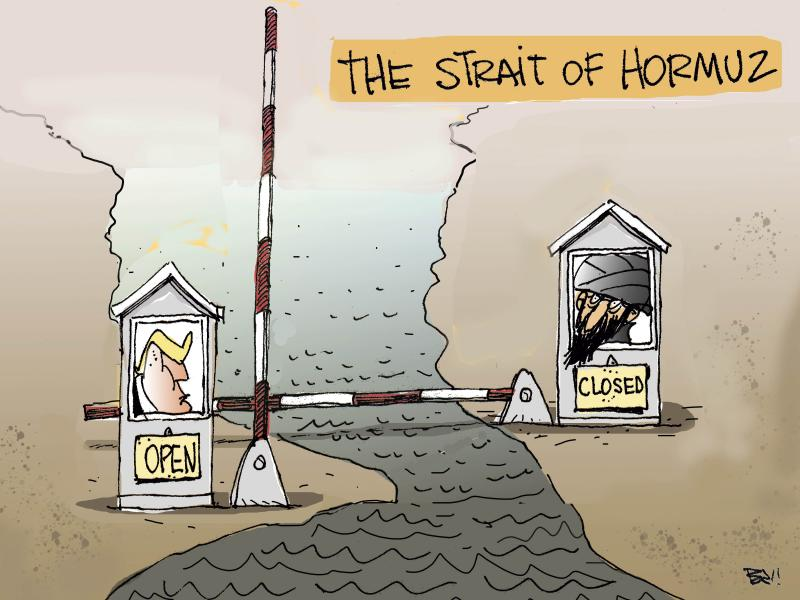
This is the part of the conversation that rarely receives adequate attention. Iran rarely needs to close the Strait to benefit from the threat of closing it. Insurance premiums rise. Shipping companies divert routes. Oil prices spike. Governments stockpile energy reserves. Diplomatic tables shift.
All of this happens because of a statement rather than sustained action. The threat itself becomes the weapon, but every weapon eventually loses effectiveness if people learn to live with it.
But here is the deeper tension. A weapon is only a weapon because it was designed to create fear in someone who has no defence against it. The moment that defence exists, the moment the target acquires the equivalent of a bulletproof vest, the weapon's power transforms.
Countries are building alternative pipelines, diversifying energy supplies and expanding strategic reserves, turning what was once an emergency response into a long-term adjustment.
Saudi Arabia's East-West pipeline bypasses the strait entirely. Its capacity is being taken more seriously with each new cycle of Hormuz tension. A predictable threat is a diminished threat.
Every Threat Becomes Less Powerful If It Is Never Used
This is the deeper problem Iran has not yet fully reckoned with. If Iran repeatedly threatens closure without following through completely, something gradual but irreversible happens.
Markets will adapt over time. Insurers will definitely recalibrate. Shipping companies will start to diversify routing. And different governments will accelerate their energy transition.
The threat will probably lose its shock value, not suddenly, not completely, but measurably, over time, with every cycle of escalation and de-escalation that ends without the expected catastrophe.
If the world can reliably predict that Iran will threaten to close the strait and then pull back from full closure, the market will eventually price that pattern in rather than the threat itself.
The weapon becomes expected. And an expected weapon, like a gun the target has already prepared for, loses the one thing that made it powerful in the first place: surprise.
And actually closing it carries consequences so severe that Iran's own survival calculus argues against sustained execution.
Iran therefore occupies an unusual strategic position: the threat is too valuable to abandon, yet the action is too costly to sustain. It is neither fully a sword nor fully a shield.
It is leverage that must be maintained without being spent. The Strait of Hormuz is undeniably the world's most important energy shipping lane. But perhaps its greatest importance is not the oil flowing through it. It is the uncertainty surrounding it.
And that uncertainty, once predictable, is slowly, quietly, becoming less powerful than it used to be. The longer the pattern repeats, the harder it becomes for uncertainty alone to carry the same strategic weight. Because every few years, the world is reminded how dependent it remains on one narrow stretch of water twenty-one miles wide.
Iran understands that reminder. But countries are no longer just watching. They are adapting, building alternatives and reducing their exposure. Which is why the biggest question has never really been whether Iran can close the Strait of Hormuz.
It is whether the threat of doing so will continue to carry the same weight in a world that is slowly, deliberately, learning how to live without needing to find out. And how long, exactly, can that threat keep working before the answer changes?