How Did Nigerian Lawyer Rasheed Aro Get Meta to Restore Five Disabled Instagram Accounts?
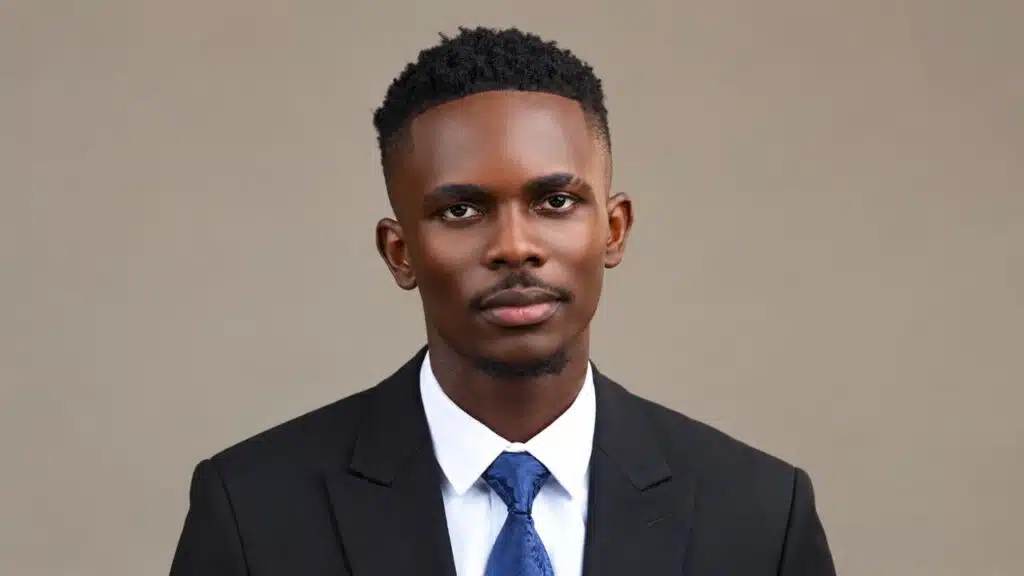
A Nigerian lawyer got Meta to restore five disabled Instagram accounts with one demand letter. Now, Rasheed Aro is taking on Big Tech to protect Nigerian users.
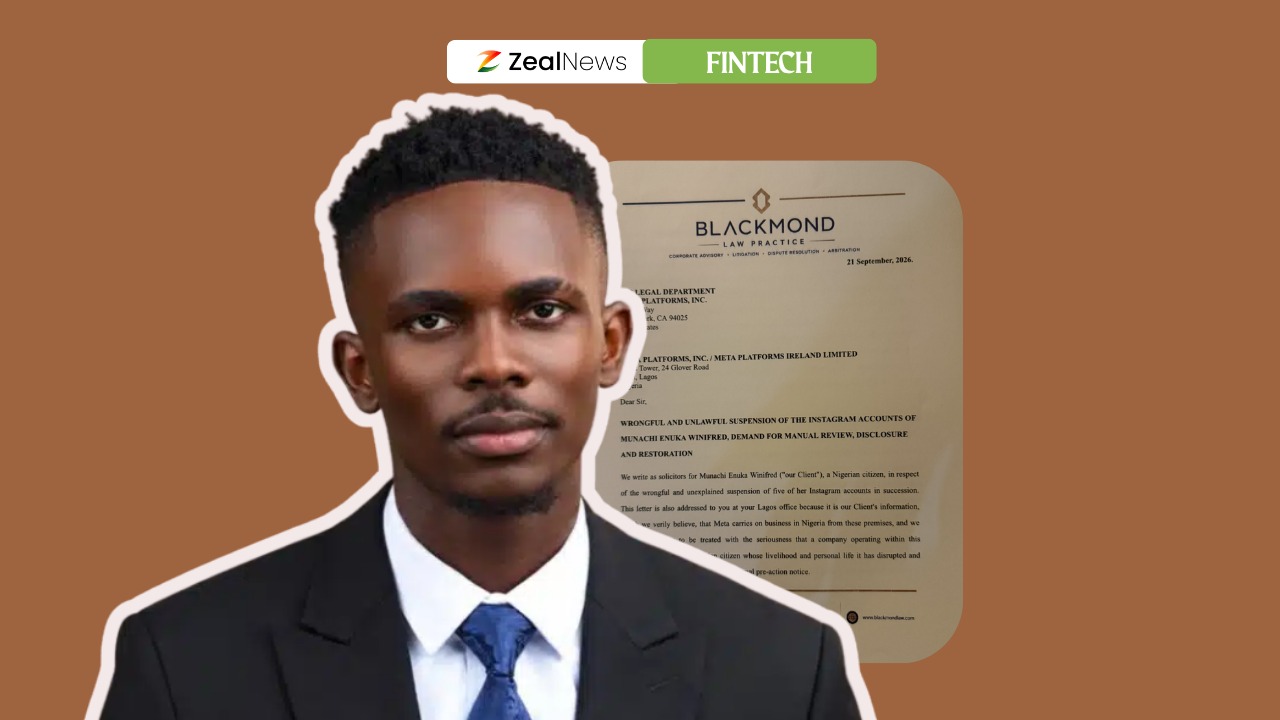
Imagine waking up to discover that the Instagram accounts keeping your business alive have disappeared. You appeal, complete facial verification and follow every instruction the platform gives you.
Then comes the final decision: your accounts are permanently disabled. No useful explanation, no person to plead your case to, and no clear way to get your digital life back.
That was the situation facing a client of Nigerian lawyer Rasheed Aro. Her five Instagram accounts were central to her life and businesses, and losing them caused distress. Aro did not begin by suing Meta.
He sent the technology giant a demand letter, gave it 14 days to respond and warned that legal action could follow.
Before the deadline expired, five accounts were restored.
Aro sees it as more than a win against a global company. He wants to help Nigerians challenge unfair account deactivations across Instagram, Facebook and YouTube. His argument is simple: when a platform can shut down an account someone depends on, users need a real way to question that decision.
How Did a Failed Fintech Startup Shape His Legal Career?
Aro Rasheed graduated with a first-class law degree from Afe Babalola University. In 2022, however, he and co-founder Oluwatimilehin Ogunme were building something far removed from a traditional legal practice: Trakka, an open banking startup.
The idea was practical: users could connect multiple bank accounts in one place to monitor transactions, budget, save and set up direct debits.
Open banking infrastructure was still developing, and Trakka’s first version sometimes failed to update transactions promptly. The team pivoted towards budget banking.
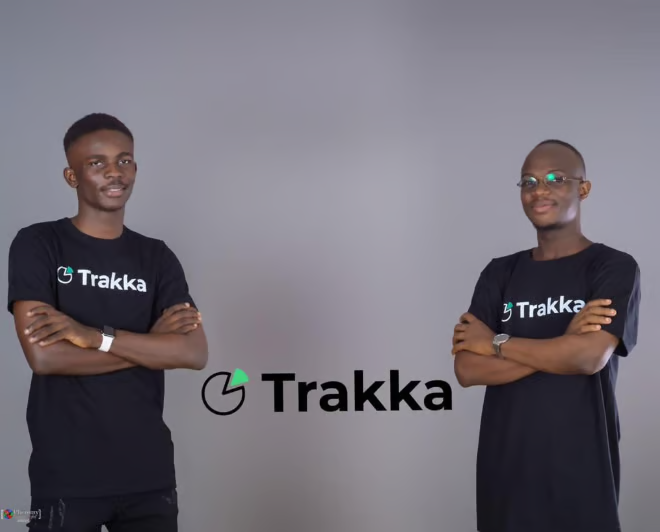
Then regulation complicated the plan. The Central Bank of Nigeria directed some of Trakka’s partners to disable their virtual account services, affecting an important part of the product. They also explored Trakka Pay, an NFC-enabled payment tool, but adoption was too slow.
Within two years, Trakka attracted about 10,000 users, raised money from angel investors and placed third at Wema Bank’s Hackaholics 4.0 in 2023. Still, awards could not fix an ecosystem that had not caught up with the product. Trakka shut down in 2024.
The experience taught him that good ideas need infrastructure, regulatory clarity and a market ready to use them.
That founder’s perspective now shapes his legal work. When a client loses access to an online business account, he does not see just a username that has stopped working. He sees the customers, income and effort tied to it.
How Did a Letter Convince Meta to Restore Five Accounts?
His client had completed Meta’s appeal process, including facial verification, but the accounts remained disabled. The repeated failures took a serious emotional toll.
Latest Tech News
Decode Africa's Digital Transformation
From Startups to Fintech Hubs - We Cover It All.
Aro considered suing Meta but decided to give the company a chance to resolve the dispute first. He prepared a demand letter that also served as a pre-action notice, sent it to Meta’s Lagos office and copied relevant agencies. The 14-day ultimatum made the next step clear: restore the accounts or face legal action.
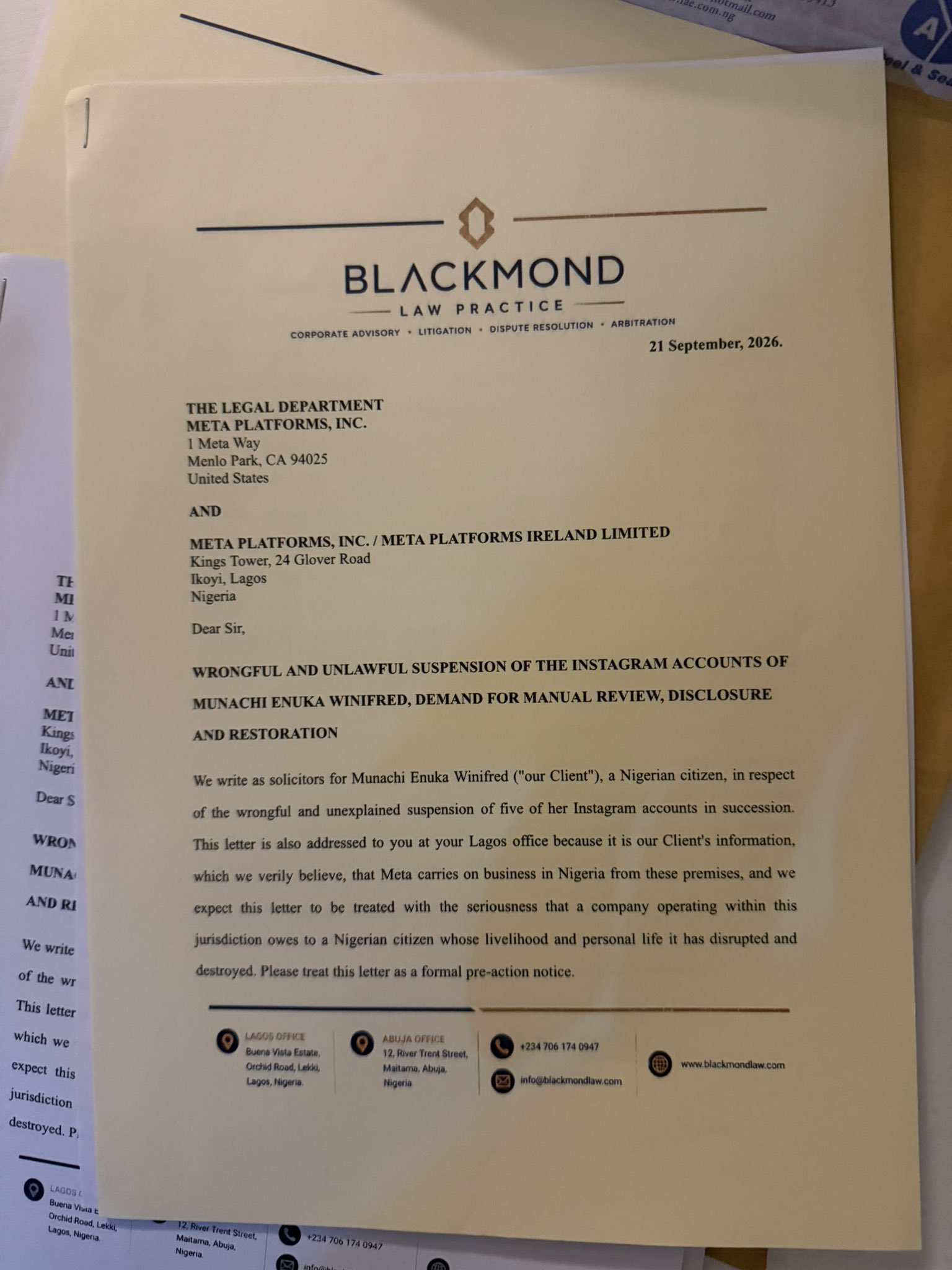
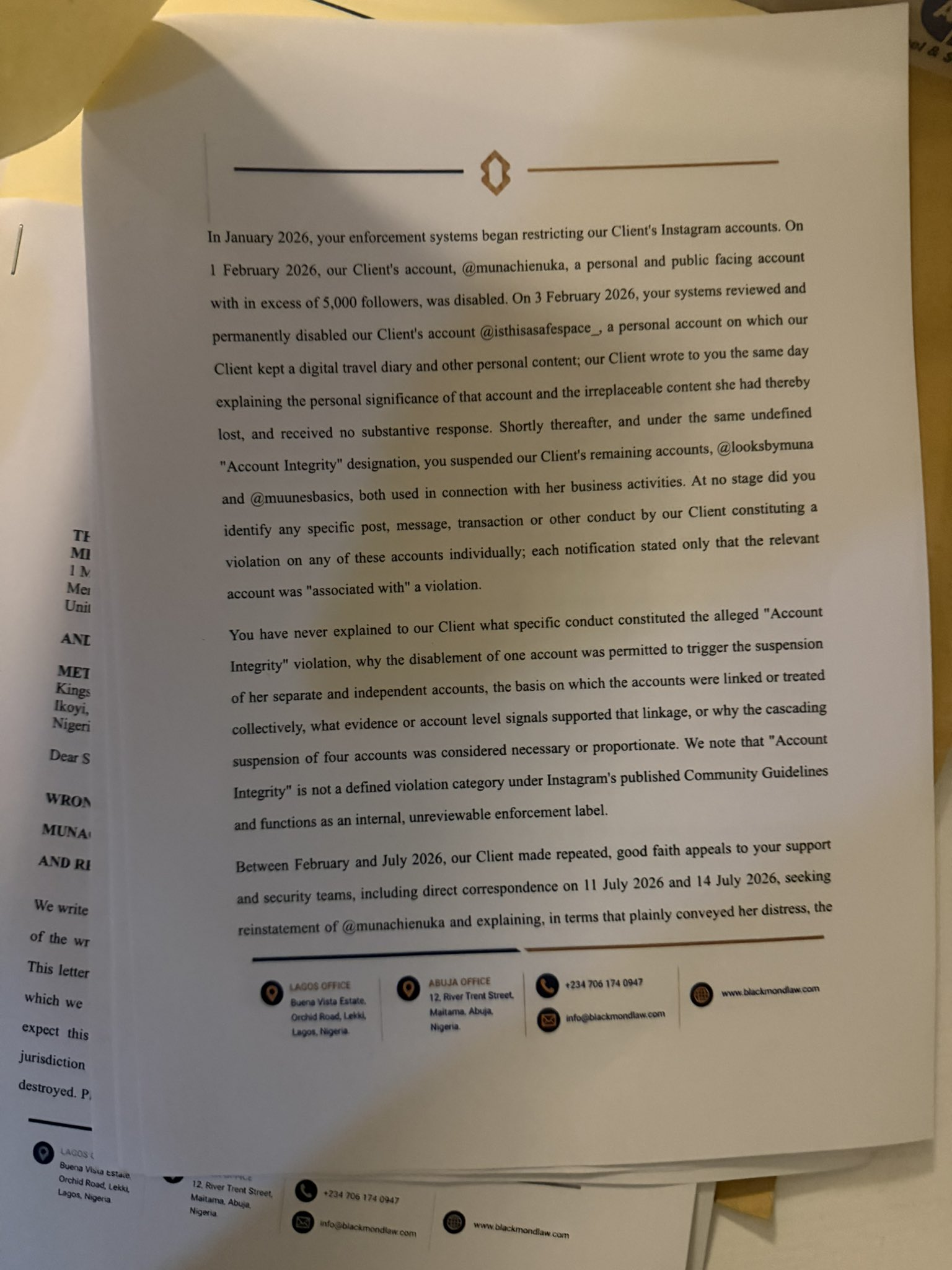
His argument drew on Nigerian law. He cited sections 34, 36, 37 and 39 of the 1999 Constitution, concerning dignity, fair hearing, privacy and freedom of expression.
He also referred to section 37 of the Nigeria Data Protection Act 2023, which provides protections against decisions based solely on automated processing.

His concern was that users could submit identification yet have no meaningful chance to explain their situation or challenge the outcome. Identity verification alone, he argues, is not a fair opportunity to be heard.
The consequences can be serious. For a business owner who relies on Instagram to reach customers, an unexplained deactivation can cut off income. Desperate users may turn to recovery agents demanding large sums. Some are scammers; others may recover an account only for it to be disabled again.
In this case, Meta restored all five accounts before the deadline. Aro’s approach offers an alternative to paying strangers who promise a miracle. It does not mean every case will have the same outcome; the right legal route depends on the facts. But it gives users another option beyond repeatedly clicking “appeal” and hoping for the best.
What Does Aro Want to Change About Big Tech in Nigeria?
Aro does not want his work to stop with individual cases. He is pursuing public advocacy and working with agencies and lawmakers on possible protections for users whose accounts are unfairly disabled.
He is not planning a class action. His goal is a lasting solution that does not require every affected person to hire a lawyer.
He points to Europe’s Digital Services Act, which sets obligations for online platforms and provides mechanisms for challenging certain moderation decisions.
Aro believes Nigeria needs a system that offers reviews, including human consideration where appropriate. The Nigerian Data Protection Commission also has a Standard Notice to Address Grievances for data protection complaints, including concerns about automated processing.
He credits the NDPC and the Federal Competition and Consumer Protection Commission for responding. But formal complaint processes can be difficult to navigate, and legal support remains out of reach for many. Clearer rules, he argues, would help more than demand letters alone.
He also worries that automated decisions and technology-sector layoffs could worsen Nigeria’s already serious employment challenges.
Yet he is not walking away from technology. Aro plans to build another company with his former Trakka co-founder, this time exploring an artificial intelligence-powered product rather than another fintech. He says he will return with more experience and a stronger understanding of legal and regulatory requirements.
Latest Tech News
Decode Africa's Digital Transformation
From Startups to Fintech Hubs - We Cover It All.
There is an interesting loop in his story. Aro once tried to build tools that gave people more control over their money. Now he is challenging a system that can take away control over their online businesses.
Both experiences point to the same lesson: technology can create opportunity, but people need protections when it fails.
Restoring five Instagram accounts was a meaningful win. Aro’s bigger test will be helping ensure the next Nigerian who loses an account does not have to fight alone.