Global Power Shift: EU and India Redefine Relations
Indian Prime Minister Narendra Modi's extensive European tour, including stops in Sweden, the Netherlands, Norway, and Italy, aims to significantly strengthen trade, investment, and strategic partnerships. A major highlight is the progress on the EU-India trade agreement, described as the "mother of all deals," alongside calls for a complementary investment pact to unlock historic opportunities.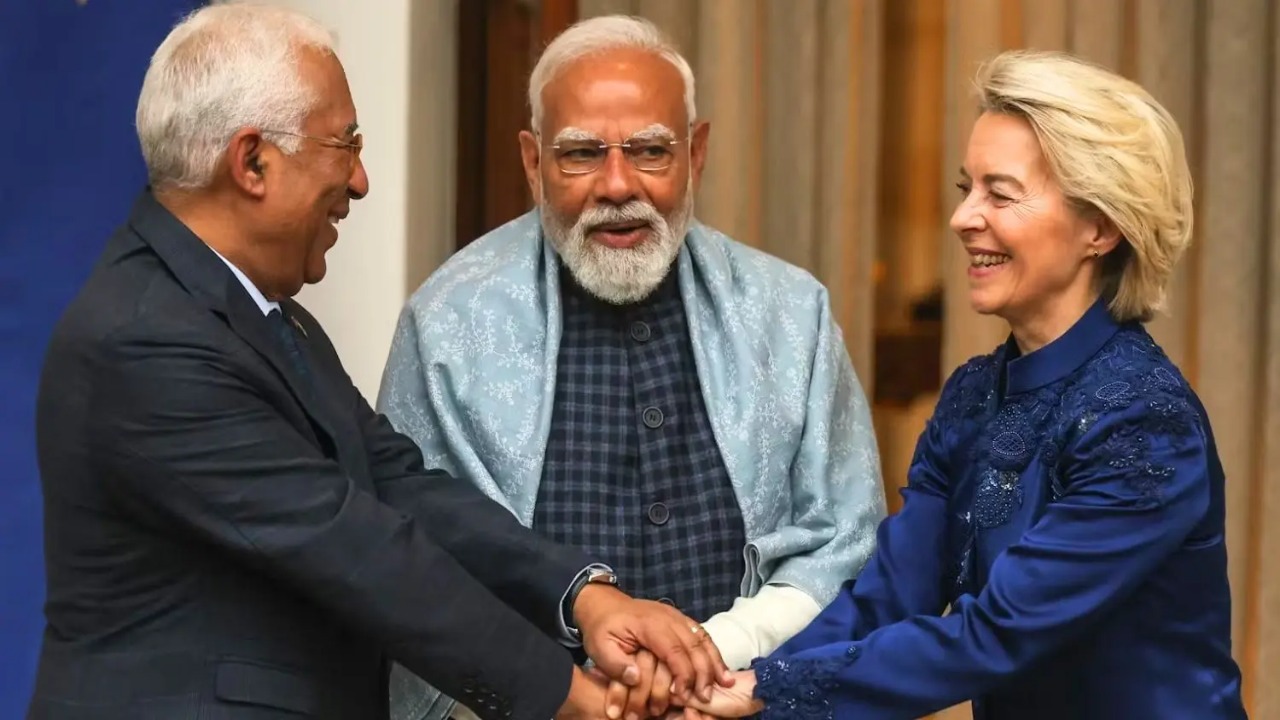
Indian Prime Minister Narendra Modi embarked on a significant tour across Europe, making stops in Sweden, the Netherlands, Norway, and Italy to strengthen bilateral and multilateral ties with European nations. His visit aimed at deepening economic cooperation, fostering innovation, and addressing geopolitical challenges through strategic partnerships.
In Gothenburg, Sweden, Prime Minister Modi engaged in crucial discussions with his Swedish counterpart Ulf Kristersson and European Commission Chief Ursula von der Leyen at the European Business Round Table for Industry.
The event brought together European and Indian business leaders, underscoring India's commitment to deepening investment linkages with Europe. Modi emphasized this objective in a post on X, highlighting the strategic importance of such engagements.
A central focus of the discussions in Sweden was the landmark EU-India trade agreement, which Von der Leyen hailed as the "mother of all deals." This agreement, initially inked in New Delhi in January, is anticipated to be finalized by the end of the year.
Representing a vast economic partnership, it contains nearly two billion people and accounts for almost a quarter of global economic output, marking the largest bilateral trade pact either side has ever signed. This deal is particularly significant given the current landscape of global trade, increasingly shaped by geopolitical tensions. Under its terms, India is set to eliminate or reduce duties on 96.6% of EU goods exports, while the EU will liberalize 99.5% of its tariff lines on goods imported from India over a period of seven years.
European leaders are pushing for stronger India-EU economic ties, with calls for an investment agreement to complement existing trade efforts and unlock new opportunities for cooperation. During his Europe tour, Prime Minister Modi also held bilateral discussions in Sweden focused on trade, investment, innovation, and defence.
Before Sweden, Modi visited the Netherlands, where India strengthened cooperation in trade, technology, and energy through a new strategic partnership. The tour will continue in Norway for the India-Nordic Summit, where leaders will discuss collaboration in technology, renewable energy, defence, space, and Arctic development.
Modi’s European visit will conclude in Italy with talks expected to build on existing agreements covering security, defence cooperation, and migration, further expanding India’s strategic and economic engagement across Europe.