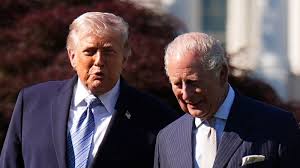
Global Alarm: Trump, World Leaders Confront Iran Tensions Amid Hormuz Strait Military Maneuvers

A precarious ceasefire in the Middle East has crumbled amidst a fresh salvo of attacks and escalating tensions, prompting world leaders to intensify pressure on Tehran to prioritize diplomatic solutions. The renewed conflict is largely centered around the strategic Strait of Hormuz, a critical waterway through which a significant portion of the world's oil flows.
The current crisis gained momentum following an exchange of fire between Iran and the United States over the Strait of Hormuz. Iran, which has vowed not to relinquish control over the waterway, claims its nuclear program is for civilian purposes, despite extensive economic sanctions imposed by the UN, US, and EU since 2010 over suspicions of bomb development. The United States, on Monday, reported sinking at least six small Iranian ships, a claim the Islamic Republic vehemently denied, instead accusing Washington of killing five civilians on boats. US President Donald Trump has repeatedly demanded Iran reopen the strait, asserting that the US has "beaten [Iran] badly" and that Iran's navy is now "reduced to little boats with a machine gun on the front of them," and even claiming all Iranian ships are now underwater. He also announced "Project Freedom," a humanitarian effort aimed at guiding ships from neutral countries out of the Gulf. While US Central Command stated that guided-missile destroyers had transited Hormuz and two US-flagged merchant vessels had embarked as a first step, Iran's Revolutionary Guards denied any commercial vessels or oil tankers had passed through. Further complicating the situation, a South Korean ship in the strait reportedly experienced an "explosion and fire."
Adding a critical new dimension to the conflict, US ally the United Arab Emirates reported Iranian attacks for the first time since the truce, calling them "a dangerous escalation and an unacceptable transgression." An energy installation in the emirate of Fujairah was targeted, injuring three Indian nationals, with UAE authorities reporting four cruise missiles launched, three of which were shot down. Drones were also fired at a tanker affiliated with ADNOC, the UAE's state-owned oil giant. While a senior Iranian military official did not deny the strikes, he stated there was "no pre-planned programme to attack the oil facilities in question," blaming the incidents on "the US military's adventurism to create a passage for ships to illegally pass through" the Strait of Hormuz. UAE President Sheikh Mohamed bin Zayed Al Nahyan affirmed his country's resolve to respond with strength to threats to its sovereignty and security, praising the armed forces for their decisive response to the "terrorist attacks targeting civilians and civilian infrastructure."
International calls for de-escalation have amplified. German Chancellor Friedrich Merz implored Tehran to "return to the negotiating table and stop holding the region and the world hostage," a sentiment echoed by French President Emmanuel Macron and British Prime Minister Keir Starmer. Saudi Arabia, a key US ally whose energy infrastructure has previously been hit by Iran, also joined the calls for diplomatic efforts. Diplomacy between Washington and Tehran, however, remains deadlocked, with the United States twice aborting plans for senior officials to attend talks in Pakistan. Iranian Foreign Minister Abbas Araghchi, a perceived moderate, commented that the clashes underscored that "there was no military solution to a political crisis" and urged the US and UAE to be wary of being "dragged back into quagmire."
In response to the escalating situation, Germany is deploying a naval minesweeping vessel to the Mediterranean for a potential future mission to help clear the Strait of Hormuz, though any deployment is contingent on an end to hostilities. Furthermore, the United States and Bahrain are championing a UN Security Council resolution that could lead to sanctions against Iran if it fails to cease threats to shipping in the Strait of Hormuz. The draft resolution, which operates under Chapter VII of the UN Charter, would demand Iran stop attacks, disclose sea mine locations, and refrain from interfering with navigation, though Russia and China may seek to block or alter it. Washington has also proposed a new multinational maritime coalition, the "Maritime Freedom Construct," aimed at establishing a post-conflict security architecture and reopening the Strait once conditions stabilize.
The renewed conflict has also had an economic impact, with oil prices climbing, including the benchmark international contract Brent crude for July delivery jumping more than five percent. Such soaring energy costs contribute to global economic pain and present a political challenge for President Trump months before congressional elections. Despite the attacks, President Trump appeared to downplay their significance, stating that Iran had "taken some shots" but caused little damage.
Domestically, President Trump has also weighed in on the issue of protests within Iran. He suggested that Iranians are deterred from protesting due to a lack of weaponry, arguing that even large crowds would be unable to withstand armed crackdowns. Citing past events, including a massacre of 40,000 protesters in January and the 2022 crackdown on "Woman Life Freedom" protesters, Trump claimed that large crowds dispersed after individuals were shot, emphasizing that few people could endure such violence without the means to defend themselves.
Meanwhile, a separate ceasefire in Lebanon, aimed at halting fighting between Israel and the Iran-backed armed group Hezbollah, also faced strain. Clashes erupted in southern Lebanon, with Israel reporting moderate injuries to two soldiers. Israeli strikes in response to Hezbollah attacks have killed over 2,700 people since early March. Lebanese President Joseph Aoun has called for a security deal and an end to Israeli attacks before any proposed meeting with Israeli Prime Minister Benjamin Netanyahu.
You may also like...
Nigeria's Government Used to Run on Oil. Now 87% of Its Revenue Comes From Somewhere Else
A new report shows Nigeria's oil dependence has collapsed from 75% to 25% of government revenue in a decade. Non-oil tax...
End of an Era: WNBA Star Tina Charles Retires After Illustrious 14-Season Career

WNBA legend Tina Charles, the league's all-time leading rebounder, has announced her retirement after a remarkable 15-ye...
Basketball World Mourns Loss: Puerto Rican Icon José 'Piculín' Ortiz Dies at 62

Puerto Rico mourns the loss of basketball legend José "Piculín" Ortiz, who passed away at 62 after battling colorectal c...
Guillermo del Toro's 'Pan's Labyrinth' Stuns Cannes with 4K Re-Release, Two Decades On!

Guillermo del Toro's acclaimed "Pan's Labyrinth" is returning to the Cannes Film Festival with a 4K restoration, opening...
Matthew Perry's Cherished Possessions, Including 'Friends' Scripts, Go Under the Hammer

Personal items from "Friends" star Matthew Perry's estate, including iconic scripts and memorabilia, are going to auctio...
Country Sensation Ella Langley Dominates Charts, Achieves Rare Top 3 Feat

Ella Langley has made history on Billboard’s Hot Country Songs chart by securing the top three positions, becoming only ...
Music Icon Linda Perry Honored with Prestigious Ivor Novello Songwriting Prize

Linda Perry, former 4 Non Blondes leader and acclaimed songwriter, is set to receive the special international songwrite...
Taylor Sheridan's Thrilling Spy Series Locks Down Explosive Season 3 Premiere!
Taylor Sheridan is having a prolific year with new hits like "The Madison" and "Marshals," alongside upcoming spin-offs ...