Gig Economy Shockwave: Imposters Bypass Top Platforms Glovo and Chowdeck Unnoticed
An investigation into Nigerian food delivery platforms, Glovo and Chowdeck, uncovered significant vulnerabilities in their vendor vetting processes, allowing a fake restaurant to operate and complete sales. This probe, sparked by a vendor impersonation complaint, highlights the urgent need for comprehensive regulatory oversight in Nigeria's food delivery sector to protect consumers from fraud and health risks, contrasting sharply with stricter frameworks in India and China.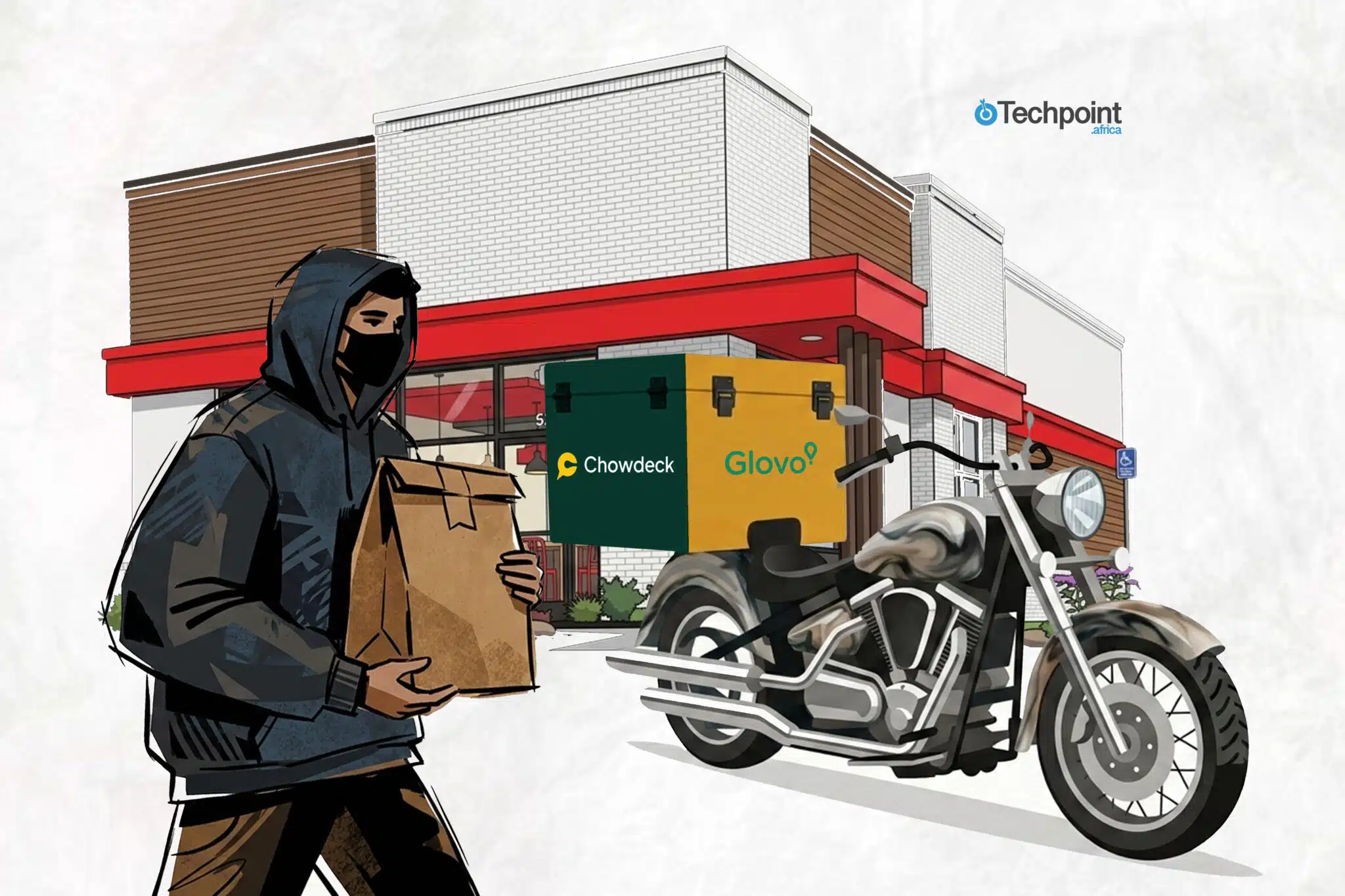
A recent social media post by food vendor Corporate Ewa in December 2025 ignited a significant investigation into the vetting processes of Nigeria's prominent food delivery platforms, Glovo and Chowdeck. Corporate Ewa alleged that several live stores on the Glovo app were illicitly using her business's name and images, despite her never having registered with the platform. This public complaint on X prompted Techpoint Africa to scrutinize how these platforms onboard restaurants, specifically testing the ease of impersonating an existing business.
Techpoint Africa successfully established a fake restaurant on both Glovo and Chowdeck, even managing to complete a sale on each. The primary objective was to evaluate the robustness of their vendor registration and onboarding procedures and ascertain the potential for fraudulent entities to mimic legitimate brands.
For Glovo, the registration process commenced with identifying a well-known restaurant not listed on the platform. To sign up as a vendor, Techpoint Africa provided a fabricated business name, a non-existent address unrelated to the actual restaurant's branches, a randomly generated tax ID in the typical Nigerian format, and a personal bank account. Glovo's system did not flag the fabricated tax ID, suggesting a lack of cross-referencing with publicly accessible databases like the Nigeria Revenue Service's (NRS) TIN verification portal or the Corporate Affairs Commission’s (CAC) register. Following these submissions, Glovo swiftly sent a partner's agreement within ten minutes of registration.
The subsequent 'verification' step on Glovo, intended to confirm identity and business, primarily required uploading a menu. Despite the partnership agreement already being sent, Techpoint Africa created a mock-up menu using images, descriptions, and prices directly lifted from the impersonated restaurant's official Instagram account. A Glovo representative later contacted the investigators, requesting much of the information previously uploaded, along with an activation fee of ₦20,000 and a CAC document. A false CAC document, using an RC number from a similarly named company, was provided. Within a week, after a signed vendor agreement and an onboarding training session, the fake restaurant went live on the Glovo app, facilitating a successful test order. The investigation found no evidence of independent business verification or 'Know Your Business' (KYB) requirements, with a fictitious restaurant approved within 48 hours of document submission. Glovo, which has onboarded over 6,000 vendors in Nigeria since 2021, declined to comment on its onboarding procedures.
The process for Chowdeck was notably quicker, taking just over an hour to set up a restaurant and complete a sale. During registration, Chowdeck requested a business name, CAC registration number, and the CAC document. Initially, the submitted business information was rejected because the name did not match the provided CAC number. However, remarkably, Chowdeck still permitted the registration to proceed, albeit with a caveat: the unverified business would be allowed to trade until daily payouts reached ₦100,000. A Chowdeck spokesperson explained that while their standard onboarding is for fully registered businesses, legitimate small businesses formalizing their registration might receive restricted access under tighter controls. Yet, the investigation demonstrated that this restricted-access provision could be exploited by fraudulent vendors. Techpoint Africa completed the profile setup using personal contact and bank details and uploaded a menu with images sourced from the impersonated restaurant’s Instagram. Within ten minutes, the store was live and publicly viewable, and a test order was successfully delivered. Chowdeck acknowledged encountering isolated cases of vendor impersonation in the past and stated their processes include automated checks and periodic reviews.
The investigation highlighted a significant regulatory gap in Nigeria's food delivery sector. Unlike financial technology companies, which are mandated by stringent KYC (Know Your Customer) and KYB requirements – evidenced by large fines levied against OPay and Moniepoint for non-compliance – the food delivery sector appears to lack specific legislation or a dedicated regulatory body. While the Federal Competition and Consumer Protection Commission (FCCPC) has broad jurisdiction over consumer protection in digital markets, and the National Agency for Food and Drug Administration and Control (NAFDAC) regulates food-handling establishments, neither has issued a framework specific to food delivery platforms. This fragmented oversight poses considerable risks, including consumer harm from fraud and potential public health challenges.
In contrast, other countries have established robust regulatory frameworks. India's vast online food delivery sector is governed by the Food Safety and Standards Authority of India (FSSAI), which sets standards for restaurants and holds delivery companies accountable for food safety, hygiene, and accurate labeling. Similarly, China's substantial food delivery market is regulated by the State Administration for Market Regulation (SAMR), which recently fined major players after an investigation uncovered thousands of 'ghost food vendors' operating with forged licenses and no physical locations. These examples underscore the importance of comprehensive oversight.
As Nigeria's food delivery sector continues to expand, the question of regulatory responsibility becomes critical. To address the identified vulnerabilities, a collaborative effort between the FCCPC, with its mandate for consumer protection across digital markets, and NAFDAC, with its expertise in regulating food-handling establishments, is suggested as the most appropriate path forward. Such a partnership could extend NAFDAC's compliance framework to cover food vendors listed on platforms and ensure platforms adhere to rigorous verification processes, safeguarding consumers from fraud and health risks.