Ghana's Northshore Apparel Hub: A Beacon of Enterprise, Eyes Expansion & State Contracts
Northshore Apparel has transformed a former refuse dump in Savelugu, Northern Ghana, into a state-of-the-art garment manufacturing facility, creating thousands of jobs and serving as a symbol of hope and economic opportunity. Supported by GEXIM and international partners, the wholly Ghanaian-owned company aims to reduce youth migration, bolster national security through dignified work, and establish Ghana as a key player in the global apparel market with ambitious expansion plans including a fabric mill and cotton outgrower scheme.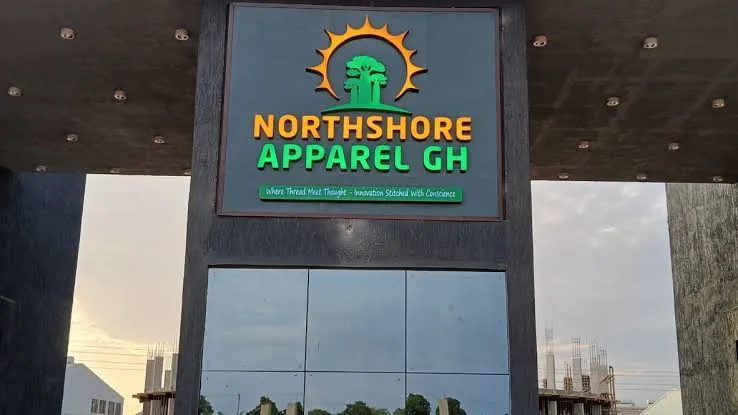
What was once an abandoned latrine pit and refuse dump in Savelugu, Northern Ghana, has been meticulously transformed into a cutting-edge garment manufacturing facility by Northshore Apparel. This development, launched as part of the 24-Hour Economy Facility on August 28, is described by Northshore Apparel CEO, Nurideen Mohammed, as a "harbour of hope" and a powerful symbol of economic opportunity and redemption. Mr. Mohammed emphasized that the site, previously a place for "what this town sent what it no longer wanted," now produces goods worn in international markets like New York and Frankfurt, showcasing that "nothing and no one is beyond redemption."
The establishment of the Northshore Apparel Hub reflects a deliberate strategy to bring decent and productive jobs to communities in Northern Ghana, addressing the persistent challenge of youth migration to major cities like Accra in search of employment. CEO Nurideen Mohammed shared his personal experiences witnessing homeless women and children from Northern Ghana struggling in Accra, which profoundly influenced his decision to locate the factory outside the capital. He stressed that creating employment opportunities in the regions can "cripple the supply of jobless young men and women" migrating to cities, thereby alleviating pressure on urban infrastructure and fostering local development. The company believes that just as a pit can become a factory, a young person "loitering by the roadside can become a machinist, a supervisor, and a plant manager," transforming talent previously called "trouble" into a productive workforce.
Beyond economic upliftment, Northshore Apparel positions dignified work as the most reliable peacebuilder, making economic transformation an integral part of national security policy. Mr. Mohammed argued that sustainable employment, rather than solely armed security responses, offers an enduring solution to insecurity in Northern Ghana. He noted that despite initial concerns from prospective supporters regarding perceived risks in the region due to incidents of violence, Northshore remained committed to demonstrating that internationally competitive manufacturing can thrive there, attracting further industrial investment.
The monumental project was made possible through a collaborative effort, demonstrating what can be achieved when private investment, financing, traditional authorities, development partners, and local communities work together. The Ghana Export-Import Bank (GEXIM) played a pivotal role, supporting the factory's establishment and operationalisation through a blended financing model. This involved the Investing for Employment (IFE) facility of Germany’s KfW Development Bank and equity from the project promoters. GEXIM's CEO, Sylvester Adinam Mensah, hailed the Northshore Apparel Hub as a testament to Ghana’s capacity to leverage local enterprise and development finance for industrialisation, job creation, and export expansion.
The Northshore Apparel facility, situated on a 50-acre industrial campus, currently operates with 50 sewing lines and has trained and deployed over 2,300 operators. Its first phase alone has created 3,000 immediate jobs, with direct employment projected to rise significantly to 10,000 when the facility reaches full operational capacity. Beyond direct employment, the factory is designed to stimulate demand for a wide range of ancillary goods and services, including transportation, food services, accommodation, and logistics, thereby extending its economic value far beyond its walls and improving livelihoods across the region. The facility also includes a 4,000-square-metre cutting and design center, 8,000 square metres of storage space, a 1,500-square-metre dining facility, a 500-kilowatt peak solar power system, an anaerobic biodigester, a 600,000-litre underground water reservoir, an on-site clinic, a crèche, and a designated place of worship for workers.
Even before production commenced, Northshore Apparel Ghana garnered significant international interest, receiving letters of intent from major buyers in the United States and South Africa. This early market confidence, as highlighted by GEXIM CEO Sylvester Adinam Mensah, underscores the factory’s export potential and its capacity to compete globally. The facility is strategically positioned to leverage trade arrangements such as the African Growth and Opportunity Act (AGOA) to export Ghana-made apparel to the USA and other international markets, earning crucial foreign exchange for the nation. With samples satisfying global standards, Northshore's first export containers are anticipated for October, with its products destined for labels like Walmart, TJ Maxx, DKNY, and American Rag.
Northshore Apparel Ghana Limited has ambitious plans for expansion, outlined in a three-phase development strategy aimed at creating an integrated textile value chain. Phase One constitutes the current garment manufacturing facility. Phase Two will double sewing capacity to 200 lines, add two more sewing production facilities, an additional cutting and design facility, and integrate 1.5 megawatts of solar power with battery storage. The transformative Phase Three involves establishing a fabric mill and introducing a cotton outgrower scheme across the West African sub-region, including Burkina Faso, Mali, Benin, Niger, Togo, and northern Ghana. This strategic backward integration leverages Savelugu’s proximity to the cotton belt, ensuring that Ghanaian cotton will ultimately leave the country as a finished garment rather than raw bales, significantly deepening local value addition and reducing dependence on imported inputs.
President John Dramani Mahama cited the Northshore Apparel Hub as a prime example of his government’s 24-hour economy initiative in action, designed to create jobs, increase production, and accelerate Ghana’s exports through multiple operational shifts. President Mahama also highlighted the various government incentives benefiting Northshore, including its registration under the Free Zones regime, which offers tax and duty exemptions on plants and equipment. Additionally, manufacturers locating in rural and northern parts of Ghana benefit from lower tax rates. The President also announced plans to introduce a net-metering framework, allowing companies with solar power plants, like Northshore with its 500-kilowatt peak solar system, to supply excess electricity to the national grid and be compensated, further bolstering energy resilience and sustainability.
Nurideen Mohammed appealed to the government to award a portion of contracts for uniforms for Ghana’s security services and other public institutions to local manufacturers. He argued that Ghana currently spends foreign exchange on imported uniforms that could be competitively produced domestically, guaranteeing quality and delivery. Procuring uniforms from local factories like Northshore would retain foreign exchange, create jobs, generate tax revenue, and provide stable order books, thereby steadying factories as they expand into international markets. Mr. Mohammed urged workers and residents to "own and protect" the factory, proving to prospective investors that industrial ventures can be commercially viable in the region.
The Northshore Apparel Hub stands as compelling proof that wholly Ghanaian-owned businesses are capable of undertaking large-scale industrial projects and competing on the global stage. Its journey from a refuse dump to an export-oriented manufacturing powerhouse exemplifies successful public-private partnerships, strategic investment, and a profound commitment to community development, making it a cornerstone of Ghana’s industrial transformation and a beacon of hope for Northern Ghana.