Ghana's Healthcare System on Brink: Dire Warnings Issued Over 'No Bed Syndrome' and Ambulance Crisis
Ghana's emergency healthcare system is critically flawed, characterized by a dangerous gap between policy and practice, leading to tragic outcomes like the “no bed syndrome.” Experts are calling for urgent reforms, including strengthening peripheral hospitals, establishing centralized bed tracking, and securing dedicated funding for essential services like the National Ambulance Service. The dire situation has been highlighted by recent patient deaths, prompting renewed calls for governmental and public action to prioritize and overhaul emergency care.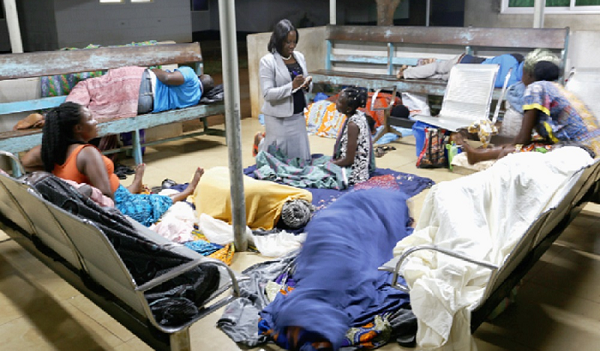
Ghana's emergency healthcare system is dangerously fragmented, poorly equipped, and underfunded, failing to adequately respond to urgent patient needs. This stark reality creates a significant gap between outlined policy standards and actual practice in many hospitals, a situation highlighted by Dr. Richard Selormey, General Secretary of the Ghana Medical Association (GMA), and corroborated by Dr. Justice Yankson, former GMA Vice President. Despite numerous well-crafted policies and guidelines, their implementation remains a major challenge, leading to systemic weaknesses and preventable deaths.
A critical issue intensifying public concern is the persistent “no bed syndrome,” where patients are frequently turned away from hospitals due to a lack of available beds, often with tragic outcomes. The reported death of 29-year-old engineer Charles Amissah, who allegedly died after being moved between three major Accra hospitals without admission, has brought this crisis into sharp focus. This incident, according to Dr. Yankson, vividly demonstrates the structural and systemic deficiencies within the emergency system, extending beyond just tertiary facilities like Korle Bu, Ridge, and Komfo Anokye Teaching Hospitals.
Several structural weaknesses contribute to this dire situation. Logistical constraints plague the National Ambulance Service (NAS), including an ageing fleet, with many ambulances having surpassed their five-year intended lifespan, leading to increased maintenance demands and reduced operational capacity. Dr. Simon Akayiri Nyaaba, Deputy Director for Policy, Planning, Monitoring, and Evaluation (PPME) at NAS, further revealed critical shortages of medical oxygen, noting that NAS relies on external sources without its own dedicated oxygen plant. This dependence creates vulnerabilities when external suppliers face operational issues or shortages. Furthermore, a lack of sustainable, reliable, and dedicated funding for NAS impedes fleet renewal, infrastructure development, and essential educational programs.
The referral system is also disjointed, with patients often transferred between facilities without proper communication or preparation at the receiving end, compounding treatment delays. Dr. Selormey emphasized the absence of a centralized system to track real-time bed availability across hospitals, underscoring a significant coordination gap. This means that even if a polyclinic is nearby, it may lack the equipment, personnel, or expertise to handle certain emergencies, leading to peripheral facilities “dumping” patients into already overwhelmed major hospitals, thereby perpetuating the “no bed syndrome.”
Beyond infrastructure and logistics, other contributing factors include understaffing, demotivated healthcare professionals, and individual lapses in professionalism. Dr. Selormey also pointed to poor health-seeking behavior among sections of the public, where individuals often delay seeking medical care until emergencies become critical. This combination of factors, he warned, creates a dangerous system that demands urgent attention and reform.
Experts are urgently calling for comprehensive reforms. Dr. Selormey advocates for strengthening peripheral hospitals with adequate human resources and necessary logistics to manage emergencies closer to communities, thereby alleviating pressure on tertiary facilities. Dr. Yankson, reflecting on largely unimplemented emergency care guidelines introduced in 2011, urged the government to invest in a functional emergency response system, including a central command centre for real-time bed monitoring and patient redirection. Dr. Nyaaba stressed the need for immediate policy interventions to ensure a reliable supply of medical oxygen and adequate funding for fleet renewal and infrastructure. All stakeholders, including the government, health sector, public, and media, are urged to engage in a concerted effort to find lasting solutions and elevate emergency care to a national priority, preventing future tragedies and safeguarding patients' lives.