Ghana's Galamsey Crisis: Lands Minister Reveals Over 4,000 Excavators Seized Amid Prosecution Challenges
Ghana's government is intensifying its fight against illegal mining, or galamsey, through arrests, equipment seizures, and policy reforms aimed at protecting devastated forest reserves and water bodies. While enforcement has been robust, the Minister for Lands and Natural Resources, Emmanuel Armah-Kofi Buah, emphasizes that successful prosecution of offenders remains the biggest challenge. The multi-pronged strategy includes targeting supply chains, controlling excavator imports, and reforming mining licenses.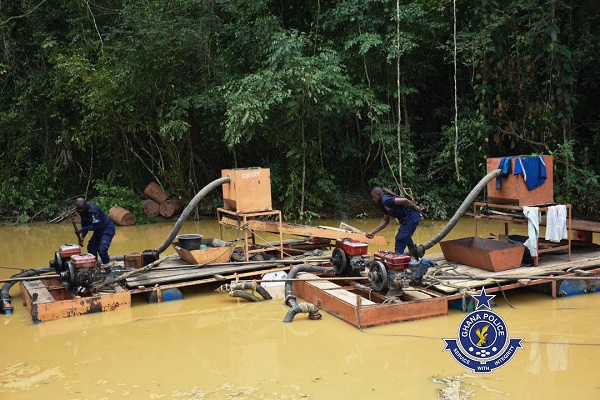
Ghana's government is intensifying its multi-pronged campaign against illegal mining, locally known as galamsey, aiming to curb the alarming destruction of the nation's vital forest reserves and water bodies. This comprehensive approach targets not only illegal miners but also the entire supply chain, including businesses and individuals involved in manufacturing, financing, and supplying equipment for these illicit operations. The Ministry of Lands and Natural Resources has disclosed significant progress in enforcement, alongside proposed reforms to the mining sector to ensure sustainable resource management.
The scale of environmental degradation due to illegal mining is severe. Approximately 8,900 hectares of Ghana's forest reserves have been degraded, an area equivalent to about 12,500 football fields, with nine out of 288 reserves identified as severely affected. Minister Emmanuel Armah-Kofi Buah highlighted images of this destruction, noting that the impact is so profound it resembles an earthquake. These activities have made some areas inaccessible for Forestry Commission officials due to the presence of armed illegal miners and incidents of violence, leading to previous assessments underestimating the true extent of the damage.
Enforcement operations have yielded substantial results. As of July 2026, authorities had arrested 258 suspects during operations targeting illegal mining in forest reserves. Furthermore, thousands of pieces of mining equipment have been seized or immobilized. This includes a combined total of 1,724 changfan machines (with other figures indicating 950 seized and 774 immobilized), 234 excavators (200 seized, 34 immobilized), 2,728 pumping machines (1,469 seized, 1,259 immobilized), 461 motorbikes and tricycles (285 motorbikes, 48 tricycles seized), and 82 gold detectors. Additionally, 801 structures associated with illegal mining were immobilized.
Despite the high number of arrests and seizures, the government faces a significant challenge in the successful prosecution of offenders. Minister Buah candidly stated, "The challenge we are having is not the arrest. It is the prosecution." The Ministry is actively collaborating with the Attorney-General’s Department to address the difficulties in securing convictions, recognizing that lasting deterrence hinges on effective judicial outcomes beyond mere arrests. The lack of detailed breakdowns on charges, prosecutions, or convictions for the 258 arrested suspects underscores this ongoing concern.
A key focus of the government's strategy is disrupting the supply chain of illegal mining equipment. Minister Buah pointed out that many of the seized changfan machines were locally fabricated before being transported to mining sites and water bodies. This highlights the need to investigate not just the miners but also the manufacturers, financiers, and suppliers of these crucial tools. To control the inflow of heavy machinery, more than 4,000 excavators are currently being held at Ghana’s ports. A new documentation and clearance regime requires importers to provide details on the end-user and intended operational location for each excavator. Approved machines will be fitted with tracking devices and subjected to geofencing to ensure they operate only within declared areas, making every excavator in Ghana traceable.
Complementing these efforts are proposed reforms to the mining licensing regime. The maximum initial term for large-scale mining leases is set to be reduced from 30 years to 20 years. Stricter requirements will be imposed on companies holding exploration and prospecting licenses, demanding demonstration of meaningful activity within specified periods. This is a direct response to the criticism from Minister Buah regarding companies holding concessions for extended periods without undertaking substantial exploration or development, effectively waiting to "cash out."
Community participation is also being strengthened. Plans include the establishment of District Mining Committees to empower local communities with a stronger voice in mining decisions. These committees would assess the potential impact of proposed mining activities on water bodies, farms, and settlements before licenses are approved. Mining companies would also be required to enter into community development agreements. Furthermore, approximately 2,000 Blue Water Guards have been recruited and trained to gather intelligence and provide first-response support for protecting water bodies. While acknowledging allegations of bribery among some guards, Minister Buah maintained that the initiative has generally provided useful intelligence for enforcement operations.
In conclusion, the government's fight against galamsey is a multi-level undertaking, integrating robust enforcement, stringent controls on equipment, comprehensive licensing reforms, and enhanced community involvement. The ultimate success of this intensified campaign, however, remains critically dependent on the justice system's ability to ensure that arrests translate into successful prosecutions and convictions, thereby creating a sustained deterrent against illegal mining.