Ghana's Energy Crisis Deepens: Expert Warns of Fiscal Inequality Amidst ECG Losses
Ben Boakye of ACEP warns that Ghana's energy sector inefficiencies are draining public finances, worsening inequality, and costing up to GH¢40 billion annually. He stresses the urgent need for reforms at the Electricity Company of Ghana (ECG), whose losses have increased despite significant investments. Boakye advocates for efficiency and appropriate management structures over ownership debates to address the sector's pervasive challenges.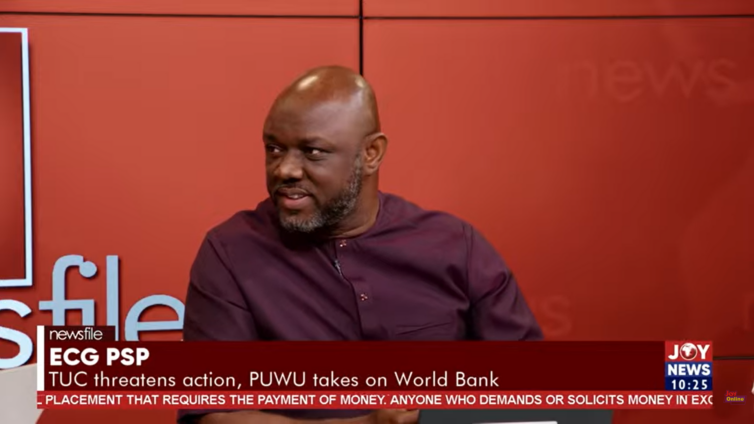
Ghana's energy sector is plagued by persistent inefficiencies that are not only draining public finances but also exacerbating inequality among its citizens, according to Ben Boakye, the Executive Director of the African Centre for Energy Policy (ACEP). Speaking on JoyNews’ Newsfile, Mr. Boakye emphasized that the country is fully aware of the fundamental issues affecting the sector and should prioritize implementing solutions rather than continuously funding the consequences of these problems.
The financial burden imposed by the energy sector far surpasses the official figures cited in government expenditure. While annual spending is around GH¢3.5 billion, this pales in comparison to the massive waste and financial losses, particularly within the Electricity Company of Ghana (ECG). ECG alone records losses exceeding GH¢20 billion annually, a burden ultimately absorbed by the national budget. Mr. Boakye further cautioned that this GH¢20 billion figure does not fully capture the country's commitment to sustaining its energy system. He estimated that when the interest costs on government borrowings—including cedi-denominated bonds at over 20% interest and Eurobonds used to finance obligations to independent power producers (IPPs) and fuel costs for electricity generation—are combined with recurring debts from ECG, the total annual cost of managing Ghana's energy sector could approach GH¢40 billion. He highlighted that these colossal sums committed to the energy sector significantly outweigh expenditures in other critical areas, such as the GH¢3 billion to GH¢3.5 billion spent annually on secondary education.
Mr. Boakye also underscored the severe social consequences of these financial woes. He argued that Ghana is failing to confront the full implications of what he described as an existential threat to the national budget, while the cost of inefficiency reinforces existing inequalities. Ordinary citizens are effectively contributing to servicing and amortizing energy-sector debts through public finances, yet paradoxically, some of these same citizens lack access to electricity. This transforms the issue from a mere question of government expenditure to one of who bears the cost and who ultimately benefits from the system. Continuing to accumulate debt to maintain an inefficient system creates a vicious cycle where taxpayers shoulder an increasing financial burden without necessarily receiving commensurate improvements in electricity services.
Despite over $700 million in government investments in projects for ECG during a period under review, the company's losses have not only persisted but worsened, increasing from approximately 21 percent to nearly 30 percent. Mr. Boakye critically stated, “The more government puts in money, the more losses and waste we generate from ECG.” He recalled that the proposed concession arrangement involving Power Distribution Services (PDS) was intended to attract about $500 million in private investment over two years, bringing private-sector expertise to improve revenue collection, reduce losses, and restore profitability. He lamented that ECG's own accounts showed greater investments ($700 million) during this period, yet losses increased rather than declined.
Addressing concerns that increased private-sector participation in ECG could lead to the state losing control of a strategic national asset, Mr. Boakye firmly rejected this premise. He argued that ownership and regulation are distinct issues, asserting that “The state is the ultimate regulator of everything that happens in this country.” He maintained that the central consideration should be whether a proposed arrangement can deliver greater efficiency and resolve the persistent problems confronting the electricity distribution sector. He stressed his belief in efficiency and the right way of doing things, advocating for Ghana to identify the appropriate institutional and commercial structure to tackle ECG's financial and operational challenges, rather than allowing the ownership debate to dominate discussions.
Mr. Boakye also raised concerns about past inconsistencies in ECG's revenue accounting, noting that reported figures did not always reflect the full amounts collected. He mentioned that recent measures to ensure ECG's revenue flows into established cash-flow mechanisms have improved transparency and facilitated payments to IPPs, though major challenges persist. He highlighted that the Ministry of Finance is currently absorbing approximately $80 million in gas costs every month, in addition to other financial commitments in the power sector. For him, the PDS model, despite its controversial implementation, remained the quickest approach to addressing ECG's challenges, with its failure attributed to process issues and political interference rather than the principle of private-sector involvement itself. He noted that under PDS, improvements in revenue collection and staff attitude were observed even before significant private investment, demonstrating the impact of stronger management practices. Mr. Boakye concluded that Ghana can no longer afford to sustain a system where billions of cedis are committed to ECG without corresponding improvements in efficiency. He stressed that any reform must aim to reduce waste, improve efficiency, protect consumers, ensure financial sustainability, and guarantee the state retains effective regulatory oversight.