Ghana's Economic Lifeline: Bawumia Champions Gold-for-Reserves & Oil Programs Amid Forex Crisis
Ghana's Gold-for-Oil and Gold-for-Reserves programmes, championed by Dr. Mahamudu Bawumia, are credited with significantly stabilizing the cedi and bolstering foreign exchange reserves. These innovative initiatives, conceived amidst an economic crisis and fears of a Sri Lanka-style collapse, allowed Ghana to acquire $5 billion in gold, leading to the removal of IMF restrictions and a dramatic increase in the Bank of Ghana's market intervention capacity. This strategic, "out-of-the-box" approach showcased Ghana's ability to leverage its gold production to overcome severe forex shortages.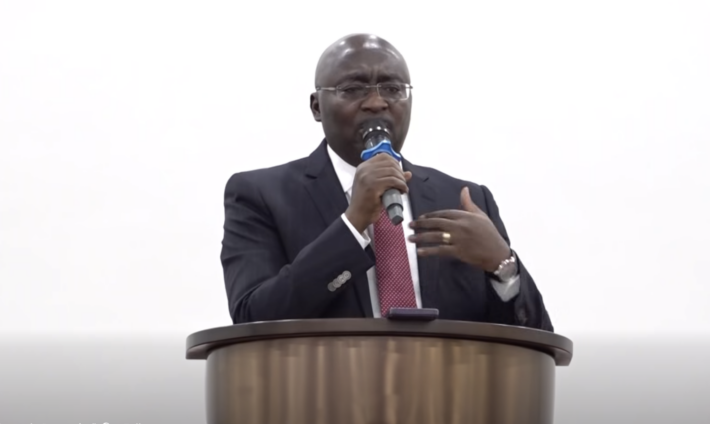
Dr. Mahamudu Bawumia, the Flagbearer of the New Patriotic Party (NPP), has unequivocally credited Ghana’s innovative Gold-for-Oil and Gold-for-Reserves programmes with significantly bolstering the nation's foreign exchange reserves and stabilizing the cedi. These initiatives, developed during a period of acute economic distress, enabled Ghana to acquire approximately $5 billion worth of gold within just two years, fundamentally transforming the country's reserve position at a critical time when access to conventional foreign exchange was severely constrained.
The genesis of these unconventional programmes can be traced back to a profound economic crisis Ghana faced following the Russia-Ukraine war. This global event disrupted international capital markets, rendering Ghana unable to raise the estimated $3 billion annually it traditionally relied upon for economic management. The ensuing balance of payments crisis led to severe foreign exchange shortages and a daily depreciation of the cedi. Dr. Bawumia recounted his grave concerns, particularly after observing the devastating economic collapse in Sri Lanka, where a lack of foreign exchange resulted in shortages of essential goods and widespread public protests. He feared Ghana could suffer a similar fate, stating, "We were really constricted in terms of availability of foreign exchange. At the same time, the cedi was depreciating almost on a daily basis. And we had to think about how to deal with this problem."
The "out-of-the-box" idea for leveraging Ghana's gold production for reserves emerged in 2021. Dr. Bawumia, then reflecting on Ghana's status as Africa's leading gold producer, expressed his disbelief that the country held only about 8.7 tonnes of gold reserves at the Bank of Ghana since independence. "I said this cannot be right," he recalled. The unique insight was that Ghana could utilize its local currency, the cedi, to purchase domestically produced gold, thereby building national reserve assets without the prior need to generate foreign exchange to acquire gold on international markets. This groundbreaking approach, which Dr. Bawumia admitted was not based on any established economic textbook model, involved the Bank of Ghana meticulously studying the proposal for nearly a year before deeming it implementable.
The success of the domestic gold purchase programme was swift and substantial. Within two years, Ghana accumulated approximately $5 billion worth of gold, significantly strengthening its foreign exchange buffers. This strategic accumulation had a pivotal consequence: the removal of a long-standing International Monetary Fund (IMF) restriction on the Bank of Ghana's foreign exchange market interventions. Previously, the central bank was limited to a maximum intervention of $80 million per month. However, by January 2025, or by the end of 2024, with the robust build-up of foreign exchange reserves, this restriction was lifted. Since then, the Bank of Ghana has demonstrated a dramatically increased capacity, now able to inject at least $1 billion into the market monthly, a monumental leap from the previous $80 million cap.
Dr. Bawumia directly linked this increased supply of foreign exchange to the subsequent appreciation of the cedi. Applying fundamental economic principles, he explained, "What does economics tell you? When you have an increase in supply, what will happen to price? It comes down. There’s no rocket science to it. It is just simple demand and supply." He further elaborated on the Gold-for-Oil programme, explaining it as a critical measure designed to exchange Ghana's gold directly for petroleum products. This mechanism not only stabilized the currency but also reduced pressure on the nation's already limited foreign exchange resources, effectively safeguarding Ghana from a more severe crisis, especially when the central bank's market intervention capabilities were constrained.
Ultimately, Dr. Bawumia framed these initiatives as a testament to the previous administration's commitment to addressing Ghana’s foreign exchange constraints and fortifying its reserve buffers through innovative and decisive economic policies. The programmes created a robust free market system that allowed for reserve accumulation and empowered the central bank to effectively support the local currency when necessary, showcasing an unconventional but ultimately successful response to an unprecedented economic challenge.