Ghana Plunged into Darkness: Blackouts Spark Fury, Govt Scrambles for Solutions
Ghana faces a critical challenge with recurring nationwide power outages, revealing significant weaknesses in its electricity transmission infrastructure. Experts and government officials, including ACEP's Benjamin Boakye and Minister Dr. John Abdulai Jinapor, underscore the urgent need for comprehensive investment, system upgrades, and strategic re-prioritization of resources to ensure a reliable power supply. The discussions emphasize that while technical solutions are known, financial constraints and investment priorities remain key obstacles.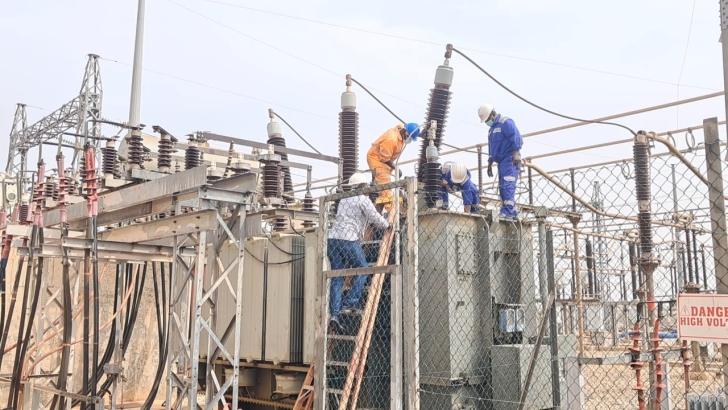
The recurring nationwide power outages in Ghana have become a significant point of national concern, prompting experts and government officials to scrutinize the country's electricity transmission infrastructure. Discussions on platforms like JoyNews' Newsfile on Saturday, August 22, highlighted the deep-seated weaknesses within the system following a recent nationwide blackout on Thursday.
Benjamin Boakye, Executive Director of the Africa Centre for Energy Policy (ACEP), expressed deep disturbance over the increasing frequency of power system trips. While acknowledging that such faults can occur in any electricity market, he emphasized that Ghana's incidents were too frequent, signaling a systemic problem rather than isolated failures. Mr. Boakye identified immediate protection challenges and longer-term infrastructure limitations, particularly around the Akosombo area, where technical teams including Ghana Grid Company Limited (GRIDCo) are working. He explained that strengthening protection systems in this region is crucial to prevent localized faults from escalating into widespread outages. Furthermore, he pointed out a structural problem within Ghana's transmission network, which combines 161-kilovolt (kV) and 330-kV lines. The differing capacities pose a challenge: if a major 330kV line trips, the lower-capacity 161kV network struggles to carry the entire electrical load, leading to a wider system collapse. Mr. Boakye called for immediate measures, such as developing mechanisms to quickly isolate selected generation plants when a 330kV line trips, to prevent overloading the remaining infrastructure. Beyond immediate fixes, he stressed the urgent need for comprehensive investigation into the causes of 330kV line trips and the expansion and upgrading of the transmission network to create additional, looped high-voltage routes for greater flexibility and resilience.
Corroborating these concerns, Benjamin Nsiah, Director for the Centre for Environmental Management and Sustainable Energy, described the situation as "worrying." He highlighted that the Volta Enclave's power infrastructure, approximately 40 years old, is no longer adequate for the increased demand. Mr. Nsiah noted that the Akosombo waterline, constructed in the 1980s, signifies infrastructure failing to meet current demand, leading to trips. He expressed doubts about Ghana's immediate financial capacity to resolve these issues, suggesting a sustainable resolution might take about a year. Mr. Nsiah also urged the Energy Ministry to improve its communication, advising transparency about temporary resolutions versus permanent fixes. He advocated for the setup of parallel or dual redundant lines to ensure continuity of supply during outages.
Energy and Green Transition Minister Dr. John Abdulai Jinapor acknowledged the significant weaknesses in Ghana's electricity transmission network, stressing the need for urgent and targeted investment. Speaking on Newsfile, Dr. Jinapor conceded that "the grid is not the strongest" and requires substantial upgrades in critical areas. He specifically mentioned the transmission lines between Kumasi and Accra as an area needing attention due to its strategic importance. The Minister attributed difficulties in financing critical energy infrastructure to restrictions imposed by Ghana's International Monetary Fund (IMF) programme, which placed state-owned enterprises like GRIDCo and Volta River Authority (VRA) under financing caps. Dr. Jinapor expressed optimism that the easing of these constraints would facilitate greater investment. He also announced that the Akosombo control station is expected to return to service soon, enabling direct power evacuation from the facility.
Lawyer and Vice President of IMANI Africa, Kofi Bentil, vehemently called for a reassessment of government's spending priorities. On Newsfile, he argued that Ghana possesses the technical expertise and resources to fix the power challenges, questioning why necessary interventions haven't been prioritized. Mr. Bentil criticized spending heavily on projects like demolishing and constructing new markets while critical infrastructure needs remain unresolved. He emphasized that the problems, solutions, required equipment, and costs are all known. Citing a recent outage near Korle Bu Teaching Hospital, he warned that power disruptions in critical health facilities could jeopardize lives. Mr. Bentil asserted that Ghanaian engineers are capable of resolving these issues if leadership provides the necessary support and resources, stressing that reliable electricity is fundamental for protecting lives, supporting businesses, and achieving economic ambitions, including the promotion of a 24-hour economy.
Amidst these discussions, GRIDCo announced planned power interruptions in parts of the Greater Accra Region on Sunday, August 23, to facilitate emergency repairs on a damaged transmission tower at Ashaiman. This tower, on the 161kV Tema–Achimota transmission line, was damaged by a nearby tanker explosion. These emergency works underscore the vulnerability of the existing infrastructure to both internal and external factors.
The consensus among experts and government statements points to a critical juncture for Ghana's energy sector. Addressing the immediate technical faults, such as those around Akosombo and Ashaiman, is crucial. However, the long-term strategy must involve significant, targeted investment in upgrading and expanding the transmission network, developing redundant lines, and implementing robust protection and isolation mechanisms. This multi-faceted approach, coupled with transparent communication and a clear re-prioritization of national expenditures, is essential to ensure a reliable, resilient, and sustainable electricity supply for Ghana.