Germany's Rail System Paralyzed: Thousands Stranded by Technical Failure
Germany's railway network faced a nationwide shutdown late Tuesday due to a critical communications system failure, stranding passengers across the country. Deutsche Bahn reported the problem with its internal GSM-R system resolved within hours, with services gradually resuming. This incident underscores ongoing challenges in German rail, prompting apologies and assistance for affected travellers.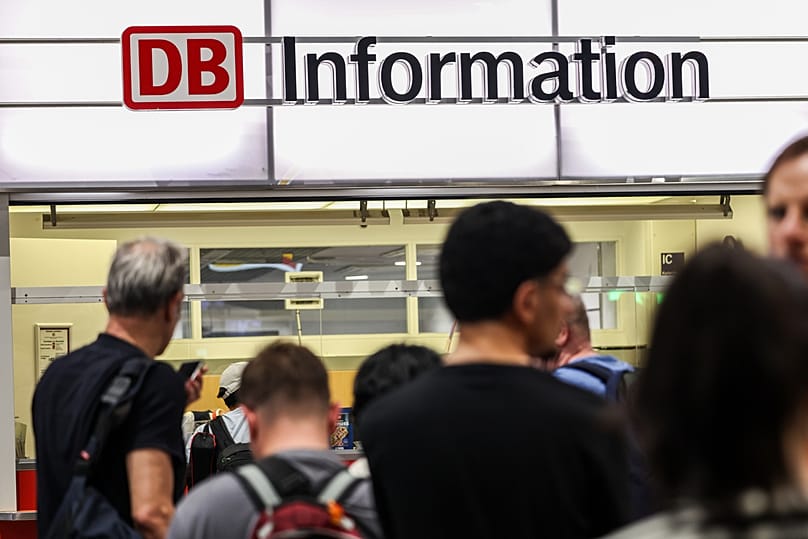
Germany’s railway network experienced a nationwide halt late on Tuesday, leaving countless passengers stranded across the country due to a critical problem with its communications system. Trains were held at stations, and frustrated travellers formed long queues at information desks in an attempt to find alternative routes to their destinations. The national railway operator, Deutsche Bahn, announced shortly before 1 am local time – approximately two-and-a-half hours after the initial report of the outage – that the issue had been resolved and services were gradually resuming.
The core of the problem lay with the GSM-R digital communication system, which is vital for internal communication within the railway network. While Deutsche Bahn later confirmed that the cause had been identified, specific details were not disclosed. German media outlet Bild quoted Deutsche Bahn CEO Evelyn Palla stating that they "were able to stabilise the situation with an emergency system.” GSM-R, an acronym for Global System for Mobile Communications–Railway, provides essential voice and data services necessary for railway operations, including critical communication between train drivers and control centres. It has been adopted across Europe as a common standard for railway operations since 2000.
The disruption caused significant distress for passengers, many of whom had to quickly formulate emergency travel plans or seek contingencies. International travellers reported widespread "unhappy faces" upon arrival at major hubs like Berlin's central station. Reyna Ghoshal, a traveller from Atlanta, Georgia, recounted the uncertainty: “The train conductor was very nice, but he was just like, ‘we don’t know,’” adding, “we booked a bus for 8 a.m. just in case, but generally we don’t know what’s going on." This incident comes amidst an increasing frequency of complaints regarding train delays and disruptions in Germany in recent years.
During the outage, Deutsche Bahn provided assistance to affected passengers by offering taxi and hotel vouchers. Where feasible, trains were kept available at stations, allowing travellers to sit inside, and the company extended its apologies for the difficult situation.
This incident also highlights broader issues within Germany’s railway infrastructure. Government-owned Deutsche Bahn has initiated thorough but often disruptive overhauls of major routes, aiming to improve performance after years of significant underinvestment. Historically, nationwide halts of the German railway system have been rare, typically occurring due to severe weather conditions like storms, rather than technical failures of this magnitude.