From Maasai to Biafra: How Colonial Maps Redefined African Lives
The borders of modern Africa weren’t drawn by Africans—but by European powers chasing profit. This article unpacks how colonial lines divided ethnic groups, fueled civil wars, and left a legacy of fractured identities and political instability that still lingers today.
If you travel to East Africa and meet the Maasai people, you will notice something strange. One part of this tribe lives in Kenya, the other in Tanzania.
They speak the same language, wear the same traditional attire, and uphold the same customs, yet, on paper, they are citizens of two different countries, divided by an invisible line they never agreed to.
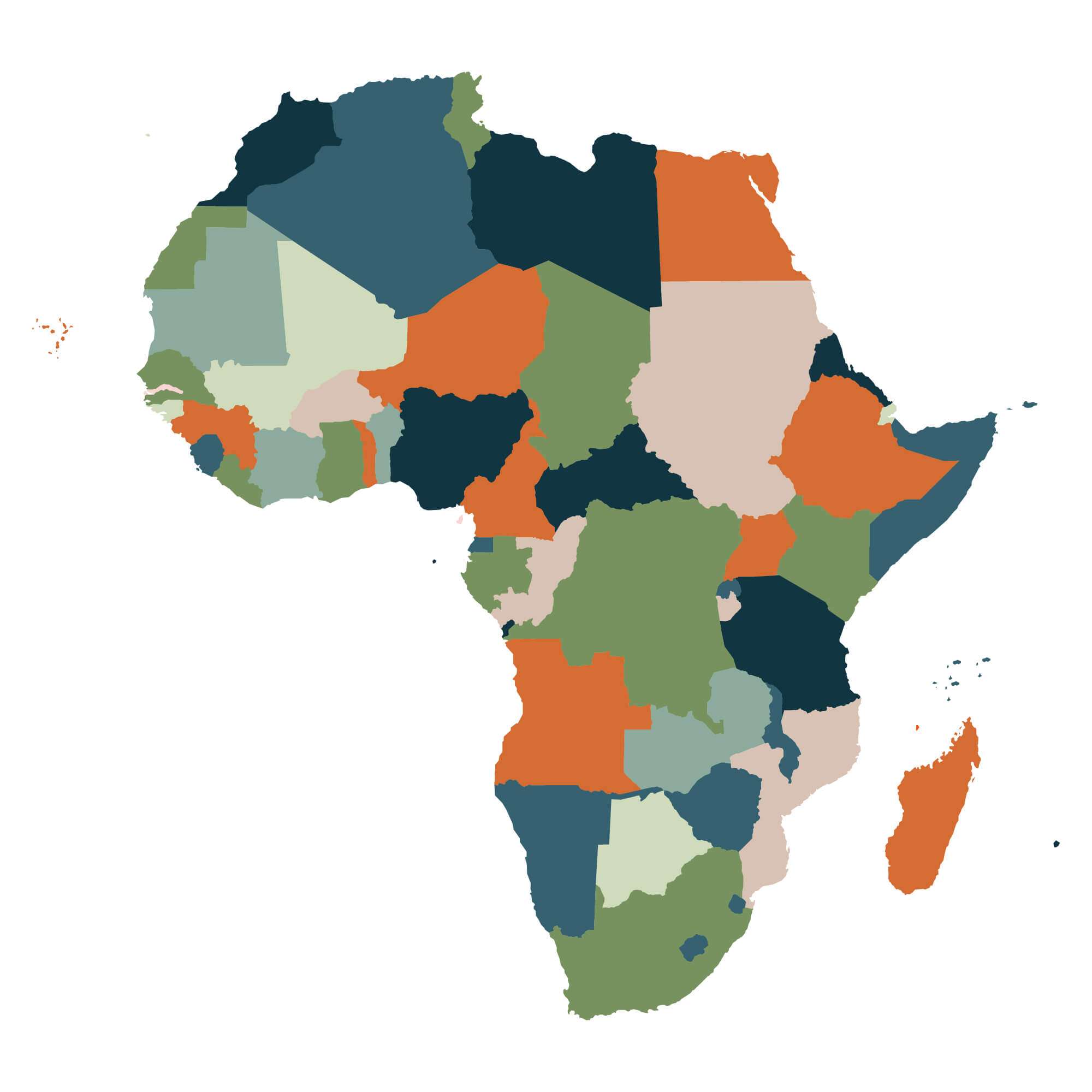
That invisible line has a name. It is called the colonial borders. And that story is not just the Maasai’s. It is the story of countless ethnic groups and precolonial kingdoms that were carved apart, lumped together, or erased completely when Europe sat around a table in 1884 and began to divide the African continent like their father's inheritance.
The result is a continent filled with countries whose borders were never drawn for Africans, and whose people are still living with the consequences of the merger politically, culturally, and psychologically.
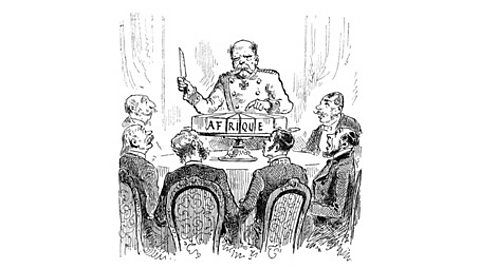
Photo Credit: BBC
The Berlin Conference
Between November 1884 and February 1885, European powers convened at the Berlin Conference, hosted by German Chancellor Otto von Bismarck. The goal was never peace, justice, or development; it was profit.
Africa’s vast resources had become too tempting, and instead of fighting over territory, European nations decided to negotiate who got what, without a single African voice in the room.
In drawing these new lines, they ignored tribal boundaries, established trade routes, religious regions, and linguistic similarities. They grouped enemies together, split allies apart, and imposed governments where none had existed before.
To them, it was an order. To Africans, it was chaos disguised as modernity.
Kingdoms Torn Apart
1. The Somali People
Today, ethnic Somalis are spread across Somalia, Ethiopia, Djibouti, and Kenya, but they were never meant to be citizens of four countries. They are one people, divided by selfish colonial interest.
The British and Italians each took a share of Somali territory, while the French held Djibouti. When borders were formalised, the Somali people became fragmented minorities, often treated as second-class citizens in their new host nations.
History
Rewind the Stories that Made Africa, Africa
A Journey Through Time, Narrated with Insight.
This laid the groundwork for conflict, from Ethiopia’s Ogaden War to Kenya’s Shifta insurgency, where Somalis demanded reunification with Somalia.
2. The Maasai Nation
The Maasai were once a powerful group occupying large areas of East Africa, but they were divided between British East Africa (Kenya) and German East Africa (Tanzania).
Today, a Maasai man might need a passport to visit his cousin across the "border." This concept never existed in his ancestors’ time.
Meanwhile, policies on land ownership, education, and traditional grazing rights vary from country to country, meaning the same culture faces different rules depending on which side of the artificial line they live.

3. The Ewe People
The Ewe ethnic group resides in Ghana, Togo, and Benin. They are victims of France and Britain’s territorial game.
In some regions, they are politically dominant and in others, marginalised. Their language and customs are consistent, but their access to resources, representation, and cultural freedom varies wildly depending on colonial legacy.
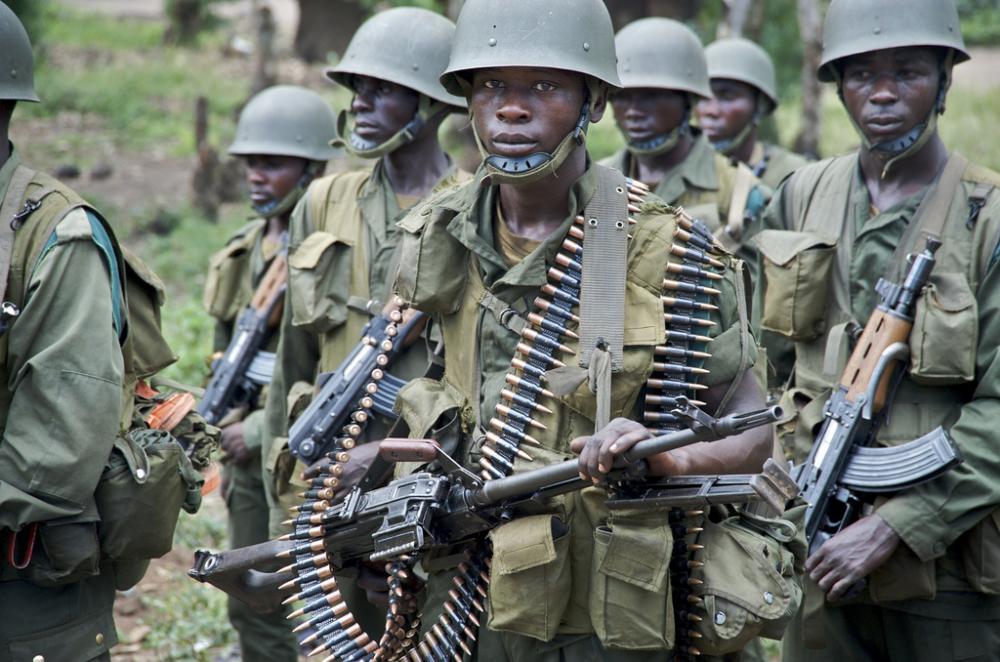
Photo Credit: Vocal Africa
Civil Wars and Ethnic Tensions: The Fallout
Colonial borders were not just inconvenient; they were deadly.
The Rwandan Genocide is a horrific example of what happens when colonial powers manipulate ethnic classifications. The Belgians, who ruled Rwanda, elevated the Tutsi minority to power and oppressed the Hutu majority, creating resentment that exploded in 1994 when over 800,000 people were killed in just 100 days.
In Nigeria, the British lumped over 250 ethnic groups, which included the Hausa-Fulani, Yoruba, Igbo, Bini, Itsekiri, and so on, into one country.
These groups had different political systems, languages, and religions. Unsurprisingly, after independence, the union became tense.
History
Rewind the Stories that Made Africa, Africa
A Journey Through Time, Narrated with Insight.
By 1967, Nigeria sank into a civil waras the Igbo people attempted to form their own country, Biafra, leading to massive loss of life.
The story repeats in Sudan and South Sudan, where the British drew a border that trapped Arab-Muslim communities in the north with Black African Christian communities in the south. This led to decades of civil war, eventually resulting in the secession of South Sudan in 2011, but definitely not peace.
National Identity vs Cultural Identity
In the aftermath of colonisation, Africans were left to make sense of national identities they didn’t choose. Being “Congolese,” or “Zimbabwean,” or “Cameroonian” meant aligning with political borders that often clashed with ethnic and traditional identities.
What does it mean to be Tanzanian when your family is Maasai first? What does it mean to be Nigerian if you speak Igbo at home and are discriminated against outside it?
In many African nations, citizenship is fragile, especially where minority ethnic groups are sidelined from power. The result is a mix of tribal loyalty, national obligation, and quiet resentment.

Photo Credit: Dilemmas of Humanity
Pan-Africanism and the Struggle for Unity
Post-independence leaders like Kwame Nkrumah of Ghana dreamed of undoing the harm. Nkrumah envisioned a United States of Africa. A continent that operates with one currency, one passport, one government. Sadly, it never materialised.
And this leaves you wondering why. Maybe because the same borders that once divided kingdoms now protect political elites. No leader wants to dissolve the very nation that gives them power, even if it was built on toxic colonial foundations.
Regional blocs like ECOWAS (West Africa), SADC (Southern Africa), and the East African Community are modest attempts at reconnection — a reconnection almost impossible. Joint examination bodies like the West African Examination Council (WAEC) in the Anglophone countries in Western Africa are not unseating the distrust that is seated amongst us. Let's not forget economic rivalry and language barriers.
Should We Change the Borders?
Some argue that Africa should redraw its borders to reflect ethnic and cultural realities. Others say that would cause even more conflict. How do you fairly untangle over a century of political entrenchment?
Instead, a more practical solution is to decentralise power, respect cultural autonomy, promote local languages, and make national identities more inclusive.
Dual citizenship, cross-border trade policies, and recognition of indigenous governance systems may not erase the lines on the map, but they can dull their sharpest edges.
History
Rewind the Stories that Made Africa, Africa
A Journey Through Time, Narrated with Insight.
Living with the Lines
The borders of Africa were not drawn with just ink; they were drawn with ignorance, arrogance, and greed. They were never designed to serve the people; they were designed to build money-making empires.
And yet, generations later, those lines still shape how Africans move, vote, fight, and live.
Understanding this history is not just a classroom exercise; it is a mirror held up to today’s Africa. One that forces us to ask questions.
Because until we confront how we were divided, we may never truly find a way to come together.