French Far-Right Activist Murder With Four Individual Arrested Amidst Misinformation Chaos
The fatal beating of French far-right activist Quentin Deranque in Lyon has escalated political tensions between the far-right and hard-left. As investigations continue and four suspects are arrested, the incident is further complicated by widespread misinformation and a political blame game.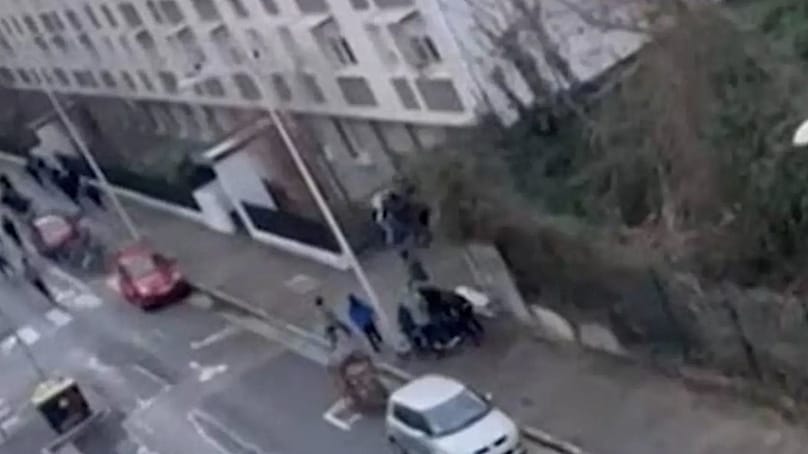
The death of 23-year-old French far-right activist Quentin Deranque in Lyon has sparked a major political crisis, heightening tensions between far-right and hard-left factions ahead of upcoming municipal elections.
Deranque died from a severe brain injury two days after being attacked by at least six individuals on February 12, near a far-right protest opposing MEP Rima Hassan at Sciences Po Lyon.
Investigations have led to the arrest of four suspects, including an assistant to Raphaël Arnault, a member of parliament from the hard-left France Unbowed (LFI) party and co-founder of the now-dissolved anti-fascist youth group La Jeune Garde.
Government officials, including Justice Minister Gérald Darmanin, have blamed the “ultra-left” for fueling the violence, while conflicting accounts have emerged regarding Deranque’s role at the protest.
His family’s lawyer stated he was “neither a security guard nor a member of any stewarding or security service” and had no criminal record.
The incident has prompted immediate political fallout.
The French National Assembly observed a minute of silence, and a commemorative march was planned in Lyon.
Far-right leaders, including Marine Le Pen, condemned the attack, calling the perpetrators “barbarians,” while LFI figures, including Jean-Luc Mélenchon and Arnault, denied any culpability. La Jeune Garde, despite its dissolution in June 2025, also distanced itself, asserting it had “suspended all its activities” and expressed horror at the killing.
The case is being investigated as voluntary homicide and aggravated assault, highlighting both the severity of the attack and the charged political climate surrounding it.
Misinformation and Online Harassment
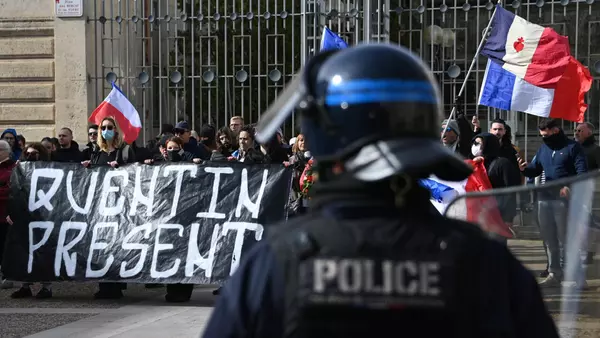
Amid the investigation, a wave of misinformation and online harassment has intensified.
Far-right activists and politicians circulated alleged names, addresses, and photographs of supposed suspects before official arrests.
Blandine Bardinet, linked to La Jeune Garde, was falsely accused of involvement, despite being abroad at the time, prompting her lawyer to announce legal action against the false claims.
Additionally, multiple fake images purportedly of Deranque circulated widely, including photos of unrelated individuals and AI-generated images, often accompanied by inflammatory captions.
Fact-checkers from Euronews identified at least six false images, illustrating how misinformation has amplified tensions and endangered reputations.
Authorities have urged caution while the investigation continues. The Lyon prosecutor has refrained from addressing political claims directly, focusing on the voluntary homicide and aggravated assault case.
France’s Interior Minister, Laurent Nuñez, suggested that evidence may implicate the Jeune Garde, though no conclusions have been confirmed.
As the country approaches the 2027 presidential election, where the far-right National Rally currently leads, Deranque’s death shows the deep polarization within French politics, highlighting the challenges of navigating justice, truth, and public perception amid an increasingly volatile and politicized environment.