Folk Rock Icon Country Joe McDonald Dies at 84
Country Joe McDonald, the counterculture musician best known for his Vietnam War protest anthem “I-Feel-Like-I’m-Fixin’-to-Die Rag,” has passed away at 84. As frontman of Country Joe and the Fish, his politically charged psychedelic rock defined the anti-war movement, and he notably led the "Fish Cheer" at Woodstock. His legacy as a voice of dissent profoundly shaped the protest-song tradition of the 1960s.
Country” Joe McDonald, a hippie rock star of the 1960s whose“I-Feel-Like-I’m-Fixin’-To-Die Rag” was a four-lettered rebuke to the Vietnam War that became an anthem for protesters and a highlight of the Woodstock music festival, died Sunday. He was 84.
McDonald, who performed with his band, Country Joe and the Fish, died in Berkeley, California.
His death from complications of Parkinson’s disease was reported by Kathy McDonald, his wife of 43 years, in a statement issued by his publicist.
News of his passing first came out on Monday, March 9.
He made a lasting mark on music and activism, especially with his iconic protest song that became an anthem for the 1960s anti-war movement.
His voice helped define a generation pushing for peace.
Joseph Allen McDonald born on January 1, 1942, in Washington, D.C., he served in the U.S. Navy from 1959 to 1962 before chasing his musical dreams.
In 1965, he moved to the San Francisco Bay Area, and in Berkeley, he co-founded the groundbreaking psychedelic rock band Country Joe and the Fish with guitarist Barry “The Fish” Melton.
The band quickly rose from the counterculture scene, mixing sharp political messages with a trippy, unforgettable sound, and became one of the era’s most powerful voices against war.
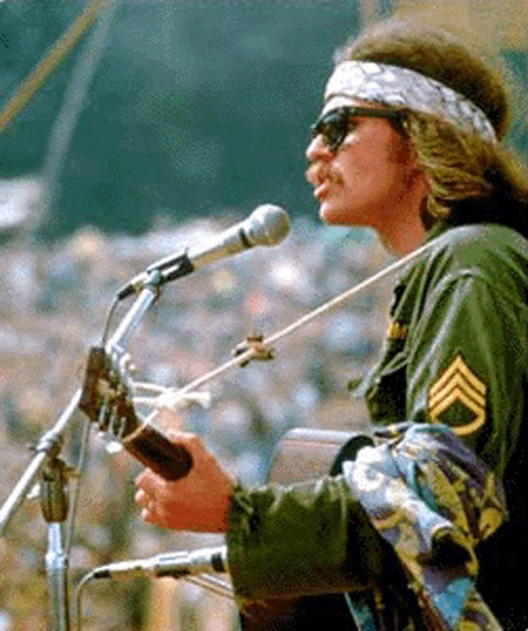
His most famous song,“I-Feel-Like-I’m-Fixin’-to-Die Rag,” quickly became an anthem for Vietnam War protesters.
Its fame soared after his solo performance at the iconic 1969 Woodstock festival, where he got the massive crowd chanting the cheeky “Fish Cheer” before launching into his biting anti-war tune.
Years later, in 2016, McDonald told Street Spirit that the song wasn’t about blaming soldiers, it targeted politicians and weapons makers.
This made it stand out from many peace songs of the time, letting even those in uniform connect with its darkly humorous “Whoopee, we’re all going to die” message.
Country Joe and the Fish made a splash in the San Francisco psychedelic rock scene with their 1967 debut, Electric Music for the Mind and Body.
They carved out their place alongside legends like Jefferson Airplane and the Grateful Dead.
While those peers may have had bigger commercial hits, Country Joe and the Fish still scored two albums in the Billboard 200 top 40, proving they were an essential part of the vibrant ’60s rock movement.
After Country Joe and the Fish broke up in the 1970s, Joe McDonald kept the music flowing as a solo artist.
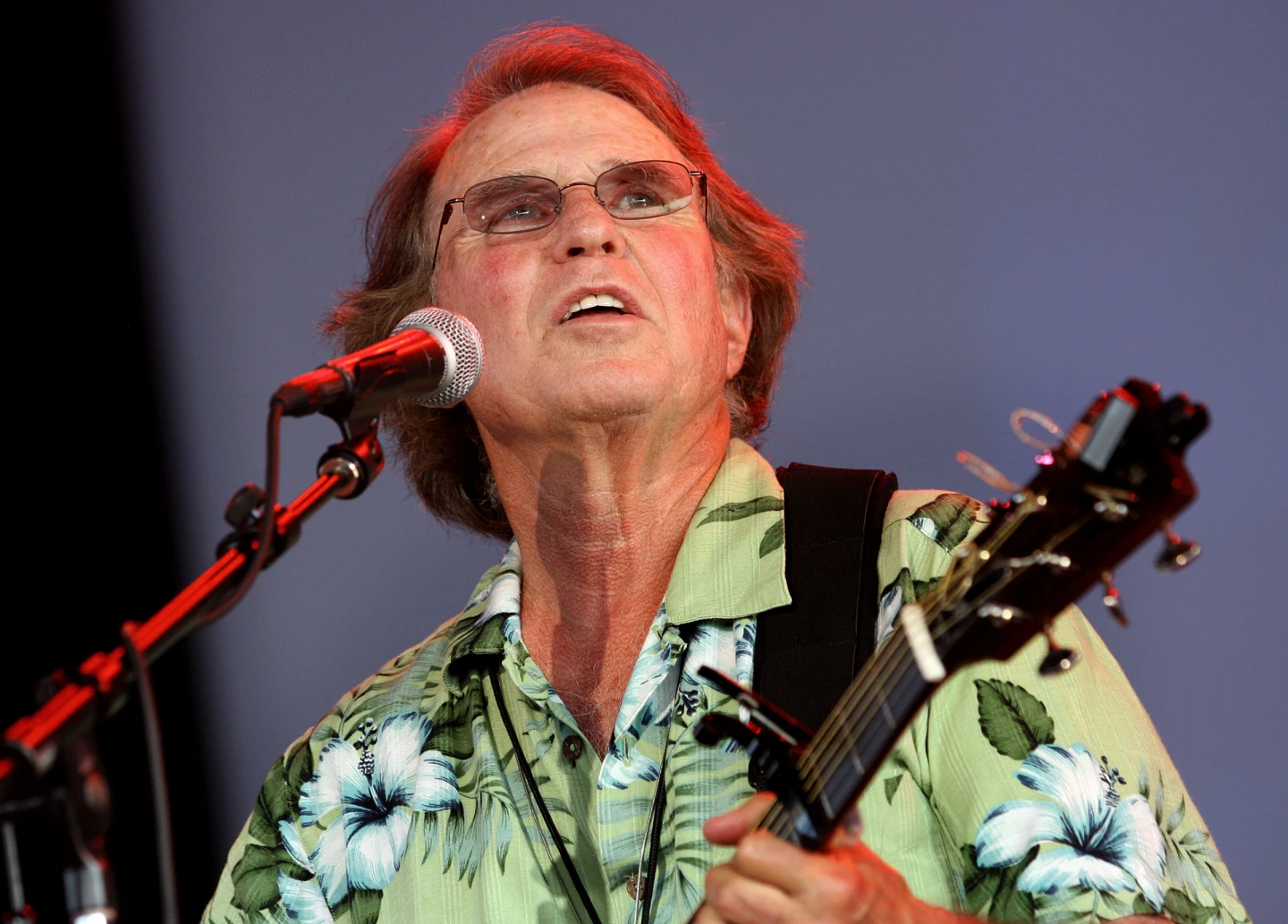
He released dozens of albums blending folk, rock, and politically charged songs, often tackling war, politics, and social change.
His 1986 album Vietnam Experience looked back at the war that shaped much of his early career.

Even though his biggest fame came during the late ’60s counterculture, he stayed active for decades, performing at festivals and writing songs that carried his sharp, socially conscious voice.
Country Joe McDonald’s music became closely intertwined with the protest-song tradition of the late 1960s, a period when artists increasingly used popular music as a platform for political expression.
Alongside figures such as Joan Baez and Bob Dylan, helped shape the soundtrack of the anti-war movement, using satire and sharp political commentary to capture the frustrations of a generation confronting the Vietnam War.