Explosive GoldBod Scandal: Ghana Lawmakers Uncover GH¢22BN Loss, Threaten Bail Conditions
A fierce debate surrounds the Ghana Gold Board (GoldBod) as Minority Leader Alexander Afenyo-Markin alleges GH¢22 billion losses and warns of future accountability, while GoldBod CEO Sammy Gyamfi vehemently refutes these claims, citing audited surpluses. Economist Prof. Godfred Bokpin meanwhile highlights the program's significant financial costs and its impact on the Bank of Ghana's balance sheet, stressing the need for better planning and transparency.
The Ghana Gold Board (GoldBod) is currently at the center of a heated political and economic debate, following stern warnings from the Minority Leader in Parliament, Alexander Afenyo-Markin, and critical assessments from economist Prof. Godfred Bokpin.
Mr. Afenyo-Markin has cautioned that bail conditions for current GoldBod leadership could become 'scary' in the future, paralleling the stringent measures applied to former government officials currently under investigation.
Speaking at a press conference on August 18, he highlighted a claimed GH¢22 billion loss involving GoldBod, suggesting that the precedent set by the current administration could have severe consequences for its own officials once political power shifts.
Mr. Afenyo-Markin has relentlessly criticized GoldBod's management, accusing them of incompetence and 'misaligned policies' leading to significant financial losses that he argues cannot be dismissed as mere market conditions or 'bad luck'.
He insists that the alleged GH¢22 billion loss amounts to 'causing financial loss to the state' and demands full accountability, rejecting any suggestions that the Minority lacks the capacity to scrutinize GoldBod's operations.
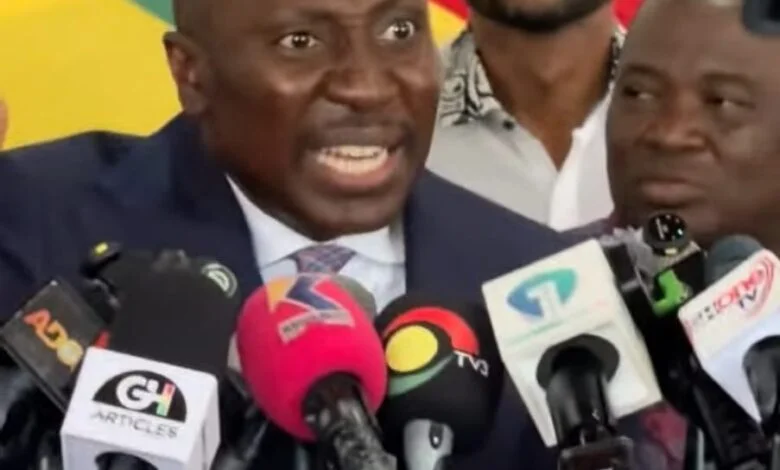
He has vowed that the Minority will continue to raise these issues firmly and without fear of personal attacks, emphasizing their responsibility to ensure public institutions are accountable to Ghanaians.
In stark contrast, GoldBod CEO Sammy Gyamfi has vehemently rejected all claims of financial losses, labeling them as 'blatant lies' and attributing them to Mr. Afenyo-Markin’s 'hallucinatory imagination'.
Mr. Gyamfi has cited GoldBod’s audited 2025 financial statements, which he says show an operational surplus of GH¢907 million and an impressive overall surplus of GH¢5.4 billion for the fiscal year.
Economist and Professor of Finance at the University of Ghana, Prof. Godfred Bokpin, has provided an independent perspective, introducing a nuanced distinction between the intervention's broader benefits and its design efficiency.
While acknowledging that GoldBod has positively impacted the economy by bringing more foreign exchange into the formal system and helping to narrow the gap between Ghana's reported gold exports and destination country imports, he questions whether these benefits justify the 'higher cost'.
Prof. Bokpin argues that the significant financial costs associated with GoldBod could have been substantially minimized through more comprehensive planning, greater transparency, and openness to expert suggestions before aggressively scaling up its operations.
He points out that the programme was expanded without policymakers fully anticipating the total costs across the value chain.
He also raised concerns that the losses are accumulating on the Bank of Ghana’s balance sheet, creating liabilities that could eventually necessitate government recapitalization.

These losses, he explained, do not immediately appear in Ghana’s public debt figures because the country does not adopt a general government approach to accounting for its debt stock.
The economist highlights that the Bank of Ghana has effectively become the 'residual risk claimant' in the domestic gold purchasing arrangement, providing financing and exposing its balance sheet to technical, economic, and valuation losses.
He recalled that earlier International Monetary Fund (IMF) estimates of approximately US$214 million in losses associated with GoldBod’s domestic gold purchasing operations were initially disputed by both GoldBod and the Bank of Ghana.
For Prof. Bokpin, this sequence suggested that the full cost implications of the intervention had not been adequately anticipated before its implementation.
He criticized what he described as a 'lack of humility' in policymaking, where governments may become overly focused on defending a policy once its costs begin to emerge.
Prof. Bokpin also noted that the IMF has consistently recommended shielding the Bank of Ghana from direct financial exposure to GoldBod.

The conflicting assessments from the Minority, GoldBod management, and economic experts have intensified scrutiny of GoldBod's financial performance and its broader implications for the Bank of Ghana and the state's fiscal health, underscoring an ongoing battle over accountability in public resource management.