EU Chief's Bold Move: €200M Greenland Investment Challenges Trump Influence
The European Union is investing an additional €200 million in Greenland to deepen economic ties and secure critical raw materials. This move comes amid geopolitical tensions in the Arctic, particularly in response to former US President Donald Trump's past attempts to acquire the territory. The investment focuses on digital connectivity, clean energy, and sustainable mining, underscoring the EU's commitment to Greenland's future and international law.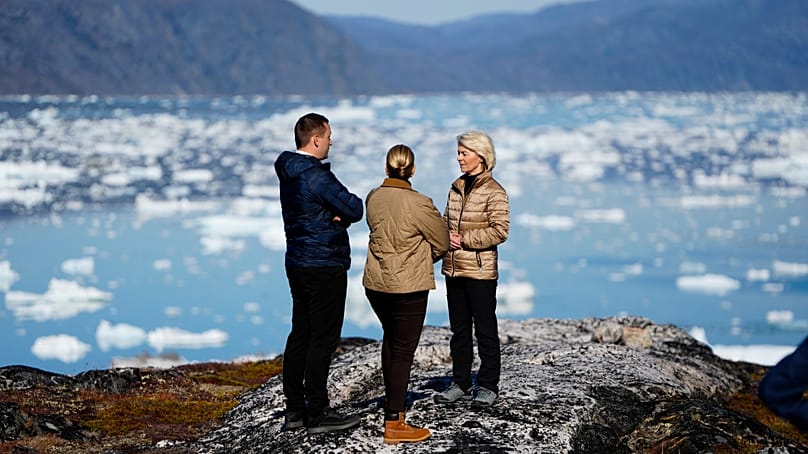
The European Union has committed an additional€200 million in investments for Greenland over the next two years, aiming to strengthen economic ties and facilitate the extraction of crucial raw materials.
This announcement was made by European Commission President Ursula von der Leyen during an official visit to Nuuk, Greenland, on Monday.
Von der Leyen underscored the Arctic's escalating geopolitical significance, stating that it has become a region where "the tectonic plates of geopolitics collide," thus giving the EU a direct stake in its developments.
The substantial financial package is designed to bolster the bloc's presence within the semi-autonomous territory.
This increased engagement by the EU comes amidst persistent efforts by former US President Donald Trump to acquire Greenland from the Kingdom of Denmark.
Trump had previously rattled transatlantic relations with his proposals to seize the island, at one point threatening steep tariffs to pressure Denmark into relinquishing the territory.
Although he initially backed down, Trump later revived his ambition, even posting a world map depicting Greenland under American control, signaling the subject remained a priority for him.
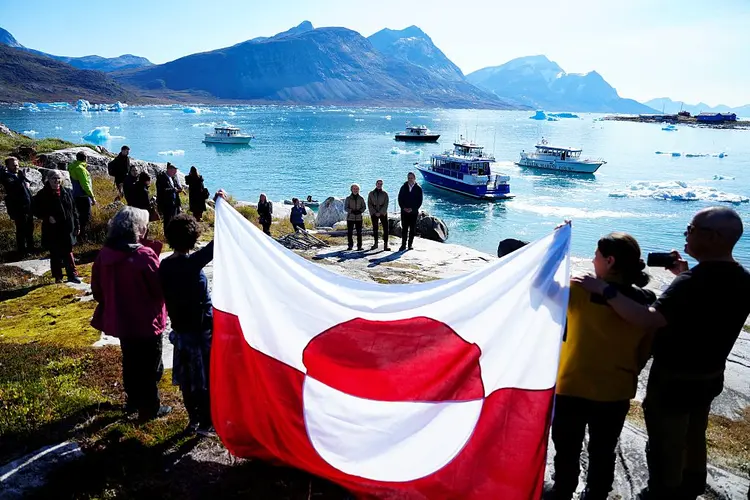
During her trip to Nuuk, von der Leyen seized the opportunity to affirm staunch European support for Denmark and Greenland, addressing what she termed "enormous pressure" without directly naming Trump.
She declared, "The European Union stands in full solidarity with the Kingdom of Denmark and the people of Greenland. We will continue to do so.
And we want to be very clear and repeat again here that Greenland's future is for the people of Greenland and Denmark to decide. No one else."
She further emphasized the fundamental principles of international law, including territorial integrity, sovereignty, and the inviolability of borders.
Standing alongside von der Leyen, Greenland's Prime Minister Jens-Frederik Nielsen and Denmark's Prime Minister Mette Frederiksen both expressed their gratitude for the EU's unwavering support.
Nielsen articulated a mutual dependency, stating, "Greenland needs the European Union, and the European Union needs Greenland. I firmly believe this to be true. We need each other."
Frederiksen acknowledged the clarity of the EU's voice over the past years, confirming its continued importance.
She also indicated Denmark's readiness for closer collaboration with both the US and Europe on security and defense matters within the Arctic, a region increasingly attractive to global powers due to climate change.

The €200 million investment package will be distributed across three strategic sectors. These include enhancing digital connectivity through initiatives like subsea cables and satellite infrastructure, advancing clean energy, with a particular emphasis onhydropower, and promoting the sustainable mining of critical raw materials.
Greenland is rich in natural resources, holding 25 of the 34 minerals deemed essential by Brussels for the domestic development of renewable energy systems and cutting-edge technology.
Currently, this sector is largely monopolized by China, leaving the EU vulnerable to Beijing's export controls.
Despite its vast mineral potential, mining activities on the island remain significantly underdeveloped. Harsh glacial conditions present formidable challenges that often deter investors from undertaking expensive projects.

These minerals were among the justifications cited by Trump for his ambition to take over Greenland, alongside his complaints that allies had not invested sufficiently in the region.
In response, European nations have intensified their commitments to Greenland.
Upcoming initiatives include NATO's Arctic Shield exercise, which will involve soldiers from 10 countries over the next two weeks.
Furthermore, the European Commission is actively updating its Arctic strategy and has allocated €530 million specifically for Greenland in its proposed next EU budget, reinforcing a long-term commitment to the region.