EKO 2026 Gears Up! Nigeria's Sporting Future Takes Shape with New Framework
The inaugural National Intermediate Games, EKO 2026, in Lagos has received its final technical framework approval from the National Sports Commission. Scheduled for October 1-15, the Games aim to identify and develop young Nigerian sporting talent, with comprehensive plans for athlete eligibility, logistics, medical services, and digital integration. Lagos State, under Governor Sanwo-Olu's leadership, is lauded for its readiness to host over 14,000 athletes.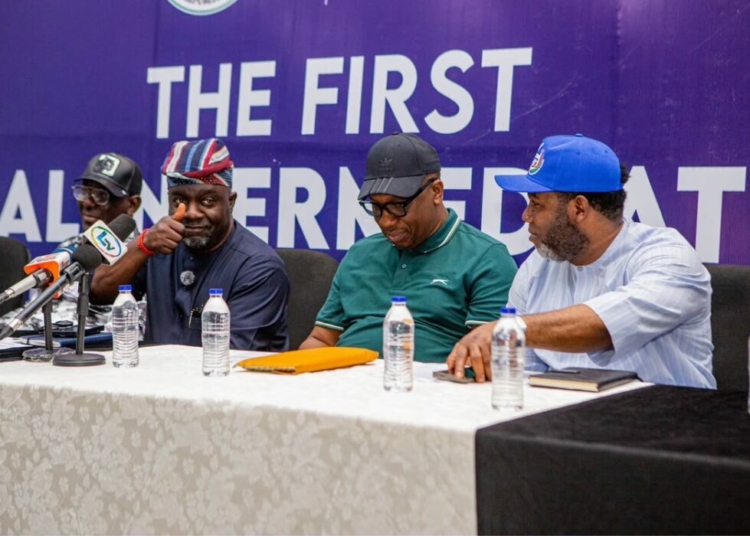
The National Sports Commission (NSC) has officially approved the final technical framework for the highly anticipated maiden National Intermediate Games, EKO 2026, as preparations in Lagos enter their critical final phase. This significant milestone was achieved during a Joint Technical Committee meeting, held at the Sam Shonibare Community Development Centre in Surulere, Lagos, and chaired by Bukola Olopade, the NSC Director-General and Main Organising Committee Chairman. The meeting convened a wide array of stakeholders, including representatives from the Main Organising Committee, National Sports Federations, participating states, the Federal Capital Territory, zonal coordinators, technical sub-committees, and the Lagos State Local Organising Committee, all dedicated to ensuring the Games' success.
A pivotal resolution from the committee meeting was the definitive approval of the age bracket for EKO 2026. Only athletes born between January 1, 2008, and September 30, 2011, will be deemed eligible to compete, a provision the MOC Secretariat was directed to consistently reflect across the Technical Manual and all other official Games documents. To safeguard the integrity of the competition, comprehensive age and identity verification measures were also approved. These stringent protocols will include NIMC checks, specific approved documentary requirements, and mandatory physical screening for all participants.
Bukola Olopade underscored the profound importance of the Intermediate Games as a vital link connecting grassroots sports with elite-level competition, placing talent identification at the core of this ambitious initiative. He articulated the aspiration that EKO 2026 would serve as a critical platform for identifying potential, fostering athlete progression, and ensuring that promising young athletes are discovered early and afforded opportunities to evolve into future national team athletes. Those identified during EKO 2026 are slated to enter a structured national development pathway. Furthermore, the committee resolved that these newly discovered athletes, alongside identified Nigerian talents in the diaspora, will form the foundation of Nigeria’s invited junior athletes team for the 2026 National Sports Festival in Enugu. Identified athletes were declared national assets, with participating states urged to collaborate with the NSC and National Sports Federations in making them available for approved national assignments and development programmes.
Several strategic adjustments were made to the sporting programme to optimize the competition. The 5,000 metres race received approval as an official athletics medal event. In weightlifting, medals will be awarded based on athletes’ overall performances within their approved weight categories, moving away from separate medals for the Snatch and Clean & Jerk components. The Mixed Team event in Taekwondo was removed from the official programme, while Netball and Teqball will be featured as demonstration sports, meaning they will not carry medal status.
Detailed plans for accommodation, catering, and transportation were also finalized. The committee reported that 16 hostels, comprising 38 buildings and offering approximately 12,800 beds, have been identified to house participating contingents. The Lagos State LOC received a directive to guarantee that these facilities are equipped with adequate security, reliable water supply, consistent electricity, standby power, cleaning services, maintenance, and fumigation prior to the arrival of athletes and officials. A decentralized catering arrangement was approved, stipulating that breakfast and dinner will be served at designated accommodation centers, while lunch will be provided at the respective competition venues. All caterers are required to strictly adhere to food safety, hygiene, and health certification requirements. Transportation arrangements are designed to operate through a tri-modal system, integrating road, rail, and water transport where appropriate, with the primary goal of efficiently moving athletes, officials, technical personnel, and equipment across Lagos.
The medical and public health framework for the Games was significantly strengthened. Qualified medical personnel will be strategically deployed at all competition venues and designated accommodation facilities, complemented by readily available ambulance services at venues. The UNILAG Medical Centre will function as the primary referral facility, with provisions for specialized referrals as necessary. Participating states and the FCT are mandated to nominate Chief Medical Officers and complete all requisite medical assessments and health screenings. The Games Medical and Public Health teams will collaborate closely with Lagos State authorities on crucial aspects such as food safety, water and sanitation, waste management, disease prevention, and emergency response. Concurrently, the official EKO 2026 website, a dedicated mobile application, and QR code-enabled systems are scheduled for deployment before the Games commence, providing essential support for accreditation, results management, data administration, and communication with athletes, officials, stakeholders, and the media.
Following thorough inspections of both competition and non-competition facilities, the LOC was instructed to complete all outstanding remedial works and venue requirements. National Sports Federations and technical committees were similarly tasked with finalizing sport-specific schedules, equipment requirements, and other operational arrangements. The Joint Technical Committee extended a call to action to all participating states, the FCT, federations, and other stakeholders, urging collective cooperation to ensure the successful staging of these inaugural Games. The Director-General of the National Sports Commission, Bukola Olopade, expressed profound confidence in Lagos State’s comprehensive readiness to host EKO 2026, scheduled to take place from October 1 to 15, and is expected to attract more than 14,000 young athletes from across the country.
Olopade particularly commended Lagos State Governor, Babajide Sanwo-Olu, and his administration for their unwavering commitment to sports development and youth empowerment, recognizing his leadership as instrumental in the successful preparations. He cited the retention and upgrade of the Access Bank Lagos City Marathon under Governor Sanwo-Olu's administration as a testament to his support for major sporting events. Emphasizing the critical importance of early talent identification, especially through competitions involving secondary school athletes, Olopade insisted that initiatives like the Intermediate Games offer a structured pathway for their holistic development. He affirmed that Lagos has demonstrably put in place the necessary facilities, systems, and organizational capacity to host a successful national sporting event. Olopade further urged the technical committee and all stakeholders to accord the Games the attention they merit, aiming to firmly establish EKO 2026 as a premier fixture on Nigeria’s sporting calendar well beyond its inaugural edition. The long-term objective is to significantly strengthen Nigeria’s sporting pipeline, providing a structured platform for identifying, developing, and exposing young sporting talent.