Ebola Alarm in East Africa: Kenya Grapples with Health Threat & Travel Fears
Kenya has confirmed its first imported Ebola case, prompting calls for enhanced preparedness and healthcare worker protection. The government assures the public of robust containment measures while maintaining that Kenya remains safe for travel and trade. Strict precautions are in place for travelers and airlines, emphasizing early detection and public awareness.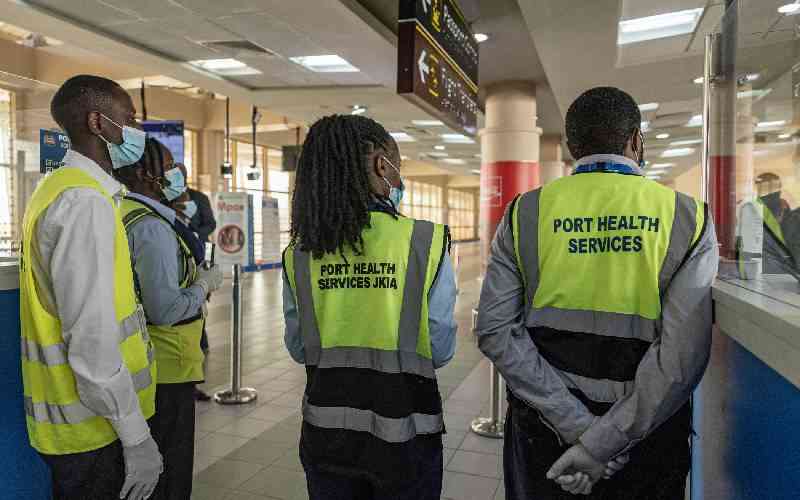
Kenya has confirmed its first imported case of Ebola Virus Disease (EBVD), linked to the Bundibugyo strain, after a patient arrived in Nairobi from the Democratic Republic of Congo (DRC) via Uganda. The Kenyan patient, who had resided in the DRC for seven years, traveled by road to Kampala before flying into Nairobi on October 3. After presenting with symptoms including fever, chills, fatigue, muscle pain, painful swallowing, and bleeding under the skin, the patient was isolated at a hospital, tested positive for Ebola at both the National Virology Reference Laboratory and KEMRI, and tragically died on the night of October 5.
Following this confirmation, various stakeholders, including the Kenya Medical Association (KMA) and the Kenya Union of Clinical Officers (KUCO), have called for urgent and intensified measures to protect healthcare workers and the public. Key demands include ensuring health facilities are adequately supplied with Personal Protective Equipment (PPE), that isolation units remain fully operational and ready, and that surveillance at ports of entry is significantly strengthened. These bodies emphasized the heightened risk faced by frontline healthcare workers and demanded comprehensive protection, support, risk allowances, medical cover, life and occupational insurance, and guaranteed compensation for families of workers who become sick or die in the line of duty. KUCO further called for clear post-exposure protocols, including immediate risk assessment, confidential testing, 21-day monitoring, and paid special leave for exposed workers.
The unions also highlighted the critical need for accelerated Ebola training, prioritizing outpatient departments, casualty, triage, laboratory, and records staff, especially in border and entry-point counties like Busia, Bungoma, and Nairobi. This training should cover early identification, travel history screening, triage, immediate isolation, proper use of protective equipment, safe injections, sample collection, contact tracing, and safe burials. KUCO specifically noted that border screening alone cannot prevent Ebola from reaching communities, asserting that the health worker at the first point of care is Kenya’s real early-warning system and must be protected, trained, and present. Additionally, KUCO urged the resolution of ongoing industrial disputes involving clinical officers and other health workers, warning that such disputes could undermine Kenya’s Ebola response capabilities.
In response to the outbreak, the government, through Health Cabinet Secretary Aden Duale, has assured the public and international partners of Kenya's preparedness and safety for travel, tourism, and investment. Duale emphasized that while the imported case is serious, it does not signify widespread transmission within the country. Kenya has maintained heightened surveillance since May, screening over 652,000 travelers, testing 267 samples (with one positive), and training 4,971 health workers. Designated isolation, treatment, and quarantine facilities with a combined capacity of 241 beds are operational at Kenyatta National Hospital, Moi Teaching and Referral Hospital, National Police Service Hospital, Port Reitz Hospital, and The Nairobi Hospital, with additional capacity being prepared. The country also boasts five designated laboratories with a national turnaround time of six to twelve hours. PPE supplies have been mobilized, with contributions from the World Health Organization (WHO) and India.
Regarding travel safety, especially air travel, authorities clarify that Ebola is not airborne like influenza but spreads through direct contact with the blood or other body fluids of an infected person, particularly once symptoms develop. The WHO has previously assessed the risk of Ebola transmission during air travel as low. Nevertheless, precautions are crucial for passengers, airlines, and health authorities. Passengers are advised to avoid contact with blood and body fluids of sick individuals, practice good hand hygiene (washing hands with soap and water or using alcohol-based sanitiser), and refrain from traveling if they develop Ebola-consistent symptoms. The Kenya Civil Aviation Authority (KCAA) has issued an Ebola travel advisory requiring temperature screening at points of entry for travelers with a fever of 38°C or higher. Travelers from the DRC or Uganda must complete an electronic traveler surveillance form, and aircraft operators from these regions must provide passenger manifests and health declaration forms to port health officers upon request.
Airlines play a vital role in the chain, with cabin crew often being the first to identify sick passengers. Airlines operating in Ebola-affected areas are expected to maintain clear procedures for crew, screening, and aircraft cleaning, including regular disinfection after every flight. Crew members receive Ebola training, and additional precautions are taken for those operating from high-risk areas. If a passenger shows symptoms of a serious infectious disease, the crew must follow airline protocols for managing sick travelers and alert authorities. For confirmed cases, specific cleaning and disinfection procedures are followed, especially if vomiting, diarrhea, or bleeding occurred onboard. Passenger manifests are crucial for public health contact tracing, helping identify exposed individuals for monitoring and follow-up, though being on the same aircraft does not automatically imply infection.
The government is also intensifying public education on Ebola, urging Kenyans to seek early medical attention for symptoms and disclose travel or contact history. Communication efforts are being enhanced through various media—radio, television, social media, and printed materials—in English, Kiswahili, and local languages, particularly in border communities. The Ministry of Health's toll-free 719 line is expected to operate around the clock and be linked to rapid response teams. Duale reiterated Kenya’s commitment to a clear approach: “detect early, isolate safely, test rapidly, trace comprehensively and respond decisively,” and urged international partners to support field operations, logistics, commodity distribution, and community engagement. Kenya remains open and vigilant, with WHO not recommending travel or trade restrictions involving Kenya, Uganda, or the DRC based on current information.