Do You Know You Blink Less When Listening?
Do you know humans blink less while listening? Yes, you too. Read about why humans blink less when listening, revealing the biology, psychology, and social meaning behind this subtle but powerful behavior.
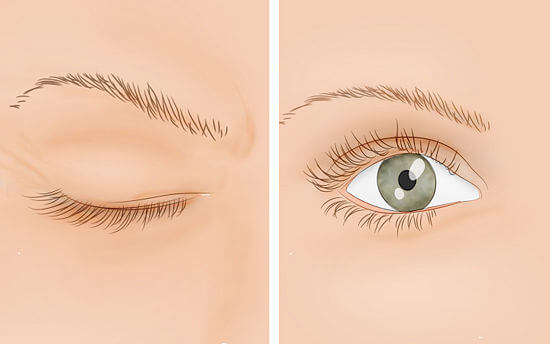
There are certain things the human body does without permission, inquiry, or thought. Breathing. Swallowing. The gentle rise of a heartbeat when something unexpected happens. And then there is blinking, one of the most overlooked behaviors, yet one of the clearest mirrors of how the mind works. Most people never stop to ask why they blink or how often they do it. But tucked inside this simple reflex is a fascinating story about attention, emotion, biology, and even culture. And one of the most surprising facts that researchers have uncovered is this: you blink significantly less when listening.
It sounds almost insignificant, but like most things in human behavior, the truth sits quietly beneath layers of everyday life. Once you understand it, conversations, lectures, arguments, and even moments of silence begin to look different. The body, it turns out, has a language of its own, and blinking is one of its most honest sentences.
When the Eyes Freeze: What Science Says About Blinking and Attention
The average person blinks between fifteen and twenty times per minute. This number fluctuates depending on mood, environment, stress, and even personality. But researchers have consistently found that during activities requiring high cognitive attention, like listening, reading, or solving a problem, this rate suddenly drops.
A study revealed that people blink nearly some percent less when deeply engaged in listening, especially when the topic requires emotional or intellectual investment. Another study published in Science showed that when people are absorbing information, particularly through storytelling, their blink patterns synchronize. In other words, an audience will often blink at the same moments, almost as if their brains are breathing in unison.

This decrease in blinking is not accidental. Blinking, though essential, interrupts visual continuity. When you blink, your vision momentarily disappears. The brain compensates by stitching those moments together, but during focused listening, the brain prefers minimal interruptions. The eyes remain open longer to maintain connection with the speaker, track microexpressions, and process subtle cues. The body instinctively chooses clarity over comfort.
This is why during intense conversations, romantic, confrontational, or emotional, people blink less. The mind becomes alert, watchful, ready to decode meaning beyond words. Even children display this pattern. When kids listen to stories, their blinks reduce dramatically, especially at moments when tension builds. From childhood to adulthood, the human brain has always known that listening is not passive; it is a full-body experience.
The Social Meaning Behind a Blink: Engagement, Trust, and Silent Messages
Blinking is more than biology; it is communication. In social psychology, blink rate is considered an indicator of cognitive processing and emotional response. High blink rates can signal stress, deception, or anxiety. Low blink rates can signal focus, comfort, or immersion. This creates a subtle dynamic in conversation. When someone listens to you with fewer blinks, your brain interprets it as attentiveness, even trust.

This is why effective communicators, from teachers to actors to diplomats, know how to hold attention. Their audiences unconsciously respond with reduced blinking, signaling mental engagement. And in a reversal, people who feel dismissed or uninterested often blink more, signaling withdrawal.
These micro-signals appear even in negotiations. Researchers studying interrogations found that suspects blink more when lying but significantly less when trying to listen carefully to a question they are anxious about answering. In romantic settings, blink ra\tes shift again. During attraction, people often blink less when listening because their attention heightens, and their gaze becomes more anchored.
In essence, blinking becomes a soft social currency. It reveals who we trust, what we value, and where our mind truly is. It shows how human beings create intimacy not only through words but through silence, stillness, and the small spaces between breaths.
When Listening Becomes a Mirror: What Your Blink Rate Says About You
Listening is often framed as a polite act, but biologically, it is one of the most demanding tasks the brain performs. It requires filtering noise, interpreting tone, reading facial cues, predicting responses, and filling in gaps. This intricate mental work is reflected in the eyes.
When someone is genuinely listening, the eyes naturally widen slightly, the body leans in, and the blink rate drops because the mind is making cognitive room for the moment. But when the mind drifts, due to boredom, disagreement, or distraction, the blink rate increases again. It becomes a form of mental escape, a tiny physical reset.
Blinking also reveals cultural differences. Studies show that Western listeners maintain longer eye contact and lower blink rates when engaged, while some African and Asian cultures incorporate more blinks as part of polite listening behavior without meaning distraction. This teaches an important lesson: blinking is not just biology; it is shaped by environment, upbringing, and social norms.

Understanding blinking patterns can become a form of self-awareness. When do you blink less? When do you blink more? The answers often reveal what you care deeply about and what loses your attention. Your eyes know your truth even when your words do not.
The Blink You Didn’t Notice: Why This Matters in a Distracted World
We live in a world where listening is becoming harder. Notifications interrupt. Screens divide attention. Conversations compete with digital noise. People use their phones during conversations, while eating and even while watching on the road without actually listening to anything and this decline in deep listening can be physically measured, people blink more today during conversations because genuine presence is increasingly rare.
This is why understanding this small fact matters. When people blink less while listening, it signifies something simple yet profound: presence. It means the mind has arrived fully. It means the world has paused for real connection. It means attention, our most valuable currency, has been given deliberately.

In relationships, workplaces, classrooms, and communities, learning how to listen with full attention is becoming a lost art. But the body still remembers how. The eyes still know the pattern. The biology is waiting for us to slow down long enough to use it again.
This small, almost forgettable detail, that humans blink less when listening, reminds us of the depth of human communication. It reminds us that attention is not just mental but physical. It reminds us that the body participates in every story we hear.
And perhaps most importantly, it reminds us that in a world full of noise, the truest sign of care is not always in what we say, but in how still we become when someone else speaks.