Nigeria’s 2027 Elections Face Growing Security Threats as Defence Minister Unveils Six-Point Plan
Nigeria's Defence Minister, Gen. Christopher Musa (rtd), highlights that political actors' choices and misinformation are key to election security, not just sophisticated defense. He proposes a 'Secure Framework' and emphasizes shared responsibility among all stakeholders for peaceful and credible 2027 elections. The Armed Forces reaffirm their non-partisan commitment to the Constitution and national stability.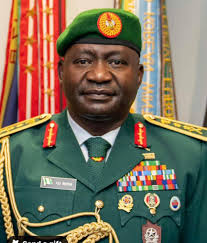
Nigeria’s Defence Minister, Gen. Christopher Musa (rtd.), has warned that even the most sophisticated security architecture cannot guarantee peaceful elections if political actors choose violence over dialogue.
Speaking at the 8th Blueprint Newspapers Public Lecture, Impact Series and Awards, Musa said Nigeria’s preparations for the 2027 general elections must address not only physical threats but also misinformation, cyberattacks and declining public trust.

Six pillars for safer elections
Musa proposed a six-point “Secure Framework” to strengthen election security ahead of the 2027 polls. The framework focuses on:
Strategic intelligence integration
Comprehensive threat assessment
Protection of digital infrastructure
Electoral cyber resilience
Civil-military coordination
Unified strategic communications
The Defence Minister argued that election security can no longer be limited to protecting polling stations, electoral materials and personnel. Modern threats increasingly operate through cyberspace and manipulated information, potentially undermining public confidence before voters even reach the ballot box.
Political violence remains a major concern
Musa delivered a particularly strong message to Nigeria’s political class, urging parties to place national interests ahead of partisan advantage.
He stressed that political competition should not be treated as warfare, warning that security agencies cannot compensate for political actors who deliberately encourage violence.
He also cautioned that electoral laws become ineffective when misinformation replaces facts and that democratic institutions cannot function effectively when citizens lose confidence in the rule of law.\
AI and misinformation add a new dimension
Nigeria’s 2027 election environment is also expected to face increasingly sophisticated digital threats.
Musa warned that artificial intelligence can now produce convincing fabricated videos, cloned voices and manipulated images capable of spreading false information at enormous speed. Such technology could be used not only to influence voters but also to damage confidence in electoral institutions and democratic processes.

This makes cybersecurity and strategic communication increasingly important components of election preparation.
Security agencies to work with INEC
The Defence Ministry says it will coordinate with several institutions as preparations intensify, including the Office of the National Security Adviser, the Armed Forces of Nigeria, the Nigeria Police Force, the Department of State Services, the Defence Intelligence Agency and the Independent National Electoral Commission (INEC).
The objective is to ensure that each institution carries out its constitutional responsibilities professionally, impartially and effectively.
A shared responsibility
Musa emphasized that election security cannot be left solely to government agencies.
He called on the media to report accurately and responsibly, while urging civil society organisations to strengthen civic education and encourage peaceful political participation.
Traditional and religious leaders were encouraged to promote reconciliation and moderation within their communities.
The Defence Minister also appealed directly to Nigerian youths, urging them not to allow themselves to be recruited as instruments of political violence or manipulation.
The message is ultimately straightforward: Nigeria's 2027 elections cannot be secured through security forces alone. Political leaders, electoral institutions, the media, civil society and citizens will all have a role in determining whether the next election cycle strengthens or undermines democratic stability.