Czech Central Bank Ignites Bitcoin Revolution with Bold 1% Reserve Strategy

Published 2 hours ago3 minute read
David Isong
David Isong
Czech Central Bank Ignites Bitcoin Revolution with Bold 1% Reserve Strategy

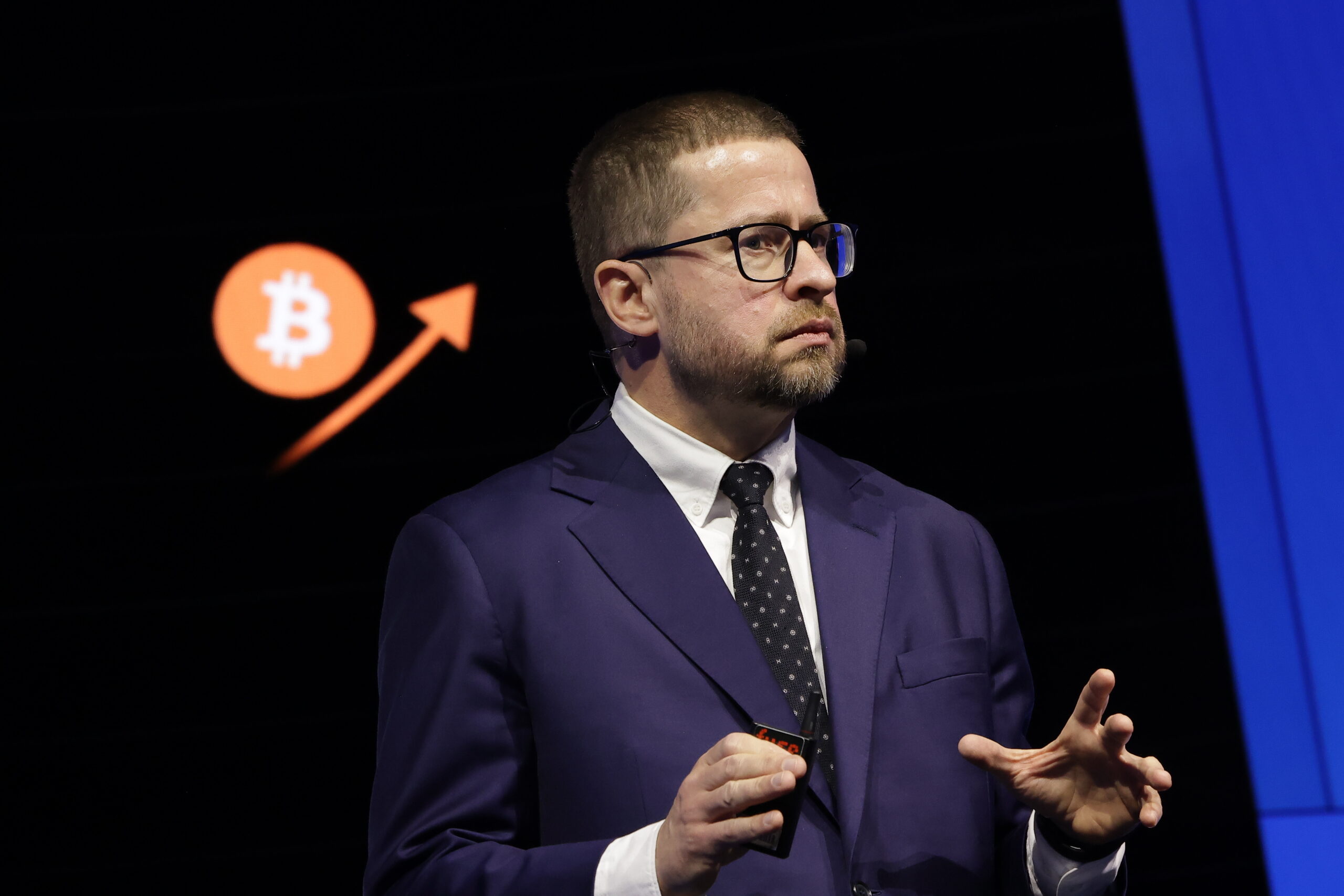
The Czech National Bank (CNB), under the leadership of Governor Aleš Michl, has adopted a distinctive reserve strategy that balances stringent inflation control with a measured integration of digital assets. Michl, speaking at a Bitcoin industry event in Las Vegas, elaborated on the bank's decision to incorporate a small allocation of Bitcoin into its reserves, explaining it as a method to enhance expected returns without escalating the overall portfolio risk.

Upon assuming the governorship in mid-2022, Michl faced a challenging economic landscape where inflation in the Czech Republic hovered near 20%. He committed the central bank to a rigorous two-year plan to bring inflation down to a 2% target, a goal that was successfully achieved through what he described as discipline, not 'magic.' Michl identified the root causes of the high inflation as prolonged periods of cheap money, a weakened currency, and an excess of easy money within the financial system. In response, the CNB implemented policies to encourage saving and strengthen the Koruna, establishing a guiding principle to 'stay hawkish forever.'

Michl also highlighted the significant scale of the Czech National Bank's balance sheet, managing approximately $180 billion in foreign exchange reserves. This amount is equivalent to roughly 44% of Czech GDP, positioning these reserves among the largest globally relative to the size of the national economy. The central tenet of the bank's strategy, according to Michl, is to 'build for the future,' anticipating long-term financial stability and growth by protecting the country's wealth. This forward-thinking approach has necessitated a pivot away from low-return bonds towards assets like stocks and gold, managed within low-risk portfolios.

A pivotal question for the bank was how to further fortify its portfolio for the long term, leading to an internal debate surrounding Bitcoin. Michl recounted a personal experience of using Bitcoin to purchase coffee in Prague and acknowledged its inherent price volatility, where values can fluctuate significantly. However, he posited that other assets also experience price movements, emphasizing that for a central bank, the crucial factor is an asset's behavior within a diversified portfolio.

Research conducted by the Czech National Bank revealed that Bitcoin exhibits low long-term correlation with many traditional reserve assets. This means Bitcoin's price movements are not closely linked to those of conventional holdings, allowing it to provide returns over longer horizons that are independent of other assets. Based on this analysis, the bank introduced a 1% Bitcoin position into its reserves. The CNB's internal assessment indicated that this 1% allocation effectively elevates expected returns when measured in Czech Koruna terms, all while maintaining the overall portfolio risk at the same level. Michl succinctly summarized this finding: 'When you add Bitcoin to your portfolio it works better, returns go up and risk stays the same – that is diversification.'

Michl framed this strategic move as an integral component of a broader philosophical approach to central banking in the emerging era of digital assets. He urged the audience to embrace a 'conservative but innovative' mindset in how institutions manage their operations and investments. For the Czech National Bank, this translates into a resolute anti-inflationary stance and a robust domestic currency, complemented by a carefully controlled experiment in leveraging Bitcoin and other non-traditional assets to enhance and strengthen its reserves over time.

Recommended Articles

Loading...

You may also like...