Crypto Mom's Bold Stand: SEC Commissioner Peirce Pushes for Privacy Tech
Outgoing SEC Commissioner Hester Peirce is advocating for a significant shift in financial system monitoring, pushing for less personal data collection and enhanced privacy. She criticized current KYC/AML rules and proposed using cryptographic tools to improve security without sacrificing individual freedom, amidst ongoing discussions on crypto regulation.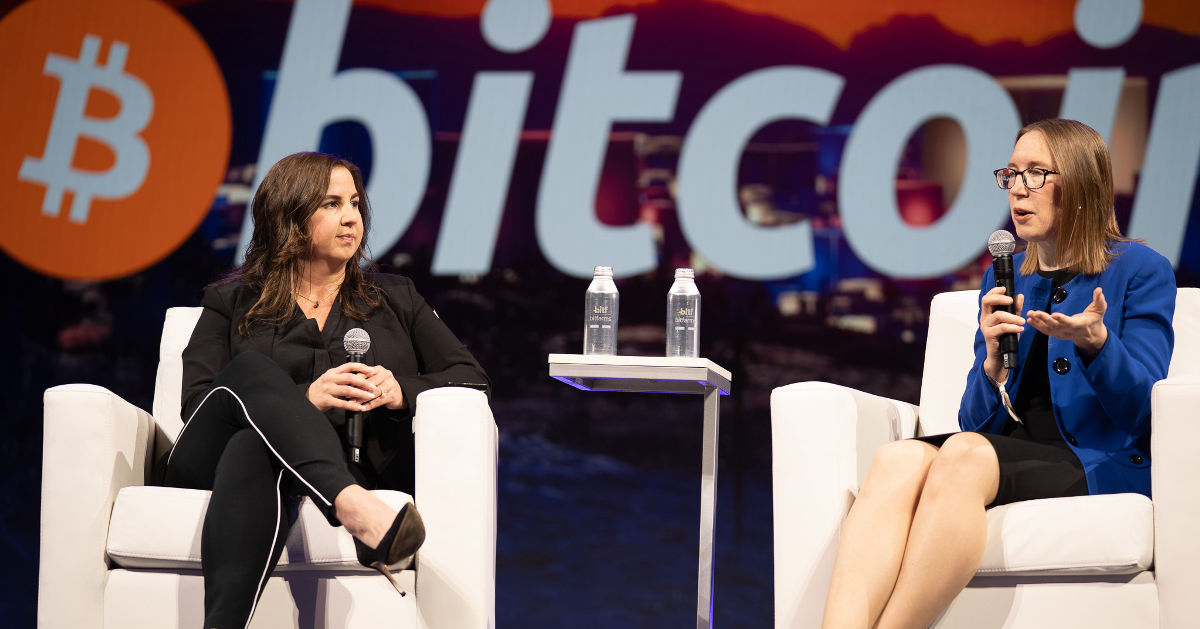
Outgoing Securities and Exchange Commission (SEC) Commissioner Hester Peirce has called for a fundamental re-evaluation of how financial systems are monitored, advocating for reduced personal data collection rather than increased surveillance. In a recent speech, Peirce, often dubbed “crypto mom” for her balanced stance on the digital asset space, specifically targeted existing know-your-customer (KYC) and anti-money-laundering (AML) regulations, urging regulators to rethink their approach.
Peirce, who is slated to depart the SEC in November, articulated her views at SIFMA’s Digital Assets Conference in New York, describing society as being at a critical crossroads. She warned against the prevailing path of the “status quo,” which she characterized as leading to a “panopticon” of extensive data collection, increased intermediary surveillance, and burdensome KYC requirements. Instead, Peirce championed an alternative path that leverages new technologies to enhance the ability to apprehend criminals while simultaneously reducing the collection of personal information and adopting more selective monitoring to safeguard Americans' privacy.
The Commissioner strongly argued that accumulating vast amounts of data on law-abiding citizens in the pursuit of criminals is ineffective. She likened the process to making needles harder to find in larger “haystacks” and highlighted the inherent risks of data leaks or misuse associated with every stored data point. Peirce criticized a regulatory mindset fixated on an ever-increasing volume of data, drawing a parallel to the speculative fixation on rising prices seen among crypto enthusiasts.
To address these concerns, Peirce pointed to innovative cryptographic tools, such as zero-knowledge proofs and attribute-based credentials. These technologies offer a way to verify specific facts—like a person’s age, accredited-investor status, or absence from sanctions lists—without necessitating the disclosure of the sensitive underlying personal details. Furthermore, she encouraged the SEC to permit firms to rely on identity checks already conducted by other regulated institutions, thereby eliminating the redundant collection and storage of identical sensitive information by multiple entities.
The broader context of SEC’s engagement with the crypto industry has seen significant shifts. Under President Joe Biden, the SEC, particularly through its former Chair Gary Gensler, adopted a stringent stance, frequently pursuing legal action against major crypto companies for allegedly selling unregistered securities. However, the regulatory environment appears to have softened, with a more accommodating approach to watchdogging the space since Donald Trump’s return to the presidency. Despite this, regulators are currently striving to establish clear rules for the rapidly evolving industry, even as landmark legislation, the Clarity Act, faced obstruction last week. Peirce, who was appointed to lead the Crypto Task Force, has previously clarified that she views herself not as an industry advocate, but rather as a “freedom maximalist,” emphasizing her commitment to individual liberties within the regulatory framework.