Countdown to 2027: INEC Kicks Off Election Readiness Nationwide
INEC is intensifying preparations for Nigeria's 2027 general elections, conducting nationwide readiness assessments, updating voter registers, and improving electoral technology. A forum organized by WADR highlighted critical issues of accountability, security, and electoral integrity, with stakeholders emphasizing the need for transparency, robust security measures, and media professionalism to ensure credible polls.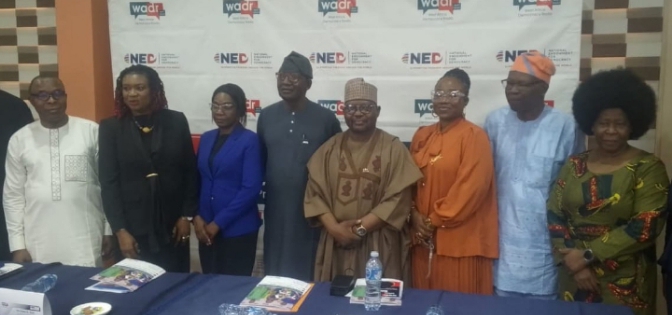
The Independent National Electoral Commission (INEC) has significantly ramped up its preparations for Nigeria's 2027 general elections, initiating nationwide readiness assessments and comprehensive staff engagements across the six geopolitical zones. This proactive approach aims to identify operational gaps, evaluate emerging risks, and implement corrective measures well in advance of the crucial electoral period. Alongside these assessments, the procurement of non-sensitive electoral materials and various stages of the voter register process are actively underway.
Prof. Joash Amupitan, the INEC chairman, articulated the Commission's progress at the Democracy and Governance Forum organized by West Africa Democracy Radio (WADR) in Abuja. His speech, delivered by Mrs. Helen Omozua Ajayi, Director of the Planning and Monitoring Department, highlighted that INEC's election preparations have transitioned beyond mere planning into "intensified operational readiness, assurance, and deployment." This extensive programme spans across INEC's 23 departments, 36 state offices, the Federal Capital Territory, and all 774 local government areas, with some activities already completed, others ongoing, and subsequent phases scheduled according to the electoral timetable.
Key activities already concluded include the Continuous Voter Registration (CVR) exercise and the public display of the Preliminary Register of Voters for claims and objections. Currently, the generation of the PDF Register of Voters for nationwide display is in progress, alongside the synchronization of CVR data and preparations for the collection of Permanent Voter Cards (PVCs). The early procurement and delivery of non-sensitive electoral materials to state offices underscore INEC's commitment to ensuring adequate time for distribution and deployment before Election Day. Furthermore, INEC has embarked on training and capacity-building programmes for election personnel and has commenced intensified voter education and public enlightenment campaigns. These campaigns are designed to inform the electorate about voting procedures, accreditation, the functionality of the Bimodal Voter Accreditation System (BVAS), Election Day processes, and PVC collection, specifically targeting diverse groups such as women, young people, persons with disabilities, and voters in hard-to-reach communities.
In terms of election technology, Amupitan emphasized ongoing improvements to BVAS and the election results management process, including the deployment of the eEC8A form. These technological advancements are aimed at strengthening end-to-end result visibility and substantially reducing opportunities for manual interference, thereby enhancing transparency and integrity. The nationwide readiness assessments also serve as a vital platform to engage Resident Electoral Commissioners, administrative secretaries, heads of departments, electoral officers, and other critical personnel, aligning them with the Commission's expectations for the upcoming elections. Prof. Amupitan underscored that electoral preparedness extends beyond conducting elections on polling day, stressing the paramount importance of public confidence and trust in the electoral system. He stated, "The focus is not only on completing scheduled activities, but also on ensuring that the systems, processes, personnel, technology, logistics, and institutional structures required to support the election are ready, functional, and operationally coordinated as the election date approaches." The official timetable sets the Presidential and National Assembly elections for February 20, 2027, with the Governorship and State Houses of Assembly elections following on March 6, 2027.
The Democracy and Governance Forum, hosted by West Africa Democracy Radio (WADR), convened electoral officials, civil society organizations, media practitioners, development partners, and governance experts to critically discuss Nigeria’s democratic process leading up to the 2027 elections. The forum's central theme was "Nigeria’s Democratic Process: Accountability, Security and Electoral Integrity."
Dr. Muhammad Kudu Abubakar, a WADR Board Member and keynote speaker, highlighted that the credibility of the 2027 elections would be heavily contingent on these three pillars: accountability, security, and electoral integrity. He cautioned that technological reforms alone are insufficient to resolve Nigeria’s electoral challenges, urging INEC to be more transparent in the cleaning and verification of the voters’ register. Dr. Abubakar suggested integrating the National Identification Number (NIN) into the auditing process to address issues like duplicate registrations and deceased voters, calling for clear figures on the exercise's outcomes. He also identified insecurity as a significant threat to electoral participation, warning that kidnappings, terrorist attacks, and violence could suppress voter turnout, intimidate officials, and erode confidence. He advocated for stronger intelligence gathering, improved inter-agency coordination, and more vigorous prosecution of electoral offences, emphasizing the need for security agencies to remain professional and neutral to protect voters. Abubakar affirmed BVAS and electronic result transmission as crucial for public confidence and called for sustained attention to the Electoral Act's provisions and stakeholder concerns regarding ballot authenticity and official accountability. He concluded by stressing the international scrutiny the 2027 elections would face, stating, "A credible 2027 election will be more than a vote. It will be a powerful statement that Nigeria is ready."
Agnes Eyatunde John-Thomasi, WADR’s managing director, opened the forum by stating its purpose: to provide a platform for citizens, civil society, media, and government institutions to assess Nigeria's democracy and governance ahead of the elections. She expressed WADR's concern over pressures on democratic resilience in West Africa, including shrinking civic space, attacks on freedom of expression, disinformation, weak accountability, political instability, and insecurity. Through its "Voices for Democracy and Freedoms in West Africa" project, supported by the National Endowment for Democracy (NED), WADR aims to provide credible information and platforms for community engagement in governance and democratic participation. Nigeria is among the countries targeted for impartial information dissemination leading up to its elections. John-Thomasi underscored the media's critical responsibility to educate citizens on democratic reforms, scrutinize institutions, counter misinformation, and facilitate engagement between citizens and decision-makers. She urged journalists to uphold professionalism, ethics, and impartiality, while also highlighting the media’s need for access to information and a free, responsible operating environment. The forum, featuring contributions from various civil society, media, women, youth, and development groups, aimed to identify successes, gaps, and practical measures to strengthen democratic governance and participation.