Cocoa Chaos: Ghana's Farmers Revolt as COCOBOD Faces Betrayal Accusations Amidst Deepening Crisis
Ghana's cocoa sector faces a severe crisis marked by farmer protests over low prices and delayed payments, amidst government claims of fiscal constraints and global market challenges. The situation is exacerbated by decades of structural failures at COCOBOD, political blame games, and growing calls for transparent reforms and a commodity stabilization fund.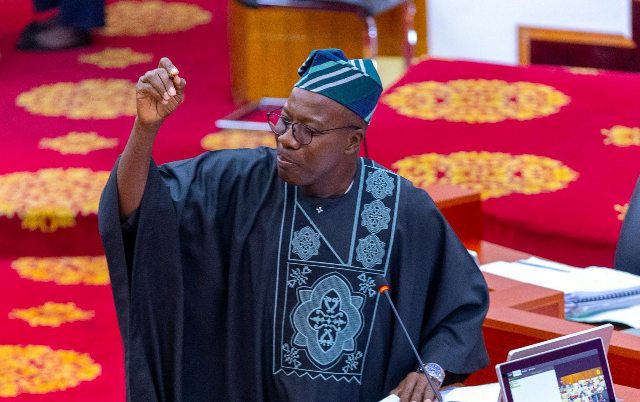
Ghana's vital cocoa sector is currently embroiled in a multifaceted crisis, characterized by widespread farmer protests, governmental insistence on fiscal realities, historical institutional failures at the Ghana Cocoa Board (COCOBOD), and intense political debate. Farmers are expressing deep economic distress over reduced producer prices and delayed payments, while the government maintains that global challenges and revenue constraints make it impossible to revert to previous price levels.
The Majority Leader in Parliament, Mahama Ayariga, firmly stated on February 20 that the government would not yield to pressure to reinstate the former cocoa producer price. He emphasized that current fiscal realities and revenue constraints prevent the John Mahama administration from fully delivering on its pledge for a substantial price increase. Ayariga asserted that cocoa pricing decisions are dictated by available resources and economic conditions, not political agitation. He attributed the difficulties to ongoing global challenges impacting the cocoa sector, which in turn affect government revenue and farmer incomes, making it impossible to promise what the state lacks. Ayariga also dismissed recent demonstrations against price reductions as politically motivated, arguing that "genuine cocoa farmers know that there is a world crisis." He pointed out that the impact of falling prices is widespread, affecting Members of Parliament and ministers who are also cocoa farmers, underscoring that "everybody loses income as a result of this global crisis."
However, an alternative perspective suggests that the current crisis is not a sudden development but a culmination of structural failures and accumulating debt within COCOBOD that span decades and multiple governments. The narrative surrounding COCOBOD, often weaponized for political gain, attempts to pin a long-standing institutional crisis on current leadership, specifically targeting Randy Abbey, who assumed office in 2025 under President Mahama’s second term. Historical analysis reveals a pattern of increasing financing commitments and borrowing pressures starting with Isaac Osei's tenure (2006-2008), which saw strong production growth but accumulating debt. Anthony Fofie (2008-2013) focused on price stabilization amidst rising borrowing. Dr. Stephen Kwabena Opuni (2013-2017) implemented aggressive productivity interventions but faced procurement controversies and rising operational costs. Joseph Boahen Aidoo (2017-2025) grappled with production volatility due to illegal mining (galamsey), disease outbreaks, climate stress, and mounting debt from forward sales and road commitments.
By 2025, Randy Abbey inherited a sector already burdened by significant debt exposure, infrastructure liabilities, market volatility, and declining production. These pressures, including debt accumulation, tightened forward sales, production slips, ballooning operational costs, and audit concerns, are documented history, not partisan fiction. To attribute this complex situation solely to one CEO is considered "narrative engineering" aimed at distorting public perception and erasing history, especially when macroeconomic indicators are stabilizing and anti-corruption conversations are intensifying.
The severity of the situation is evident in the protests by cocoa farmers who picketed COCOBOD headquarters in Accra. Carrying placards with messages like "We worked, you lied" and "Government celebrates but our families mourn," farmers accused authorities of failing to protect their livelihoods. They demand an urgent upward review of the producer price and settlement of outstanding payments owed by Licensed Buying Companies (LBCs). Farmers highlight the difficulty in covering basic needs and school fees, warning that without immediate intervention, many may abandon cocoa farming, jeopardizing future production.
Political opposition has also weighed in, with Dr. Ekua Amoakoh, Deputy Spokesperson for the Bawumia Campaign, criticizing the government for "misplaced priorities." She questioned the government's focus on renaming the National Intelligence Bureau (NIB) to BNI while cocoa farmers' concerns about unpaid sales remain unresolved. The Minority Caucus echoed these concerns, warning against Ghana's dangerous over-reliance on commodity prices for economic stability and arguing that current macroeconomic improvements are driven by global gold prices rather than structural reforms. They criticized "economic resets that shift global market risks onto vulnerable farmers" as "policy injustice."
Furthermore, the Trades Union Congress (TUC) Ghana, through its Chairman Bernard Owusu, strongly condemned salary reductions imposed on COCOBOD workers. Owusu argued that workers should not bear the brunt of declining global cocoa prices or economic mismanagement, especially given the stark income disparity between management and workers. He stated that such cuts violate Collective Bargaining Agreements and demanded respect for union engagements, full transparency, and shared responsibility.
In response to these pervasive challenges, experts and industry players have proposed solutions. Professor Williams Peprah, an Associate Professor of Finance at Andrews University, suggested establishing a Commodity Stabilisation Fund for key commodities like cocoa, gold, and oil. This fund would cushion farmers against price fluctuations, acknowledging that commodity markets are highly sensitive. Similarly, the Produce Buying Company (PBC) appealed to COCOBOD to fast-track payment processes and resolve "systematic issues" that have long plagued the industry. PBC proposed a transparent, receivables-based payment system accessible to COCOBOD and banks to track fund drawdowns, utilization, cocoa deliveries, and entitlements, thereby restoring financial sanity and reducing incentives for arbitrage and smuggling. This approach aims to eliminate non-functional buyers who exploit liquidity gaps to shortchange farmers.
Ultimately, the crisis in Ghana's cocoa sector calls for a shift from political blame games to evidence-driven accountability, structural reforms, and transparent governance. The sector's strategic importance—funding education, stabilizing foreign exchange, sustaining rural livelihoods, and anchoring national agriculture—demands discipline, reform velocity, and mandate clarity, rather than panic choreography or illusionary narratives. Ghanaians are urged to demand proof and reject distractions, as the integrity of this critical sector hinges on genuine and sustainable solutions.