Chaos and Celebration: Iran's Supreme Leader Ayatollah Ali Khamenei Killed Amidst Global Reaction
The death of Iranian Supreme Leader Ayatollah Ali Khamenei in a US airstrike has triggered a global firestorm of reactions, from widespread celebrations to an immediate escalation of military conflict across the Middle East. While The New York Times faced criticism for its nuanced obituary, President Trump lauded the strike as justice, prompting Iran to vow unprecedented retaliation. Amidst rising tensions and international calls for peace, Iranian Americans in Manhattan celebrated, advocating for a new era in Iran.
The death of Iranian Supreme Leader, Ayatollah Ali Khamenei in a US airstrike on Saturday has sparked widespread, polarized reactions globally, leading to both celebrations and an immediate escalation of conflict in the Middle East.
Khamenei, 86, had ruled Iran for 36 years, intensifying hard-line governance and fueling extremism across the region, with many describing him as a brutal dictator responsible for the deaths of thousands of Iranians.
Amid global celebrations over Khamenei's demise, The New York Times faced significant criticism for its perceived 'soft-touch' headline: 'Ayatollah Ali Khamenei, Hard-Line Cleric Who Made Iran a Regional Power, Is Dead at 86.'
Social media users accused the liberal outlet of failing to label Khamenei a 'terrorist,' drawing comparisons to its headline announcing the death of cartoonist Scott Adams, which notably highlighted his 'racist comments.'
The Times defended its approach, stating that its obituaries 'report and reflect lives in full, illuminating why, in our judgment, they were significant,' and include 'newsworthy details of each life and death.'
US President Donald Trump confirmed Khamenei's death on Truth Social, branding him 'one of the most evil people in History' and asserting that his killing represented 'Justice for the people of Iran' and global victims.
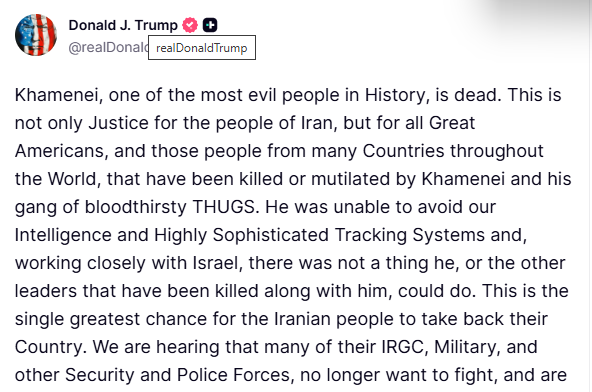
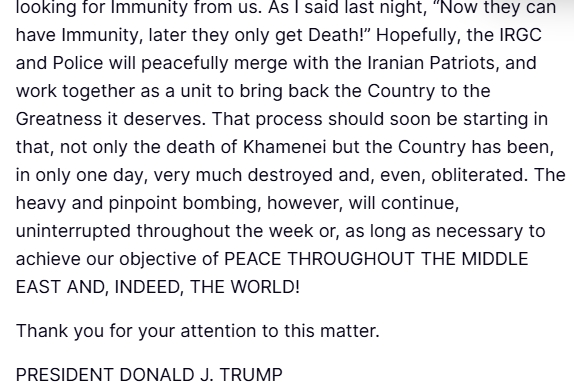
Trump credited US 'Intelligence and Highly Sophisticated Tracking Systems,' developed in cooperation with Israel, for the successful strike, which also claimed the lives of Khamenei's daughter, son-in-law, grandchild, and two high-level military leaders, Rear Adm. Ali Shamkhani and Maj. Gen. Mohammad Pakpour.
The President urged Iranian citizens to seize this moment as 'the single greatest chance for the Iranian people to take back their Country.'
In a defiant response, Iranian President, Masoud Pezeshkian branded Khamenei's killing a 'declaration of war against Muslims.'
Iran raised its 'Red Flag of Revenge' and vowed unprecedented retaliation against the US and Israel.
This pledge was swiftly followed by a series of strikes across neighboring Gulf states, including Qatar, Israel, Bahrain, Kuwait, Iraq, Oman, and Saudi Arabia.
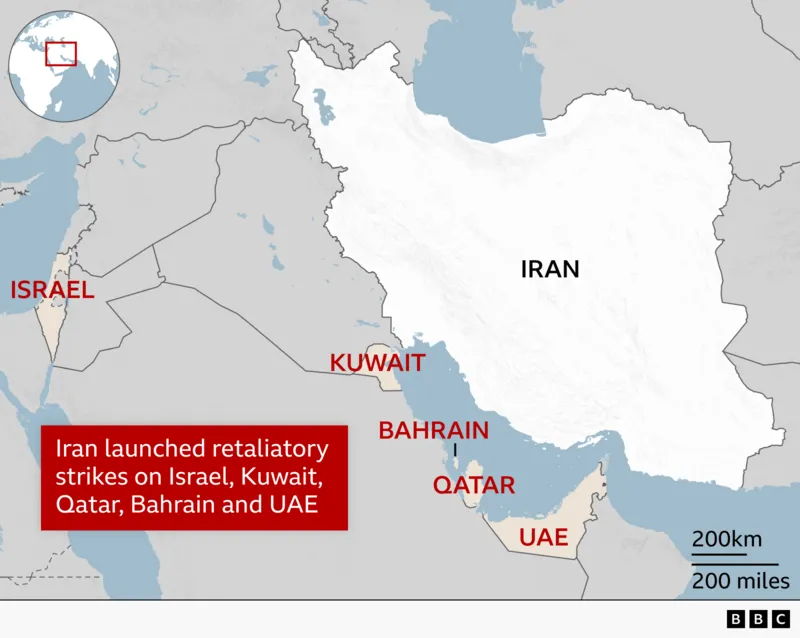
Iran's Revolutionary Guards claimed attacks on nearly 30 US military bases and even the aircraft carrier USS Abraham Lincoln in the Gulf, declaring that 'land and sea will increasingly become the graveyard of the terrorist aggressors.'
Trump, in turn, promised to strike Iran 'with a force that has never been seen before.'
As the conflict intensified, Pope Leo XIV, speaking from the Vatican, expressed 'deep concern' over the Middle East situation.
The pontiff, the first American-born Pope, issued a strong appeal to all parties to engage in 'reasonable, sincere, and responsible dialogue' rather than resorting to 'mutual threats' and 'weapons, which sow destruction, suffering, and death.'
He warned of the potential for a 'tragedy of enormous proportions' and urged a halt to the 'spiral of violence before it becomes an irreparable abyss,' advocating for diplomacy and peaceful coexistence founded on justice.
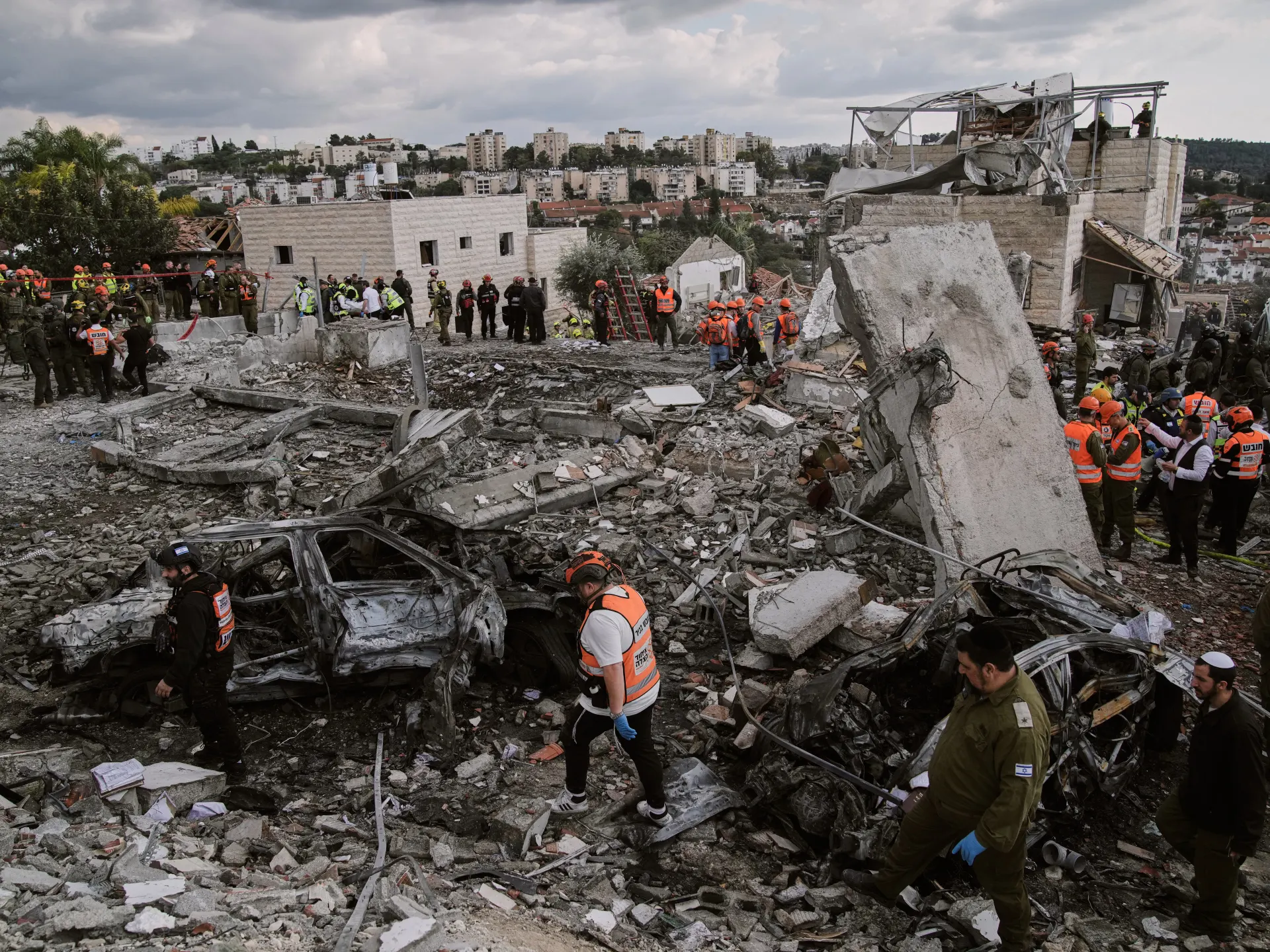
The escalation of violence continued, with rescue teams seen amidst debris after an Iranian rocket hit Beit Shemesh near Jerusalem, Israel, reportedly killing at least nine people.
Waves of suicide drones also struck Dubai on Sunday afternoon, destroying a hotel in Bahrain and targeting Dubai's airport, the Burj Al Arab, and Palm Jumeirah hotels, as remnants of the Iranian regime launched widespread airstrikes against US allies and Western expat areas.

Simultaneously, a contrasting scene unfolded in Manhattan, where approximately 500 Iranian Americans and supporters of the Iranian royal family marched to celebrate Khamenei's death.
Carrying Iranian, American, and Israeli flags, they praised the US and Israeli bombing campaign, chanting 'azadi' (freedom), 'USA USA USA,' and 'President Trump Thank You.'
Many called for the return of exiled Crown Prince, Reza Pahlavi, son of the Iranian shah deposed in the 1979 Islamic Revolution, and some banners declared 'Make Iran Great Again.'
Speakers in Times Square sang Iran's old national anthem and expressed gratitude to Trump and Israeli Prime, Minister Benjamin Netanyahu.
Marchers, many from New Jersey and Long Island's Iranian American communities, articulated varied hopes for Pahlavi's role, ranging from a constitutional monarchy 'similar to Scandinavia' to his return as an elected president.
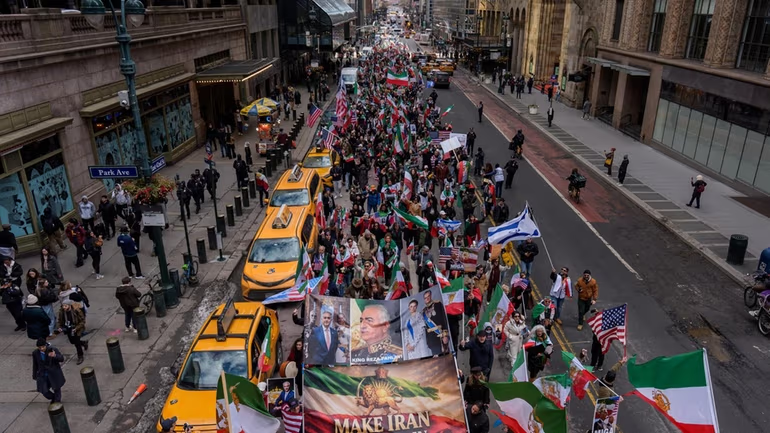
Some expressed support for the 'current war,' viewing it as a necessary action to remove the 'top echelons' and enable Iranian citizens to protest freely.
The historical context of the Pahlavi dynasty was also present, with the march reflecting a desire to revert to a pre-1979 Iran.
Crown Prince Reza Pahlavi, living in exile in Maryland, is the son of Mohammad Reza Pahlavi, who centralized power and suppressed dissent after a US- and British-backed 1953 coup.
While supporters passionately advocate for his return, it remains unclear how widely the prince is supported within Iran itself, where recent protests have primarily focused on economic grievances like skyrocketing inflation, corruption, and political suppression rather than a return to monarchy.