Ceuta's Migrant Crisis Deepens as Thousands Flood Beaches Again
Thousands of migrants in Ceuta were forced back to beaches after a new reception center became overcrowded, exacerbating the ongoing crisis. Local officials criticized the chaotic transfer and called for expedited repatriation processes, warning of long-term challenges if the current pace continues.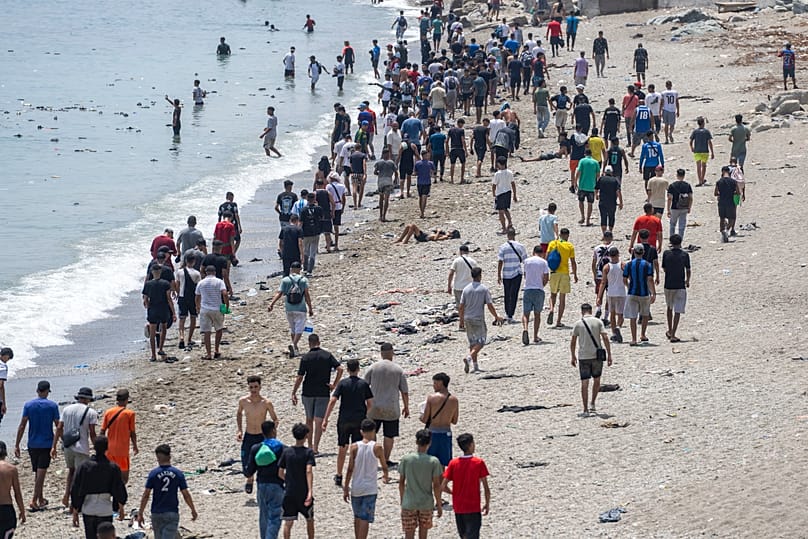
More than 2,000 migrants in Ceuta were forced to return to the beaches after a newly established temporary reception facility, located in the autonomous city's port, proved insufficient to accommodate them. The facility, designed to house 1,700 people, became overwhelmed when over 4,000 migrants, escorted by Spain's Civil Guard and National Police, arrived from the Trampolín and Benítez beaches on Friday morning. Consequently, many had no choice but to return to the beaches they had just left.
Government sources indicate that approximately 3,000 migrants remain on the city's streets. During the chaotic transfer, police struggled to maintain order as individuals vied for a spot at the new site, following weeks of living rough on beaches and streets. Officers resorted to firing warning shots into the air to control the crowds, though local authorities reported no serious incidents. The return of migrants also meant that a planned clean-up operation for the beaches had to be postponed, leaving Trampolín beach still dotted with makeshift tents and shacks.
The Ceuta migrant crisis originated in late July when over 70,000 people crossed into the Spanish exclave from Morocco. Kissy Chandiramani, a member of Ceuta's autonomous government, sharply criticized the port transfer, describing it as chaotic and highlighting that neither the city government nor port authorities received advance warning. Chandiramani urged for an acceleration of migrant return procedures, cautioning that without swift action, Ceuta risked transforming into "the great CETI of North Africa," referring to Temporary Immigrant Reception Centres.
She further noted that roughly one hundred migrant cases are processed daily. With additional resources, she believes this process could be completed within 15 days. However, Chandiramani warned that if the current slow pace persists, the situation "is going to drag on forever," underscoring the urgency of the crisis and the need for more efficient handling of migrant cases.