Blockbuster NBA Trade Rocks East: Jaylen Brown Jumps to 76ers!
The NBA was stunned by the recent trade of Jaylen Brown from the Boston Celtics to the Philadelphia 76ers, drawing comparisons to the Luka Doncic deal. While Brown's on-court accolades were significant, advanced analytics, personality clashes, and a complex trade market contributed to Boston accepting a seemingly underwhelming return for their Finals MVP.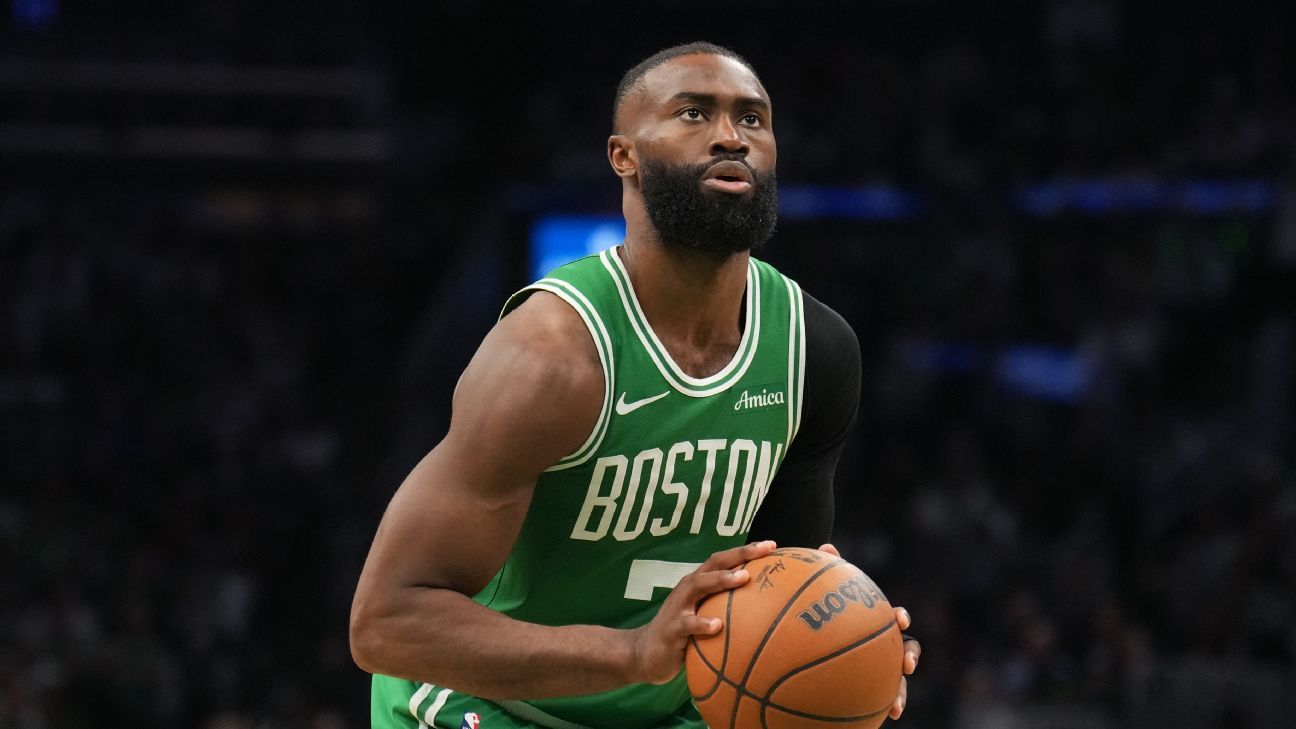
The recent trade involving Jaylen Brown, the Boston Celtics' Finals MVP from just two years prior, sent shockwaves through the NBA, evoking a collective astonishment not seen since the Dallas Mavericks controversially offloaded Luka Doncic to the Los Angeles Lakers in early 2025. While the Doncic trade bewildered the league due to the unexpected departure of a superstar in his prime and a perceived ridiculously low return, the Brown trade's impact stemmed from its destination to a bitter rival and the surprisingly modest package received by the Celtics.
Critics quickly highlighted the stark contrast in trade values. Whereas the Utah Jazz secured two unprotected first-round picks and two unprotected swaps from the Lakers for Doncic – without taking back any salary – the Celtics acquired one unprotected first-rounder, another conditional first-round pick or swap, and a pair of second-rounders from the Philadelphia 76ers for Brown, a five-time All-Star. Furthermore, the 76ers managed to shed Paul George's widely regarded burdensome contract, valued at two years and $110.7 million remaining, as part of the deal. General managers across the league expressed bewilderment, with one noting that Brown was traded for "less than Walker Kessler," a promising young player who has yet to earn an All-Star nod.
Numerous questions arose regarding the rationale behind the trade: Why was the market for a player who just completed his best statistical season and finished sixth in MVP voting so cold? Why did Boston's President of Basketball Operations, Brad Stevens, a two-time Executive of the Year, rush into such an underwhelming deal? And why didn't the Celtics push harder for Giannis Antetokounmpo if moving Brown was considered imperative?
On the surface, Brown's performance speaks volumes. The 29-year-old was one of the league's most productive players, averaging career highs of 28.7 points, 6.9 rebounds, and 5.1 assists per game last season, a feat matched only by multi-time MVPs like Antetokounmpo, Nikola Jokic, and Doncic. He also stood out as a strong defender, often tasked with guarding opposing teams' top scorers. With Jayson Tatum sidelined for most of the season due to a ruptured Achilles tendon, Brown spearheaded the Celtics to an impressive 56-26 record, exceeding expectations. Brown himself, in a social media post, underscored his extensive winning record with the Celtics, more than any other player in the past decade. These achievements fueled a popular perception among media, fans, and fellow players that Brown belonged to the league's elite.
However, advanced analytics presented a contrasting narrative. Multiple general managers indicated a significant discrepancy between Brown's media-voted accolades and his statistical impact, describing it as "probably the widest gap in the league." Analytics consistently showed that the Celtics had a better net rating with Brown off the floor than on it in four of the last four seasons and six of the past eight. Teams' internal models generally concluded that Brown's overall impact wasn't commensurate with his supermax contract, which guaranteed him $183 million over the next three seasons. Executives argued that dedicating such a substantial portion of the salary cap to a player who isn't "truly generational" is unsustainable, citing that the league is becoming "smarter now" about player value beyond raw scoring numbers.
Beyond the numbers, concerns about Brown's personality and fit within the team reportedly played a crucial role. League sources suggested the Celtics concluded that Brown's partnership with Tatum, which had generated years of underlying tension despite their championship success, had simply run its course after nine seasons. His unapologetically strong personality, outspokenness, and perceived reluctance to adapt his playing style were believed to have influenced the front office's decision to trade him. This, in turn, raised red flags for potential trade partners, who worried about how Brown would integrate with other established stars. "If Jaylen isn't happy winning Finals MVP, All-NBA, winning with the Boston Celtics, how's it going to be with us?" one president of basketball operations queried, highlighting the apprehension among teams.
The Celtics' initial trade strategy centered on acquiring a superstar, primarily engaging the Milwaukee Bucks in discussions for Giannis Antetokounmpo. Boston reportedly finished as the runner-up in the "Greek Freak derby," but Stevens' refusal to include intriguing young prospects alongside Brown and two first-round picks ultimately cost them the deal. This perceived stubbornness and a lack of contingency plans after missing out on Antetokounmpo were criticized by peers. Following this, Boston aggressively canvassed the league, reportedly demanding up to four unprotected first-round picks for Brown, a strategy that multiple executives believed backfired by scaring away potential suitors.
As the trade market dried up, particularly after the start of free agency, the Celtics were reportedly left with few options. On July 1st, almost three months before training camp, they accepted what was described as the "best, and possibly only," offer on the table. While some executives called it a "panic" move and a "bad decision" that looked unfavorable, others understood the Celtics' urgency. They pointed out that trade value often diminishes when the league knows a team is under pressure to move a player and that a drying market leaves limited choices. One executive concluded that if the relationship with Brown was truly untenable, "it's better to make a bad trade than none at all."