Bitcoin on the Brink? Miner Squeeze Threatens Largest Network Correction in Years!
The Bitcoin network is poised for one of its most significant mining difficulty drops, projected at 10.3% this Saturday, June 13, 2026. This adjustment comes amidst a prolonged BTC price decline, forcing miners to disconnect and showcasing Bitcoin's self-regulation mechanism. The correction aims to stabilize mining costs and block times, though further price drops could see support as low as $25,500.
The Bitcoin network is preparing to record one of the largest mining difficulty drops in its entire history, a direct result of the prolonged decline in BTC price.
According to a new report from Galaxy Research, this sustained price pressure has significantly eroded miners' profit margins, compelling many to disconnect their computing power from the network. This extended downtrend has intensified pressure on all market participants.
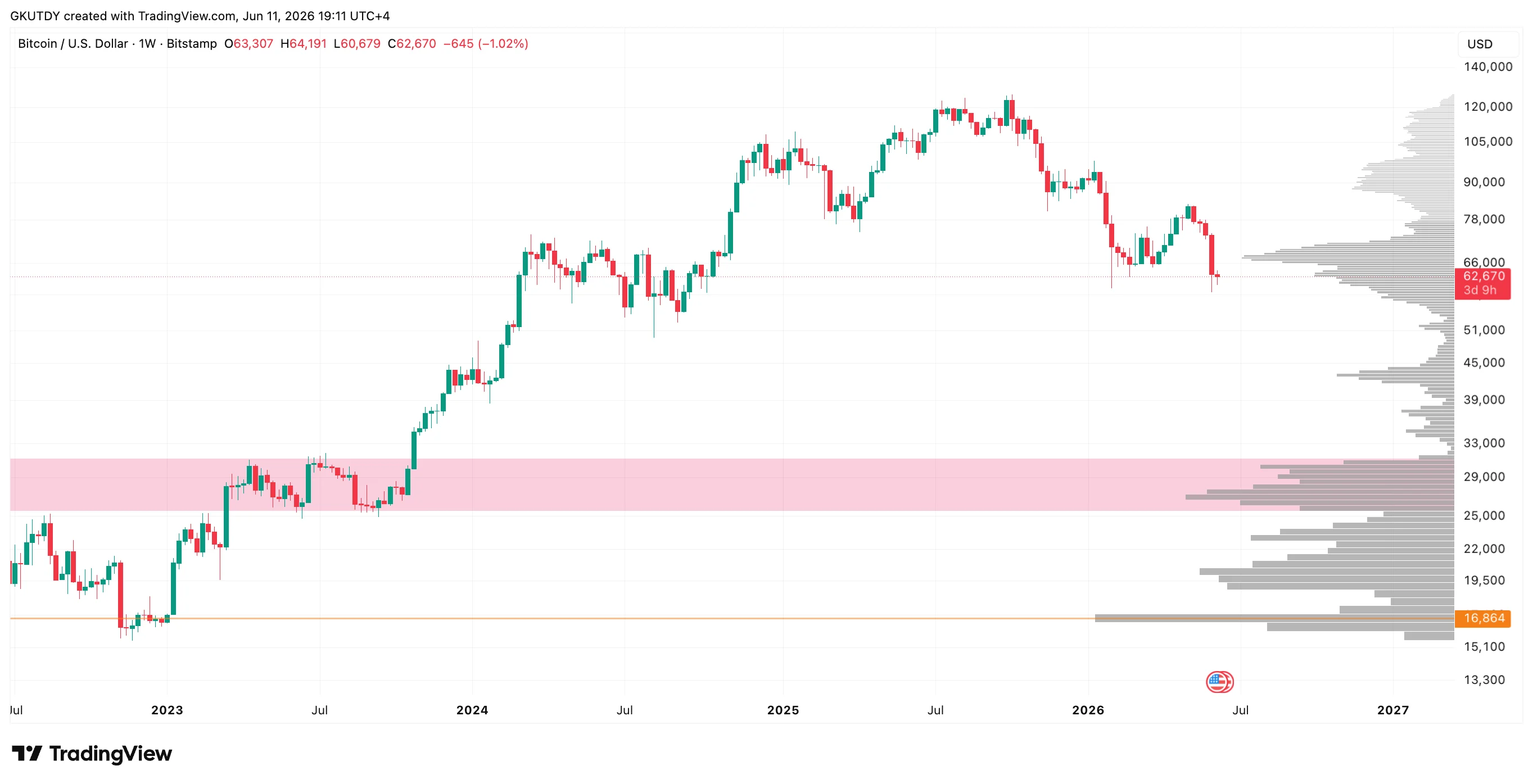
During today's trading session, Bitcoin is attempting to find a local bottom, trading around $62,826, up 2.23% over the past 24 hours, yet it remains down 15% since the beginning of June.
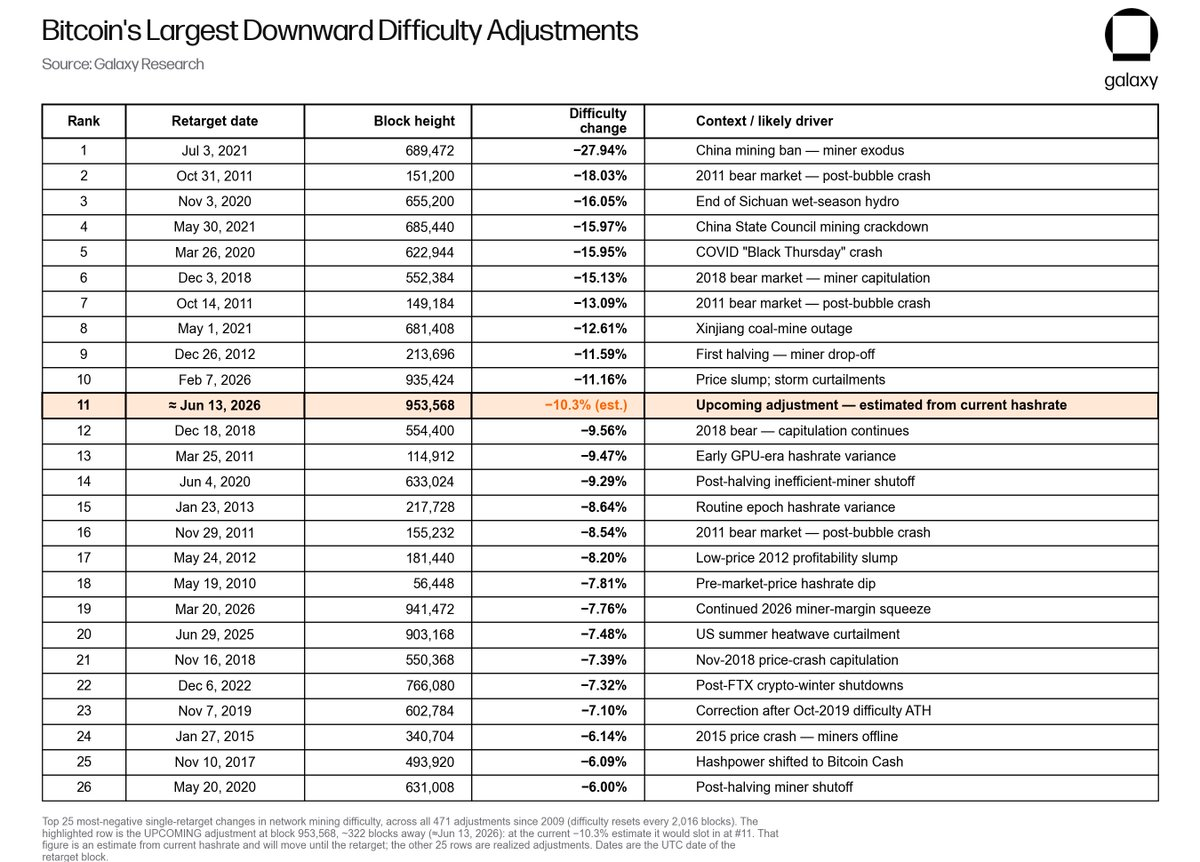
Analysts estimate that against this backdrop of price stagnation, an automatic adjustment scheduled for this coming Saturday, June 13, 2026, at block 953,568, will lower Bitcoin mining difficulty by 10.3%.
This upcoming decline clearly illustrates Bitcoin's built-in self-regulation mechanism. When the asset's price moves lower, mining becomes unprofitable for many companies, leading to equipment being switched off and a slowdown in block generation.
The network's algorithm then responds by making the mining task easier to maintain target block times.
The current 10.3% decline is set to become the eleventh-largest negative adjustment in the blockchain's history.
This marks the second major correction in 2026; earlier, on February 7, the network lowered difficulty by 11.16% due to a combination of price decline and severe winter storms.
The upcoming event stands alongside other significant stress tests in the industry's history, and for comparison, the top five deepest difficulty drops are as follows: -27.94% on July 3, 2021, due to China's full mining ban and the exodus of companies; -18.03% on October 31, 2011.
Following the collapse of the first major bubble; -16.05% on November 3, 2020, linked to seasonal migration of hash power from Sichuan; -15.97% on May 30, 2021, amidst the first strict crackdown by China's State Council; and -15.95% on March 26, 2020, driven by pandemic-fueled market panic.
The correction expected this weekend will allow the remaining market participants to reduce the cost of mining each block and help stabilize block times back toward the target level of 10 minutes.
However, if bearish pressure intensifies and the current horizontal volume shelf around $62,000 fails to hold, the key global support level, based on the historical volume profile, is located much lower in the range between $25,500 and $31,500 per BTC.