Benisheikh Horror: Borno Officials Reveal Forewarning of Deadly Attack

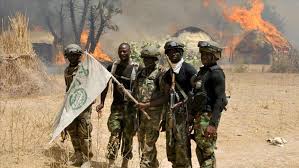
A recent terrorist attack on the 15 Task Force Brigade in Benisheikh, Kaga Local Government Area, Borno State, has underscored the persistent threat posed by insurgents in Nigeria's North-east. The deadly assault, which occurred in the early hours of Friday, targeted both the military formation and parts of the town, resulting in the death of the Brigade Commander, Brigadier General Oseni Braimah, along with several soldiers and civilians. This incident has sparked significant concern and prompted high-level visits and calls for a review of security strategies.
Borno State Governor, Professor Babagana Zulum, disclosed during a sympathy visit to Benisheikh that security forces had received credible intelligence about the impending attack approximately three days before it happened. Expressing his shock and dismay, Governor Zulum condemned the assault and highlighted the urgent need to reassess the region’s security architecture to effectively address emerging threats. The governor questioned local authorities, including the local government chairman, who confirmed receiving such intelligence reports, leading Zulum to lament the critical lapse that allowed the attack to proceed despite prior warnings.
Benisheikh, strategically located along the Maiduguri–Damaturu highway, serves as the headquarters of Kaga Local Government Area and is a crucial military and logistical hub in the ongoing fight against Boko Haram. The town has a history of insurgent attacks, including a devastating one in 2013. Despite improved security measures and sustained military operations that have restored relative calm in recent years, these sporadic attacks continue to demonstrate the resilience of insurgent groups operating in the Lake Chad Basin.
Governor Zulum emphasized the importance of enhanced intelligence coordination, vigilance, and proactive measures to protect both military installations and civilian populations. He reaffirmed the Borno State Government’s commitment to supporting the Armed Forces and other security agencies, pledging to strengthen local vigilantes and community resilience to prevent Benisheikh from falling into the hands of Boko Haram. The governor also extended his condolences to the families of the fallen soldiers, honoring their sacrifices as a testament to their patriotism and dedication to national security.
In a separate development, Vice President Kashim Shettima visited Maiduguri, the Borno State capital, to commiserate with the Nigerian Army and the state government over the attack. Representing President Bola Tinubu, Shettima honored the fallen soldiers, describing their sacrifice as a poignant reminder of the high cost of peace and security. He assured that the federal government would provide continued support, stating unequivocally that “criminals will have no hiding place” under President Tinubu’s administration.
According to a soldier who survived the Benisheikh assault, the scale and coordination of the attack were unprecedented. The attackers, suspected to be Boko Haram and Islamic State West Africa Province (ISWAP) fighters, advanced in large numbers from different directions simultaneously, appearing to have meticulously studied military positions beforehand. However, the Headquarters of Operation Hadin Kai clarified casualty figures, dismissing earlier reports of 17 soldiers killed. Lt.-Col. Sani Uba, Media Information Officer of the Northeast Joint Task Force, confirmed that only two officers and two soldiers died during the engagement. He also debunked claims that the brigade commander’s vehicle failed during the operation, explaining that Brigadier General Braimah was in a Mine-Resistant Ambush Protected (MRAP) vehicle that was only temporarily immobilized during combat, reflecting the intensity of the battle and his leadership at the frontline.
The Benisheikh attack has once again brought national attention to the precarious security situation in Nigeria’s North-east, highlighting the critical need for sustained collaboration among the military, government, and local communities to definitively defeat insurgency in the region.
Recommended Articles
Confusion Mounts Over Brigadier-General's Death in Borno Terror Attack

The Defence Headquarters has confirmed the death of Brigadier-General Oseni Braimah and three other personnel in a terro...
Tinubu's Outrage: President Mourns Troops Killed in Deadly Borno Terrorist Attack, Vows Justice

President Bola Tinubu has expressed deep sorrow over a deadly terrorist attack on a military base in Benisheikh, Borno S...
Brigade Commander Feared Dead as Military Confirms Soldier Killings in Fresh Boko Haram Offensive
Military personnel, including reports of a Brigade Commander, were killed in a coordinated insurgent attack on the 29 Ta...
Devastation in Northeast Nigeria: Airstrikes Claim Dozens of Lives

Recent airstrikes in Nigeria's Yobe state have resulted in numerous civilian deaths, with casualty figures disputed by v...
National Security Alert: FG Unveils New List of Alleged Terror Sponsors!

The Federal Government of Nigeria has unveiled an updated list of 48 alleged terrorism sponsors, including individuals l...
You may also like...
Sydney Sweeney Thriller Shatters Streaming Records, Dominates Charts!

Director Paul Feig's psychological thriller, The Housemaid, starring Sydney Sweeney, has become a massive box office and...
HBO's 'Harry Potter' Reboot Shocker: Beloved Character Cut From Films Set For Return!

The upcoming HBO Harry Potter series is generating significant excitement, with the documentary "Finding Harry: The Craf...
Justin Bieber's Coachella Performance Shocks Fans, Draws Celebrity Reactions

Justin Bieber headlined the 2026 Coachella festival with a distinctive set that blended nostalgic YouTube videos, new mu...
Capcom Shocks Fans by Re-Releasing Classic Resident Evil Titles

Accessing classic video games on modern systems is increasingly difficult, a problem stemming more from business decisio...
Teen Prodigy Eniola Osabiya Forges Gen Z Tech Community

Meet Eniola Osabiya, a 17-year-old Nigerian full-stack developer whose journey began at a church boot camp and led him t...
Shiba Inu on Brink? SHIB Faces Crucial $3.4 Billion Support Test as Major Crypto Spot at Risk

Shiba Inu (SHIB) is undergoing a critical period, potentially losing its top-tier cryptocurrency status due to declining...
Bitcoin Bull Michael Saylor Signals New Buying Frenzy with 'Orange Dot' Chart Revival

Michael Saylor's Strategy has once again sparked crypto market speculation with the return of its
Horror at Manchester Airport: Man Falls from Plane, Investigators On Scene

An aircraft engineer was seriously injured after falling from a Jet2 plane at Manchester Airport on Saturday, April 11. ...