Ayatollah Assassination Fallout: Global Fatwa Issued as Protests Erupt

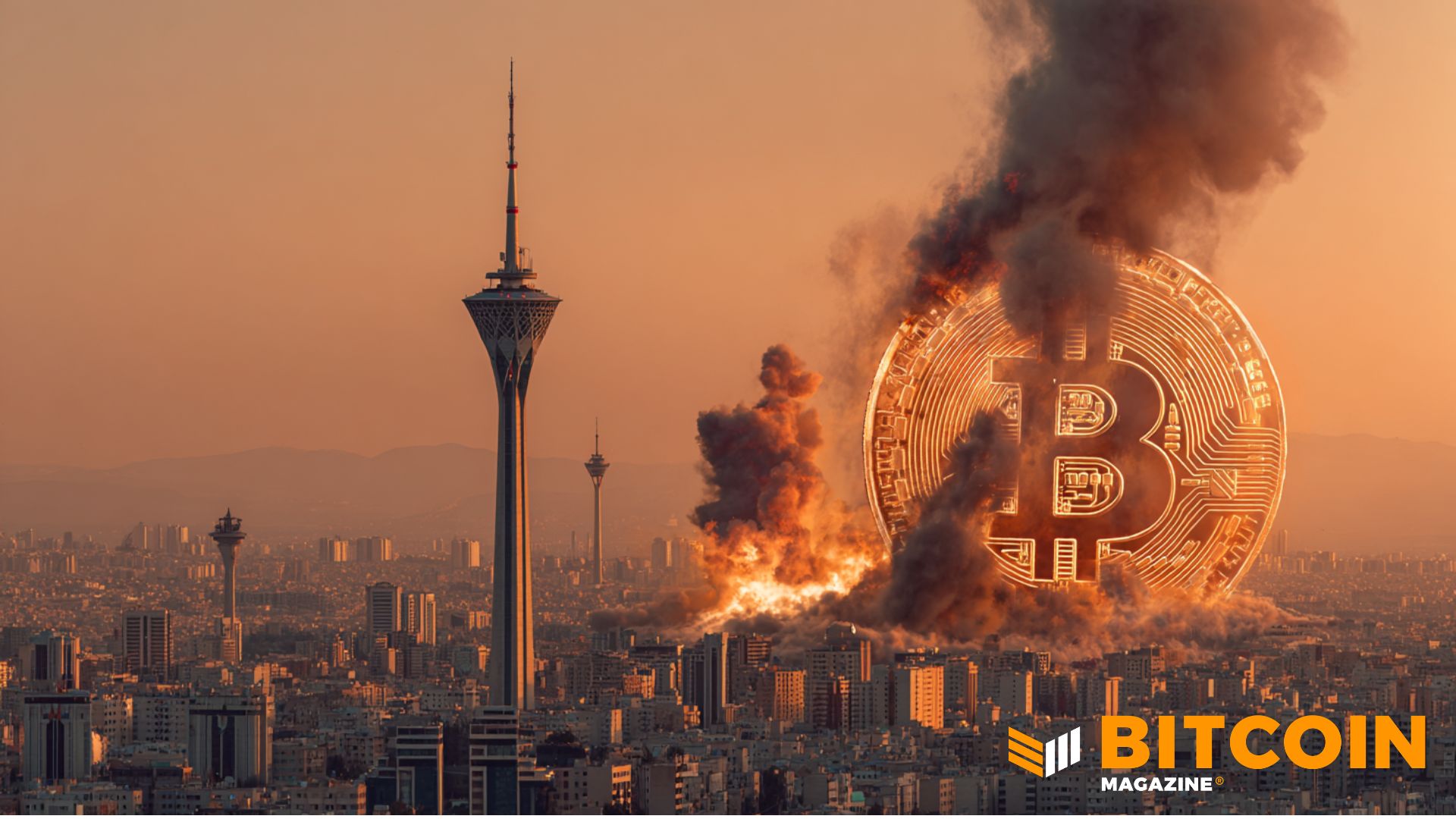
On a seemingly ordinary Saturday morning, events unfolded in central Tehran that would shake the foundations of Iran's leadership. At 8:10 am local time, the heavily fortified Beit Rahbari, the 'House of Leadership' and residence of Iran's Supreme Leader Ayatollah Khamenei, located on Pasteur Street, was struck by a combined Israeli and US military operation. Within minutes, Ayatollah Khamenei, alongside several other high-ranking officials including the commander-in-chief of the Revolutionary Guard, the regime's defence minister, and the secretary of Iran's Defence Council, lay dead. This devastating attack marked a significant escalation in the long-standing conflict between Iran and the West, orchestrating what has been termed a "new way of war" characterized by unprecedented intelligence penetration and technological sophistication.
The operation, dubbed "Epic Fury" and authorized by then-President Trump on February 27, was the culmination of years of meticulous planning and a seamless fusion of cyber warfare, surveillance, and human espionage. Israeli intelligence, with American assistance, had achieved a level of penetration into Iran's security services and government that allowed them to map the inner workings of one of the world's most paranoid regimes. This "next-level intelligence" combined advanced technology for data and visual analysis with extensive "humint" (human intelligence) gathered by covert agents.
Initial intelligence efforts following the "12-Day War" last June focused on exploiting a vulnerability: while Iranian VIPs were forbidden from carrying mobile phones, their bodyguards and drivers were not. Mossad and the IDF's Unit 8200 leveraged this to track key personnel, leading to the assassination of several Iranian commanders. After Iran shut down this loophole, Israeli intelligence adapted by shifting to broader, 24/7 multi-source surveillance. Key assets included a CIA agent within Khamenei's inner circle to confirm his presence, and Mossad's long-standing hack of Tehran's traffic camera network, particularly one on Pasteur Street, which provided a live feed of the compound's daily rhythms and personnel movements. Detailed dossiers were built on key figures, mapping their routines and identifying a "golden window" for a multi-decapitation strike.
The operational chronology was executed with extreme precision and secrecy. Israeli F-15s lifted off at dawn, turning away from Iran to avoid suspicion, before releasing air-launched ballistic missiles known as Black Sparrows. These repurposed target simulators, designed for testing Israel's Arrow missile defence system, followed a ballistic arc, striking the Pasteur compound instantly and obliterating it with over 30 missiles. Only one official survived, having overslept. A second wave then destroyed Iran's air-defence batteries, clearing a corridor for 200 Israeli aircraft – the largest air raid in the country's history – to sweep across Iran, hammering ballistic-missile depots, silos, mobile launchers, and production facilities. Within hours, Iran's air defences, missile infrastructure, and leadership were effectively neutralized.
Beyond the kinetic strikes, the operation integrated a psychological warfare component. Minutes after the initial explosions, the popular Iranian prayer-time calendar app, BadeSaba, which had been infiltrated earlier, pushed a series of messages to millions of users across the country. These alerts encouraged civilians to rise against the clerics, promised retribution for "cruel and merciless actions," and urged security forces to "lay down your weapons and join the forces of liberation." This demonstrated the seamless integration of cyber warfare with physical attacks. In the days following Khamenei's assassination, Israel and America continued their surgical strikes, eliminating another top-secret meeting of Iran's Supreme Council, which had gathered to choose a new Supreme Leader. While Khamenei's son Mojtaba has been chosen, Israeli sources indicate he too is likely being tracked, underscoring the ongoing nature of this "new way of war."
The assassination and subsequent strikes have elicited strong reactions and raised concerns about future retaliation. A top Iranian cleric, Nasser Makarem Shirazi, issued a fatwa, a formal religious decree, compelling all Muslims to avenge the "blood of the martyr" Ayatollah Ali Khamenei, explicitly naming the US and Israel as the "main perpetrators." Experts, including counter-terrorism specialist Ghaffar Hussain and Islamism expert Heiko Heinisch, have warned that this proclamation significantly heightens the risk of terror attacks globally by Iranian sleeper cells and lone wolves, targeting embassies, restaurants, shops, and institutions with connections to Israel or run by Jews. Past incidents, such as the 2018 alleged bomb plot in Paris, the 2018 assassination attempt in Denmark, and the 2012 New Delhi bombing attributed to Iranian agents, serve as stark reminders of Iran's history of exporting terrorism. British intelligence agencies, including MI5, are now closely monitoring Iranian networks in Europe, aware of the "soft target" vulnerability and the potential for individuals to interpret the fatwa as a direct religious order, similar to the long-term impact of the fatwa against Salman Rushdie.
Public reactions to Khamenei's death were also immediate and divided. In Manchester, UK, a candlelit vigil was held for the "late Supreme Leader," attracting mourners who waved Palestinian flags, carried pictures of Khamenei, and criticized Israel. This vigil, supported by the Friends of Islamic Centre of Manchester and attended by members of Ahlul-Bayt Islamic societies from British universities, was met with a counter-protest. Pro-monarchy demonstrators, waving US, Israeli, and pre-1979 Iranian flags, celebrated Khamenei's death, burned his pictures, and expressed support for Reza Pahlavi. Clashes ensued, necessitating police intervention. Greater Manchester Police acknowledged the strong emotions but stated they could not ban gatherings unless there was a clear risk to life and property. Meanwhile, former US President Donald Trump confirmed Khamenei's killing, branding him "one of the most evil people in history" and crediting the intelligence and sophisticated tracking systems for the success. Iranian authorities postponed Khamenei's funeral amidst the ongoing strikes, signifying the unprecedented scale and impact of the operation.
You may also like...
The Naira's Recent Stability: Temporary Relief or the Start of a Real Recovery?

After years of steep decline, the naira has shown unexpected stability. But is Nigeria’s currency truly recovering, or i...
Carrick's Man Utd Reign Hits First Snag: 'It Hurts' Coach Admits After Defeat!

Manchester United's seven-game unbeaten run under coach Michael Carrick concluded with a 2-1 defeat to Newcastle United....
João Pedro Stuns Villa with 'World Class' Hat Trick, Draws High Praise!
Chelsea secured a commanding 4-1 victory against Aston Villa, driven by João Pedro's hat trick and a goal from Cole Palm...
Nvidia's Jensen Huang Fuels Mystery: Is He Really Pulling Back from OpenAI & Anthropic?

Nvidia CEO Jensen Huang announced the company's likely cessation of investments in OpenAI and Anthropic, citing impendin...
Ayatollah Assassination Fallout: Global Fatwa Issued as Protests Erupt
A joint US-Israeli strike successfully assassinated Iran's Supreme Leader Ayatollah Khamenei in Tehran, leveraging a "ne...
World on Edge: US-Backed Forces Launch Ground Invasion as Iran Conflict Explodes

The escalating US-Israel-Iran conflict presents multifaceted challenges, from sophisticated drone warfare and ground off...
Thinking of Trading Crypto? Read This Before You Download Any App

Thinking of trading crypto in 2026? Before you download any exchange app, here are five critical things every beginner n...
The 4 Types of Parenting Styles: What Style Is Actually Right for You?

A detailed guide to the four parenting styles, authoritative, permissive, authoritarian and neglectful and how each appr...