Are We Turning Everyday Struggles Into Mental Health Diagnoses?
When did heartbreak become depression, neatness become OCD and selfishness become narcissism? Mental health labels may be changing how we understand ordinary life.
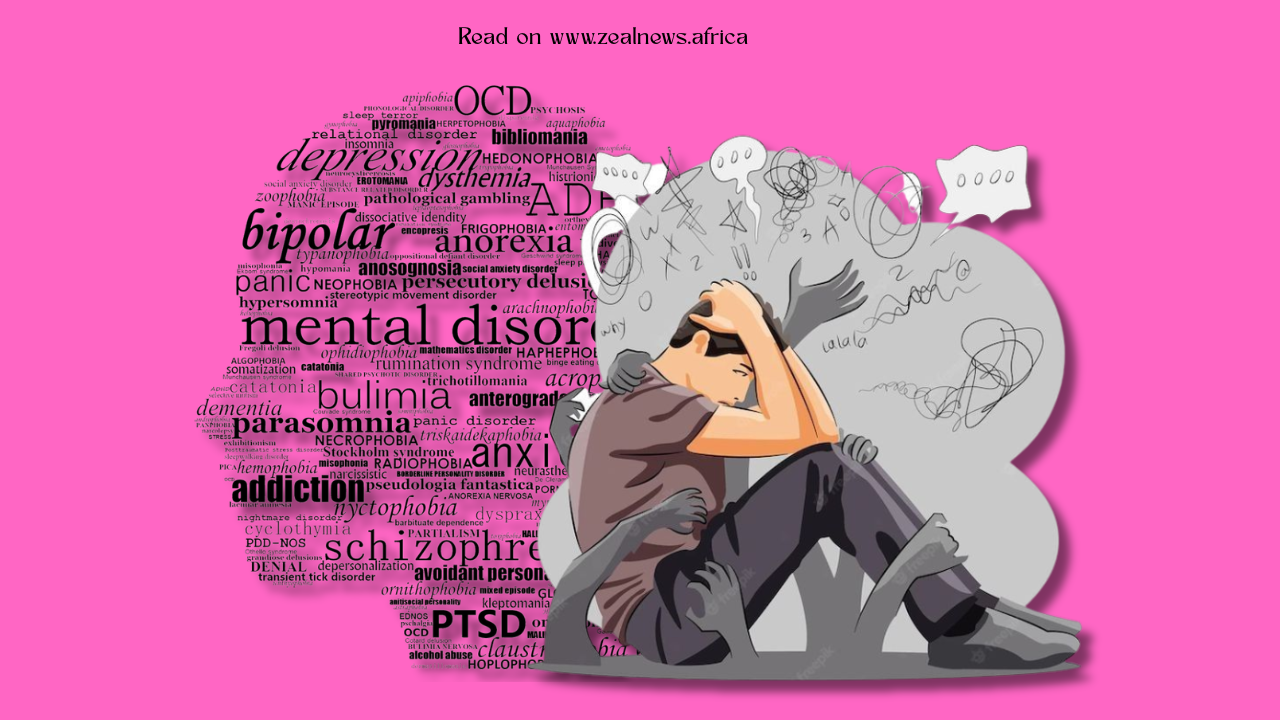
“My love, just because you sweep your house five times a day does not automatically mean you have OCD.”
Crying after a breakup does not automatically mean you have depression. Feeling nervous before an interview does not necessarily mean you have an anxiety disorder.
Forgetting where you kept your keys is not enough to prove that you have ADHD. And an inconsiderate former partner cannot be clinically diagnosed as a narcissist simply because the relationship ended badly.
Somewhere along the way, the language of mental health escaped the consulting room and became part of everyday conversation.
Words such as OCD, ADHD, anxiety, depression, trauma, abuse and narcissist now appear constantly in social-media posts, relationship discussions and casual conversations.
A stressful week becomes “anxiety”, an argument becomes “emotional abuse”, and an untidy room becomes evidence of ADHD.
This growing awareness has produced genuine benefits. People now have more language with which to describe emotional pain, recognise possible symptoms and begin conversations that were previously surrounded by shame.
But greater awareness has also created an uncomfortable question: are clinical labels being stretched so widely that ordinary human struggles are increasingly mistaken for mental disorders?
Why Mental Health Labels Are Everywhere
Spend a few minutes on TikTok, Instagram or YouTube and you may encounter videos promising to reveal “signs you have ADHD”, “symptoms of hidden trauma” or “proof that you are dating a narcissist”.
Some of this content is created by qualified professionals, while much of it comes from people sharing personal experiences. A personal experience can be valuable without being universally diagnostic.
The problem is that social media rewards content that is fast, relatable and emotionally compelling. Mental-health diagnosis, however, requires considerably more context.
A 2022 study published in The Canadian Journal of Psychiatry examining 100 popular ADHD videos on TikTok classified 52 per cent of them as misleading, while only 21 per cent were considered useful by the clinical reviewers.
More recent experimental research found that people shown inaccurate ADHD videos had less accurate knowledge afterward but greater confidence in what they believed they knew. Misinformation can therefore make people feel informed while leaving them less informed.
That does not make every mental-health video harmful. It means a viral video should be treated as a possible starting point for questions, not a substitute for an assessment.
Relatable Behaviour Is Not the Same as a Diagnosis
Clinical conditions are rarely defined by one behaviour that occasionally appears in everyday life. Professionals consider how frequently symptoms occur, how long they have persisted, whether they appear in different situations and how seriously they affect a person’s life.
The World Health Organization describes a mental disorder as a clinically significant disturbance in cognition, emotional regulation or behaviour that is usually associated with serious distress or impaired functioning. Distress matters, but distress alone does not always establish a disorder.

Take obsessive-compulsive disorder.
OCD is not simply a preference for cleanliness or organisation. It involves recurring, unwanted thoughts, repetitive behaviours or both, with symptoms that can consume significant time, cause distress and interfere with daily life.

A person with OCD may clean repeatedly, but the central issue is not how clean the house becomes. The behaviour may be driven by intrusive thoughts and a powerful urge to perform rituals to obtain temporary relief from distress.
ADHD is also more complicated than occasional distraction.
ADHD involves a persistent pattern of inattention, hyperactivity or impulsivity that begins in childhood, appears in more than one setting and interferes with social, educational or occupational functioning.
Everyone may lose keys, postpone a task or struggle to concentrate when tired. In ADHD, these difficulties form a continuing pattern that can seriously disrupt school, employment, relationships and everyday responsibilities.
Anxiety requires the same distinction.
Feeling anxious before an important interview is a normal human response. Anxiety disorders generally involve fear or worry that is excessive, difficult to control, persistent and disruptive to a person’s family, social, school or working life.
Depression is not simply another word for sadness.
A person can feel deeply sad after rejection, bereavement or disappointment without necessarily having major depressive disorder. Clinical depression involves a broader group of persistent symptoms that significantly affect daily functioning, and diagnosis requires symptoms to be present most of the day, nearly every day, for at least two weeks.
The two-week period is not a do-it-yourself test. A person’s symptoms, medical history, circumstances and level of impairment must still be properly evaluated.
The Rise of “Concept Creep”
Psychologist Nick Haslam has described the expansion of harm-related language as “concept creep”.
His research argues that concepts including trauma, abuse, bullying and mental disorder have gradually expanded to include a wider range of experiences and less severe forms of behaviour.
This expansion can improve recognition of previously ignored harm, but it can also encourage society to interpret ordinary difficulties through increasingly clinical language.
The effects are not entirely positive or entirely negative.
A broader understanding of trauma may help people recognise experiences that were previously dismissed. But when every upsetting event is described as trauma, the term may lose some of the precision needed to understand different kinds and levels of distress.
Psychiatrist Allen Frances, who chaired the task force that produced the DSM-5, has become a prominent critic of diagnostic overreach. He has repeatedly argued that psychiatric labels should not be expanded so casually that ordinary sadness, grief, worry and disappointment are automatically treated as mental illnesses.
Child and adolescent psychiatrist Sami Timimi has advanced an even stronger criticism of modern psychiatric diagnosis. He argues that family relationships, culture, development, inequality and social pressures can be overlooked when complex difficulties are quickly placed into diagnostic categories.
These views remain part of an ongoing professional debate. They should not be interpreted as proof that mental illnesses are unreal or that diagnosis is never useful.
For many people, receiving an accurate diagnosis provides clarity, access to treatment, appropriate accommodations and a better understanding of difficulties they have experienced for years.
The Other Danger: Dismissing Genuine Illness
Concern about overusing clinical labels can easily swing too far in the opposite direction.
Telling people that they are “just sad”, “simply lazy” or “only overthinking” can discourage those with serious symptoms from seeking support. Not every struggle is a mental disorder, but every struggle still deserves to be taken seriously.
Many people with genuine mental-health conditions continue to receive no treatment. WHO estimates that only about one in four people living with an anxiety disorder obtains treatment, despite the availability of effective care.
The answer is therefore not to mock people who recognise themselves in an online discussion. Nor is it to accept every online symptom list as a diagnosis.
The responsible response lies between dismissal and self-diagnosis.
A video may help someone notice a troubling pattern. The next step should be careful reflection and, where symptoms are persistent, overwhelming or disruptive, consultation with a suitably qualified professional.
When Does an Everyday Struggle Become Something More?
Human beings naturally experience sadness, worry, grief, frustration, disappointment and uncertainty.
These emotions can be painful without necessarily being pathological. Mental-health concerns become especially important when symptoms persist, intensify or begin disrupting a person’s ability to function.
Warning signs may include being unable to manage normal responsibilities, experiencing major changes in sleep or appetite, withdrawing consistently from important relationships or feeling unable to cope with ordinary daily activities.
Even then, the purpose of professional assessment is not merely to attach a label. It is to understand what the person is experiencing, what may be contributing to it and what kind of support would be most helpful.
The original purpose of mental-health awareness was not to convince everyone that they had a disorder. It was to help people recognise genuine suffering and obtain support without shame.
That goal remains worth protecting.
Not every bad day is depression.
Not every organised person has OCD.
Not every distracted person has ADHD.
Not every selfish partner has narcissistic personality disorder, and not every painful experience needs a clinical label before it can be acknowledged.
Sometimes life is simply difficult. Knowing when difficulty has become persistent, disabling or overwhelming may be one of the most valuable forms of mental-health awareness we can develop.