Ancient Superstitions Revealed: The Terrifying Truth About Owls as Omens
Owls possess a dual symbolism rooted in classical antiquity, representing both wisdom and omens of death. Linked to goddesses like Athena for their practical intelligence and nocturnal abilities, they also foretold doom due to their association with darkness and the underworld.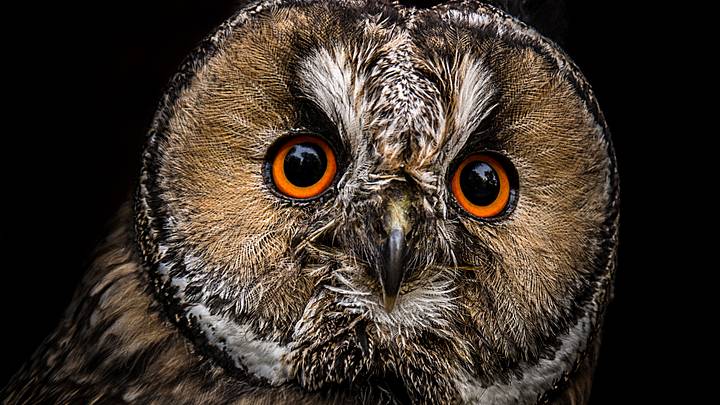
Francisco Goya's 1799 etching, “The Sleep of Reason Produces Monsters,” famously depicts a man asleep amidst a swirl of bats and owls, prompting contemporary Western audiences to ponder the symbolic nature of these creatures. While bats are widely understood to represent ominous themes like witches and vampires, owls present a more complex duality. Commonly associated with wisdom, owls have also historically carried foreboding connotations, signaling danger and death. This seemingly contradictory symbolism—one comforting, the other distressing—does not stem from disparate cultural eras but rather from ancient roots, with both aspects traceable to classical antiquity.
The owl's connection to wisdom is deeply embedded in ancient Greek and Roman mythology. Specifically, the little owl, or *Athena noctua*, prevalent in regions like Italy and Greece, was a sacred animal linked to Athena and her Roman counterpart, Minerva. These goddesses presided over a diverse array of domains including art, crafts, warfare, trade, and strategy. Their wisdom, however, was not defined as contemplative knowledge for its own sake but rather as a practical intelligence—the ability to apply insight to solve real-world problems, such as designing sturdy buildings or devising battle strategies against superior numbers. The owl's strong association with Athena, particularly, was reinforced by its abundant presence around Athens, a primary center for her worship, and by the bird's own remarkable characteristics: its exceptional hearing and eyesight, which allow it to navigate and hunt effectively in the deep darkness of night, a time when human senses are largely diminished.
Conversely, the owl's nocturnal lifestyle is also the source of its status as an omen of danger and death. For the ancient Greeks and Romans, and indeed many other cultures, darkness was symbolically linked to the underworld, the final destination for all mortals. It is therefore not surprising that owls frequently appear in ancient accounts preceding the deaths of prominent Romans, including historical figures like Julius Caesar and Augustus. One notable anecdote recounts how Tiberius Gracchus, a politician whose land reforms earned him the enmity of powerful senators,