Alarming Drop: African Tech Funding Rebound Leaves Women Behind
Despite a 46.2% increase in total funding to $1.64 billion for African tech startups in 2025, gender diversity significantly declined, with only 16.9% of funded ventures having a woman on their founding team. A new report by Disrupt Africa reveals this downward trend, highlighting how capital concentration is benefiting established founders at the expense of diversity. This underscores the urgent need for deliberate intervention to achieve an inclusive tech sector.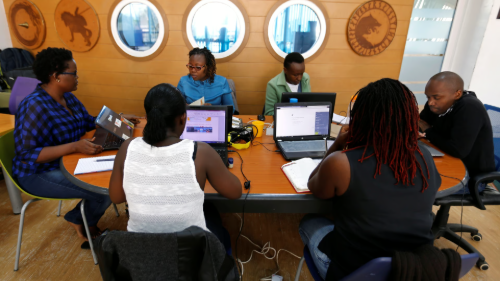
Despite a recovery in total investment volumes, gender diversity in African tech funding experienced a significant decline in 2025, according to the latest African Tech Startups Funding Report by Disrupt Africa. The report highlights a worrying trend where, even as the overall venture capital landscape stabilized, representation for women founders continued its downward trajectory.
In 2025, a total of 178 startups successfully raised $1.64 billion. While the number of funded ventures saw a slight dip, the total funding amount increased by a substantial 46.2% compared to the previous year, 2024. However, this growth in capital did not translate into improved gender representation. Only 30 of the funded startups, equating to 16.9%, had at least one woman on their founding team in 2025. This figure marks a further reduction from 37 startups (18.5%) in 2024 and a more significant drop from 107 startups (26.3%) in 2023.
This decline extends a consistent downward trend observed over several years. In 2022, 128 funded startups, representing 20.2% of the total, included a female co-founder. The figure stood even higher in 2021, at 121 startups or 21.5%. The data strongly suggests that the consolidation phase following the recent capital crunch has regrettably failed to enhance gender representation among funded ventures across the African continent.
Further reinforcing these findings, Disrupt Africa's separate Diversity Dividend report concluded that progress towards achieving gender balance within the ecosystem has been limited and remains considerably far from parity. This indicates a systemic issue that goes beyond mere fluctuations in funding cycles.
Key insights from the report underscore that while African tech funding has indeed stabilized after a global slowdown in venture capital, this stability appears to be accompanied by a concentration of capital. This concentration disproportionately benefits a smaller pool of more established founders, often at the direct expense of fostering diversity within the startup landscape.
Globally, research consistently demonstrates that female-founded startups typically receive only a small fraction of overall venture capital. In the African context, women-led ventures have historically attracted less than 10% of the total funding by value. During periods of tighter funding cycles, investors frequently exhibit a tendency to favor proven networks and repeat founders. This inclination, while seemingly rational from a risk perspective, inadvertently reinforces existing gender imbalances and limits opportunities for new and diverse teams.
Moreover, the increasing trend of larger ticket sizes also contributes to skewing total funding predominantly towards male-dominated teams, as these larger investments often go to established entities with existing male leadership. Addressing and improving representation will necessitate a multi-faceted approach, including the establishment of targeted funds specifically for diverse founders, the creation of stronger pipelines at the crucial pre-seed and seed investment levels, and a concerted effort to increase the number of women in venture capital decision-making roles.
As the funding landscape for African tech rebounds, stakeholders within the ecosystem are urged to face the crucial challenge of ensuring that this recovery does not inadvertently widen existing structural gaps. Without deliberate and proactive intervention, the current concentration of capital risks significantly slowing down, if not reversing, the progress towards a more inclusive and equitable tech sector across the entire African continent.