Akpabio's Bold Declaration: Senate Not a Hub for Political Largesse!
Senate President Godswill Akpabio has strongly advised political parties against denying experienced lawmakers tickets for re-election, stressing the importance of legislative continuity for effective governance. He emphasized that the Senate is a serious institution for competence and national development, not for political patronage, and highlighted how retaining experienced legislators improves lawmaking and strengthens democracy.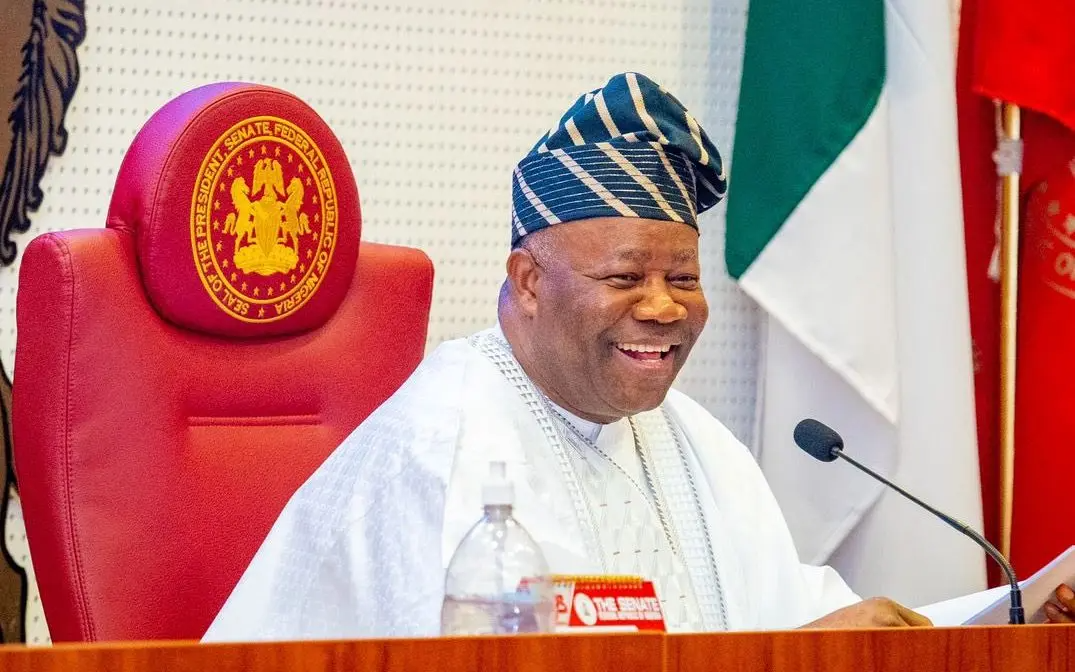
Senate President Godswill Akpabio has issued a strong caution to political parties, urging them against denying experienced lawmakers tickets to return to the National Assembly. He emphasized that such decisions could significantly weaken democratic governance in Nigeria by depriving the legislature of invaluable experience and institutional knowledge. Akpabio firmly stated that the Senate is not a platform for "sharing political largesse" or political patronage, but rather an institution where competence, experience, and commitment to national development must be prioritized.
Akpabio stressed the importance of continuity, remarking that it is detrimental for a senator to serve only one year. He called upon political parties to give greater consideration to the contributions of serious-minded individuals who can make meaningful impacts on legislation and national development. He cited Professor Francis Faduyile, a former president of the Nigerian Medical Association, as an example of an individual possessing considerable experience and expertise vital for the Senate. The Senate President maintained that while political decisions often involve state-level considerations, experienced lawmakers should always be given opportunities to continue contributing to legislative progress.
To underscore the benefits of retaining experienced legislators, Akpabio highlighted how it can strengthen legislative institutions, enhance the quality of parliamentary debates, and promote the development of laws that effectively address the country’s challenges. He insisted that legislative experience is a crucial asset that should not be discarded without careful deliberation. Drawing parallels with the United States, he referenced long-serving figures like former Senator Robert Byrd, who served for 51 years, and former President Joe Biden, who represented Delaware in the Senate for 36 years. Akpabio argued that such long-serving lawmakers develop profound institutional knowledge and legislative expertise essential for strengthening parliamentary proceedings and improving lawmaking quality.
The Senate President asserted that Nigeria must cultivate a democratic system where the legislature is recognized as a critical institution of governance, rather than merely a venue for political rewards. He underscored that the effectiveness of government is directly dependent on the quality of laws enacted by the National Assembly. Akpabio posed a critical question, asking how Nigeria could achieve effective governance if lawmakers fail to enact legislation capable of addressing citizens' needs and aspirations, urging for laws that genuinely improve the lives of Nigerians.
Akpabio also acknowledged and welcomed the growing public interest in legislative activities, citing the recent Senate debate on the decriminalization of suicide as evidence. He noted that the considerable discussion generated on social media demonstrated that Nigerians are actively following parliamentary proceedings and engaging with issues being considered by their representatives. This public attention, he suggested, should motivate lawmakers to elevate the quality of their debates and ensure legislative decisions truly reflect the public interest. Finally, Akpabio urged senators to maintain their commitment to producing legislation that fortifies democratic institutions, enhances governance, delivers tangible benefits to citizens, and ultimately strengthens the legislature as a central pillar of Nigerian democracy.