Ajé: The Spirit of Prosperity in Yoruba Life and Diaspora
What does Ajé really mean, and how do you attract it?
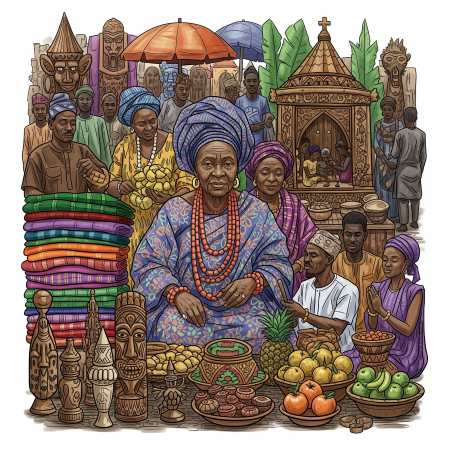
What Does It Mean When Someone Says "Ajé"?
To hear someone say “Ajé” in Yoruba culture is to be greeted with a word of immense spiritual and material weight. It is not merely a name; it is a declaration of blessing, an invocation of wealth, abundance, and unfolding opportunity.
In markets, homes, and sacred gatherings, "Ajé" is spoken as a call for success, a wish for prosperity, and a reminder of the invisible forces that govern fortune.
To call someone "Ajé" is to recognize their ability to attract or embody wealth, not only financial, but also spiritual, communal, and creative. It affirms a person's connection to the life-force of abundance itself.
Ajé: Origins, Essence, and Tenets

Image Credit: Unsplash
In Yoruba cosmology, Ajé is more than a deity. She is a guiding principle. She is revered as an Orisha, and also serves as a way of life—a discipline of being, acting, and thinking in alignment with the principles of prosperity, balance, and ethical wealth.
Her presence is believed to attract opportunity, prevent financial loss, and awaken entrepreneurial wisdom.
She is considered a child of Olokun, the mysterious and wealthy deity of the deep ocean. As Ajé Olokun, she emerges from the depths bearing riches and hidden power. Her symbols—cowrie shells, kola nuts, and the color yellow—speak to her role as the custodian of ancient currency and divine commerce.
Living the Ajé way means practicing mindful prosperity. This involves maintaining cleanliness in both body and intention, approaching life with gratitude for blessings received and those yet to come, conducting oneself with humility in times of wealth, not being wasteful, extending generosity toward others in need, and respecting women, elders, and spiritual traditions as sacred bearers of divine energy.
Ajé does not reward greed or ingratitude. She withholds her favor from those who hoard or boast or waste.
Culture
Read Between the Lines of African Society
Your Gateway to Africa's Untold Cultural Narratives.

Image Credit: Unsplash
Ajé in Yoruba Cosmology: Symbols and Sacred Acts
Ajé’s sacred day is Monday, called Ojo Ajé, a day when markets hum with spiritual energy and traders invoke her name for profitable dealings. It is customary to rise early, bathe and wear fresh clothing, speak oríkì (praise poetry), and offer prayers, songs, and gifts such as cowries, fruits, honey, or grains.

Ajé’s veneration includes rituals performed at crossroads or busy markets, where her energy is most active.
Key symbols include cowrie shells, which represent ancient money and the divine concept of value; yellow garments, evoking attraction, success, and gold; and white bowls of water, used in blessings and rituals to cleanse and draw in positive energy.
But more than ritual, the Ajé lifestyle requires daily alignment with her principles. Wealth is to be managed with wisdom, shared with love, and earned with honesty.
The Do’s and Don’ts of Ajé Veneration

Those who venerate Ajé are encouraged to purify themselves physically and spiritually before prayer, to ask for wisdom and opportunity rather than simply requesting money, to offer thanks to Olodumare and the Orisha for all forms of abundance, to use wealth to uplift others within the community.
On the other hand, one should never beg for riches without showing intention or readiness to act. Wealth should not be displayed arrogantly, and actions rooted in envy or greed must be avoided.
A Holistic Philosophy of Wealth
Culture
Read Between the Lines of African Society
Your Gateway to Africa's Untold Cultural Narratives.
To follow Ajé is to embrace a holistic understanding of prosperity. Wealth is not simply what one owns; it is how one lives. It includes integrity in business dealings, mindfulness in how resources are acquired and spent, wisdom in financial and spiritual decisions, generosity toward others as a spiritual responsibility, and balance between the material and the sacred.
Ajé teaches that true riches are layered. They encompass not just material gain, but also knowledge, peace of mind, personal development, cultural identity, and ethical living. In this way, Ajé is not merely a spirit to be worshipped. She is a principle to be lived, a mirror that reflects our values and aspirations.
Ajé in the Yoruba Diaspora
As Yoruba people were displaced during the transatlantic slave trade, Ajé traveled with them. She was carried not only in rituals but also in songs, chants, and dreams. Across South America and the Caribbean, she took root in new soil, including in Candomblé, Santería, Lucumí, and Trinidad Orisha traditions.
Here, Ajé became both a spiritual symbol and a cultural rallying point. Her energy inspired entrepreneurship among marginalized communities, economic resilience in the face of systemic oppression, and reverence for feminine power in a colonial world that often denied it.
In modern diasporic practice, Ajé remains a beacon of justice, empowerment, and balance. Community ceremonies, workshops, and rituals focus not only on invoking her power but also on financial literacy, self-sufficiency, and spiritual healing.
A Global Concept

Across world cultures, the concept of divine prosperity finds powerful resonance in deities and spiritual figures that mirror the role of Aje in Yoruba cosmology.
In Hinduism, Lakshmi stands as the radiant goddess of wealth, prosperity, and fertility, often depicted with gold coins and lotuses, while Kubera serves as the guardian of treasures and lord of riches.
In Greco-Roman tradition, Plutus, the Greek god of wealth, parallels Aje through his embodiment of agricultural abundance, while Fortuna, the Roman goddess of fortune, symbolizes the unpredictable nature of prosperity through her cornucopia and wheel of fate.
In East Asian traditions, figures like Hotei, known for his overflowing sack of treasures, and Ebisu, the Japanese god of prosperity and fishermen, reflect Aje’s joyful and communal aspect of abundance.
Culture
Read Between the Lines of African Society
Your Gateway to Africa's Untold Cultural Narratives.
Daikokuten, another Japanese deity, grants wealth particularly to farmers and households, while Caishen in Chinese folk religion is a widely revered god of fortune, honored especially during the Lunar New Year.
Conclusion
In both Yoruba lands and the global diaspora, Ajé continues to influence cultures. Those who seek her favor are to live not just richly, but righteously. Blessings come to those who understand: prosperity is sacred, and so must be our pursuit of it.