Africa's Dark Files: How a Radio Host's Murder Reached Cameroon’s Highest Circles
Martinez Zogo, Cameroon's fearless radio journalist, was abducted and tortured to death in January 2023 after exposing government corruption. Inside the state-linked plot, the trial, and the fight for press freedom accountability in Central Africa.
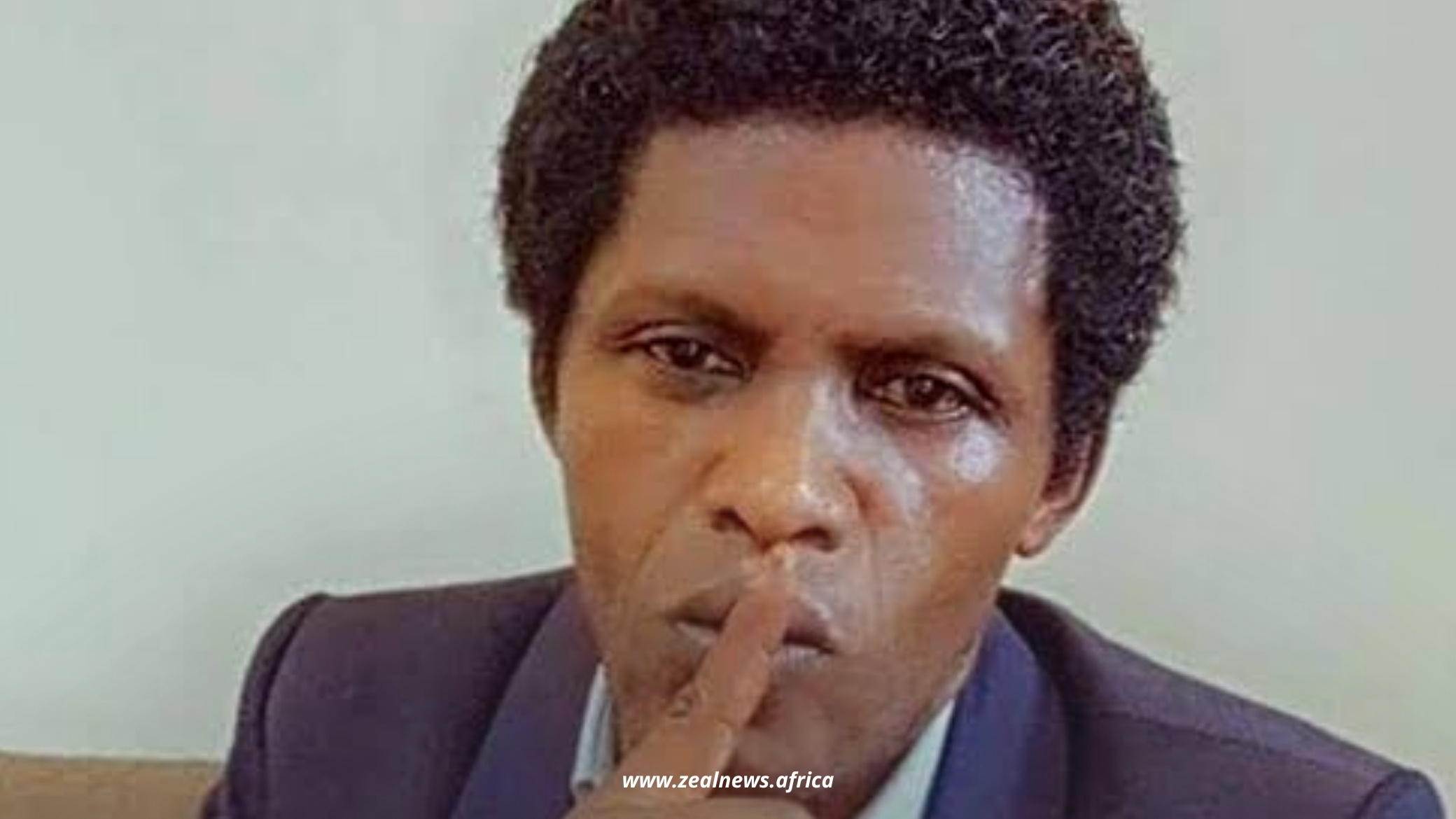
Every morning in Yaoundé, Cameroon, drivers and market traders tuned their radios to Amplitude FM and waited to hear the truth on Martinez Zogo's show. The show called Embouteillage, was named after the Cameroonian word for gridlock, and each broadcast was a perfect traffic jam of inconvenient names, figures and information that powerful men would have preferred to remain in the dark.
For nearly two decades, Zogo did this from a microphone. Then, on the evening of January 17, 2023, four hooded men in a black Prado followed him home.
He never made it through the gate.
Cameroon Journalist Murder: The Man Behind the Microphone
Arsène Salomon Mbani Zogo, known on air as Martinez Zogo, was born in Yaoundé in 1972 and built a career by naming names.
His program, Embouteillage, launched at Radio Magic FM around 2006 and later carried by Radio Amplitude FM, became a platform for exposing financial scandals, alleged embezzlement by government officials and the intricate networks linking Cameroon's business class to the state.
With this program on air, he had to pay a price. Cameroon's media regulator, the Conseil national de la communication (CNC), suspended Embouteillage multiple times over the years following complaints from the officials Zogo named.
It might seem like the silence of a guilty conscience but it is more of the administrative pressure of a state that prefers its corruption unreported. Zogo kept broadcasting anyway.
In the weeks before his abduction, Zogo's reporting had grown more specific. He publicly accused Jean-Pierre Amougou Belinga, one of Cameroon's most powerful media moguls, and founder of Vision 4 Television and the L'Anecdote media group, of corruption involving funds from the Cameroonian treasury.
He also claimed to hold documents implicating senior state officials in the theft of millions of dollars in public funds since 2013, and said he had sent this dossier to several institutions and media outlets.
Then, on air, he told his listeners something he knew and navigated off microphone: people involved in corrupt activities wanted him dead.
Targeted Killing of a Journalist: The January 17 Abduction
According to multiple witness accounts reviewed by the Committee to Protect Journalists, at about 8 p.m. on January 17, 2023, four hooded men in a black Prado car followed Zogo while he was driving to his home outside the capital city of Yaoundé.
Zogo sought help at a nearby gendarmerie station, and the attackers collided with his vehicle as he drove to the station's closed gate, prompting Zogo to exit his car and run for help.
A witness heard him shout: help me, they want to kill me. He was forced into the Prado and the attackers disappeared into the night.
Five days later, on January 22, 2023, his body was found in Ebogo, roughly 15 kilometres from Yaoundé, in an advanced state of decomposition. The Cameroonian government confirmed the body had suffered substantial physical abuse.
Reports from journalists described what forensic evidence later established. Zogo had been sexually assaulted, and his genitalia, fingers, and teeth had been mutilated prior to his death.
His body also showed signs of burns, fractures and acid exposure; the acid was applied to his face, likely in a failed attempt to destroy the remains before the body was left to be found.
DGRE Cameroon and Press Freedom: When the State Becomes the Weapon
The arrests that followed sent shockwaves through Cameroon's political elite. On January 31, 2023, authorities arrested Léopold Maxime Eko Eko, head of the General Directorate of External Intelligence (DGRE), and Justin Danwe, director of operations at the DGRE.

Léopold Maxime Eko Eko | Image credit: Jeune Afrique
Between January 31 and February 9, 2023, more than 20 people were arrested. On February 6, Amougou Belinga was arrested at his home in Yaoundé.


Justin Danwe | Image credit: ACTU Cameroun
What court documents later made public revealed the existence of a surveillance operation that allegedly spied on Zogo since at least 2015. This was disclosed in a 20-page referral to trial document reviewed by CPJ.
Eko Eko had ordered the DGRE to surveil the journalist since 2015 as part of the "Presse" dossier. Zogo's surveillance was corroborated by Yves Saïwang, an officer in the DGRE's electronic surveillance division, who declared during questioning that Zogo was the target of surveillance, and that since 2017, he was responsible for monitoring him.
Saïwang said he sent Danwe geolocation information about Zogo via WhatsApp and received 20,000 francs (US$33). Heudji Guy Serge, another DGRE officer, said he too provided technical information to Danwe about Zogo and received 15,000 francs (US$25).
The surveillance machine that ultimately killed Zogo had been running, quietly and systematically, for eight years.

Evidence in the Martinez Zogo Trial: Deleted Calls, Digital Forensics, and a WhatsApp Group Named "Soa"
As the case moved toward the military tribunal in Yaoundé, court proceedings, which formally opened in March 2023, began to expose the infrastructure of the alleged plot in granular detail. The most consequential disclosure was centred on 26 deleted calls.
Official telephone records confirmed that between January 18 and January 28, 2023, Amougou Belinga and Lieutenant-Colonel Danwe exchanged 26 audio calls and this particular timeline corresponded precisely to the period covering Zogo's abduction and the discovery of his body. Both men deleted the calls from their respective devices.
Digital forensic expert Prof. Georges Bell Bitjoka, presenting in court, mapped out a WhatsApp coordination thread explicitly named "Soa" which is the area on the outskirts of Yaoundé where Zogo lived and where his body was discovered.
The group was created for the sole purpose of tracking, capturing and locating Martinez Zogo. Cell tower triangulation data placed the commando unit in the precise sectors of the Soa area on the night of January 17, 2023, between 9:00 PM and 11:00 PM.
Danwe had ordered comprehensive tracking operations in late 2022, demanding physical pictures of the journalist to properly map out the target.
The same forensic session showed graphic footage of Zogo's final hours, recovered from deleted files and projected in the courtroom. The images caused visible shock among those present and served as a devastating rebuttal to any argument that what happened to Martinez Zogo was spontaneous or incidental.
Cameroon Press Freedom Trial: Political Interference and Judicial Controversy
The trial's path was rocky. Two judges overseeing the case were dismissed and this raised questions about independence and transparency, and speculation about potential executive interference with the judiciary.
Other reports indicated the two judges were removed for allegedly receiving bribes from individuals linked to the defendants. On December 1, 2023, a controversial court order allegedly signed by Justice Sikati II Kamwo was leaked on social media granting provisional release for Amougou Belinga and Eko Eko.
The information was later debunked as fake by the judicial authorities and Justice Sikati II Kamwo was removed from the case.
In July 2025, Amougou Belinga's legal team filed an appeal seeking to nullify the military tribunal proceedings. The judges of the Court of Appeal delivered a stinging rebuke in a session that lasted barely an hour, the court flatly rejected all procedural objections.
He remains in detention at Yaoundé's Kondengui maximum security prison.
Reports from Cameroonian investigative outlets have alleged that political negotiations, including promises by senior regime figures to secure his release in exchange for support in President Paul Biya's re-election campaign, have run in parallel to the official proceedings, though these allegations remain unconfirmed.
Central Africa Journalist Killings: Why the Zogo Case Is a Test of Accountability
Reporters Without Borders described Zogo's killing as one of the most brutal acts against a journalist in Cameroon's recent history. The case triggered a wave of public outrage and rare public statements from international press freedom organisations who demanded accountability.
The International Press Institute has called the proceedings a defining test of press freedom accountability in Central Africa.
The case involves 17 defendants and among them 12 agents of a national intelligence service, a media oligarch with direct connections to cabinet ministers, and a network of surveillance officers whose combined actions point toward what the judicial record characterises as a coordinated state-linked operation against a journalist doing his job.
Two more journalists died in Cameroon in the months that followed. Priest and journalist, Jean Jacques Ola Bebe, was found dead near his home in Yaoundé on February 3, 2023, considered close to Zogo. Anye Nde Nsoh, who worked for the local newspaper Advocate, was killed in Bamenda in May 2023. Neither case has produced a public investigation outcome.
As of June 2026, the Zogo trial continues before the Yaoundé Military Tribunal with no confirmed verdict date.
What is confirmed, in 20 pages of judicial referral, hundreds of witness testimonies, deleted call logs, cell tower data, forensic autopsies, and recovered footage, is that Martinez Zogo was watched, hunted, taken, tortured, killed and nearly destroyed because he told the truth on the radio every morning in Yaoundé, and somebody with the resources of a state found that intolerable.
Meta Description:
Tags:
#MartinezZogo, #CameroonPressFreedom, #Africa'sDarkFiles, #JournalistMurder