Africa’s Cinematic Renaissance at Cannes: Nigeria Steps Into the Spotlight
As the red carpet unfurls by the French Riviera and camera flashes glitter under the Mediterranean sun, the 78th Cannes Film Festival feels as grand as ever — but this year, there's a distinct heartbeat echoing from Africa. In a historic moment, Nigeria made its official debut in the festival’s Un Certain Regard category with My Father’s Shadow.
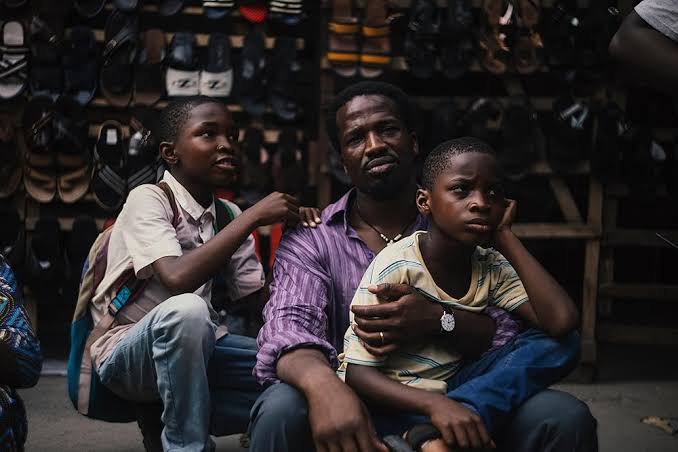
In 1993, Nigeria stood at a political crossroads. A military dictatorship held sway over a nation yearning for democracy. The annulment of the June 12 presidential election—widely considered to have been won by Moshood Abiola—plunged the country into chaos. Protesters filled the streets, strikes paralyzed major cities, and fear seeped into everyday life. Economically, structural adjustment policies imposed by international lenders had led to rising inflation and widespread poverty. Socially, the air was thick with tension and unspoken grief. It is against this backdrop that My Father’s Shadow, a debut feature by Nigerian-British director Akinola Davies Jr., unfolds—a quiet yet powerful meditation on masculinity, family, and memory amidst the echoes of national collapse.
The Palais des Festivals is buzzing once again. As the red carpet unfurls by the French Riviera and camera flashes glitter under the Mediterranean sun, the 78th Cannes Film Festival feels as grand as ever — but this year, there's a distinct heartbeat echoing from Africa. In a historic moment, Nigeria made its official debut in the festival’s Un Certain Regard category with My Father’s Shadow.
For the uninitiated, the Cannes Film Festival is arguably the most prestigious platform in world cinema. Established in 1946, Cannes is not just a film festival — it is a global arbiter of cinematic excellence. With its fiercely curated selections, it offers a stage for auteur voices and visionary storytelling from across the globe. Winning at Cannes, or even being selected, can elevate a filmmaker’s career to international heights. What sets Cannes apart is its emphasis on art, risk, and originality. This is not a festival driven by box office projections or mass-market tastes. Cannes is where the language of cinema evolves — and where global audiences learn to listen to new dialects of storytelling.
This year, Akinola Davies Jr.’s My Father’s Shadow will deliver one of the most emotionally resonant African narratives at Cannes in recent memory. Set in Lagos during the volatile 1993 elections, the film explores the fragile reunion of two brothers with their estranged father. The political crisis looms silently in the background, like a storm cloud hanging low but never quite breaking.
Davies’ directing style is contemplative and poetic. He resists melodrama, instead allowing silence and stillness to speak. His collaboration with cinematographer Lílis Soares — the acclaimed visual artist behind the 2023 fantasy Mami Wata — is certain to give the film a deep emotional gravity. Soares' camera doesn’t merely observe; it studies. Each frame is crafted with the kind of patience rarely afforded to Black characters in global cinema — giving weight to presence, to pain, and to joy.
Akinola Davies Jr. is no stranger to complex emotional terrain. A Nigerian-British filmmaker raised between Nigeria, New York, and London, his work often bridges continents and cultures. His 2021 short film Lizard, which won the Grand Jury Prize at Sundance, established him as a compelling voice in global cinema. That story—of a young girl navigating the uneasy world of a Lagos church—shares thematic DNA with My Father’s Shadow: both center quiet protagonists in turbulent settings. Outside traditional cinema, Davies has directed for brands like Kenzo and Gucci and created music videos for artists such as Blood Orange and Kokoroko. His short film Rapt, made for Kokoroko, was shortlisted for the 2023 Cannes Lions Excellence in Music Video. Through every medium, Davies carves a space for African narratives that feel both intimate and epic.
Let’s cast our memory back to Mami Wata, CJ “Fiery” Obasi’s masterpiece that, while not a Cannes selection, continues to be a defining work in the ongoing renaissance of African visual storytelling. Nigeria’s official Oscar submission in 2023, Mami Wata is a cinematic odyssey that unfolds like a monochrome fever dream, steeped in West African mythology. The film tells the story of a mystical and powerful water spirit, Mami Wata, who embodies both beauty and danger. Set in a coastal village, it follows the struggles of the villagers as they confront their traditions, beliefs, and the arrival of a mysterious outsider..
With the talented Lílis Soares once again behind the camera, Mami Wata captured the imagination of audiences at the 2023 Sundance Film Festival, where it earned Soares the World Cinema Dramatic Special Jury Award for Cinematography. At FESPACO, Africa’s most prestigious film festival, it won Best Cinematography, Best Set Design, and the African Critics Award. The film’s mythological heart, centered on a seaside village losing faith in its intermediary to a powerful water deity, carries both ancient wisdom and urgent relevance, reflecting the shifting power dynamics within contemporary African society.
Together, My Father’s Shadow and Mami Wata form a kind of cinematic duet. Though stylistically distinct, both films embrace unique color palettes to reframe the African gaze. They challenge colonial visual hierarchies by making Blackness not just visible, but luminous, spiritual, sovereign.
Africa’s relationship with Cannes has historically been sparse but powerful. In 1966, Senegalese director Ousmane Sembène debuted Black Girl, a searing postcolonial critique that established him as the father of African cinema. Since then, representation from the continent—especially Sub-Saharan Africa—has been intermittent, hampered by limited funding, and global distribution bottlenecks.
Thankfully, things are changing. Nollywood, the world’s second-largest film industry by volume, is evolving beyond its fast-paced, direct-to-video roots. It’s maturing into a fertile ground for auteur-driven narratives with global ambition.
This year’s AfroCannes initiative, with panels on animation, Afro-futurism, and film finance, reflects the urgency and confidence of a new generation. This isn't just a moment of visibility for African filmmakers — it's a moment of voice, of vision, and of artistic sovereignty.
From the tumult of 1993 Lagos to the timeless myths of coastal West Africa, African cinema is taking up space — frame by frame, festival by festival.
My Father’s Shadow will premiere on May 18th 2025.