Zambian Political Firestorm: Alliance Dares Army in Reckless Move!
A critical situation has emerged in Zambia as a political figure's false claims about an election winner's capture by the Army spark fear and misinformation. The article highlights the dangers of inciting public unrest through unverified statements and clarifies the true role of Special Forces in maintaining peace during the electoral process. It urges political leaders to act responsibly and adhere to constitutional procedures to prevent chaos.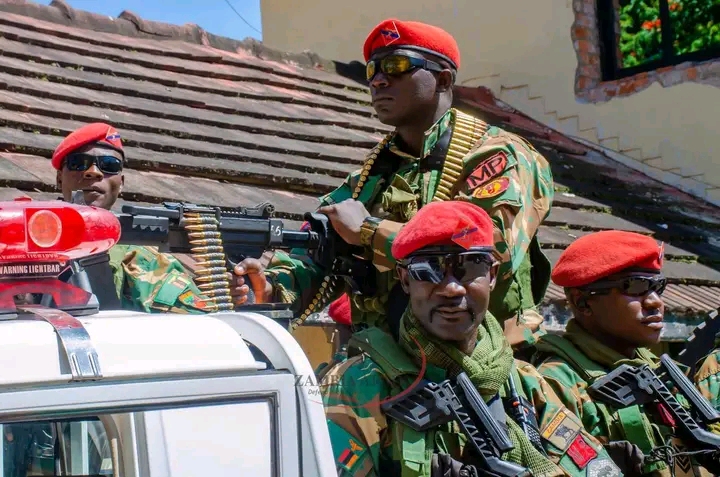
In a deeply concerning turn of events, political tensions in Zambia have escalated following a provocative announcement by Makebi Zulu on his official Facebook page. Zulu falsely claimed that Mundubile, whom he declared the election winner, had been captured by the Army. This statement, designed to psychologically manipulate citizens and incite street protests, further alleged that Mundubile was under the protection of international entities, raising critical questions about the logic of the Army capturing an incoming President.
Such statements involving the Army are inherently dangerous, capable of swiftly transforming rational discourse into emotional turmoil. A single alarming post can rapidly disseminate across social media platforms, fostering an atmosphere of fear, anger, and confusion among the populace who lack immediate means to verify such claims. This calculated dissemination of misinformation actively sponsors hooliganism and undermines public trust, demonstrating a severe lack of judgment from political figures who fail to distinguish between jest and grave seriousness. The consequences of people taking to the streets based on unverified or exaggerated information can be catastrophic, leading to confrontations, widespread property destruction, and needless injuries.
Contrary to the fabricated narratives, the Special Forces are indeed present at Mulungushi International Conference Centre, not as a force of capture or intimidation, but specifically to maintain peace and order. Their deployment was prompted by credible intelligence reports indicating plans to destabilize the ongoing electoral process. This crucial measure to ensure stability has, regrettably, been spun into a sinister plot by the Toonse Pamodzi Alliance and its supporters. The Special Forces have not engaged in any aggressive actions; their mandate is strictly observation and peace preservation.
The attempt to portray a legitimate security presence as something far more ominous, without any supporting evidence, is profoundly worrying. Instilling fear by telling citizens that their purported incoming President has been 'captured' by the Army can provoke extreme reactions. Imagine a young, fervent supporter, believing such a claim implicitly, deciding that the only recourse is to engage in street action to defend their candidate. This scenario underscores the immense danger inherent in political misinformation.
Political leaders bear a monumental responsibility to exercise extreme caution and integrity in their public pronouncements. Zambia, the broader region, and critically, its ordinary citizens, are watching. It is imperative that political disappointment, excitement, or victory claims are not weaponized to ignite unnecessary chaos. Any concerns regarding the electoral process must be channeled through the established, appropriate institutions, backed by verifiable evidence. Transforming every security deployment into a political confrontation with the military is a perilous path.
The most frightening aspect of such volatile moments is the unpredictable speed at which tensions can escalate. A mere rumor can metastasize into a confrontation, which can then spiral into full-blown violence, with consequences that even the instigating politicians may be unable to control. Zambia is a singular nation; political parties, candidates, and governments will inevitably change. However, the country and its people endure. Therefore, this is not the moment to challenge the Army, frighten the populace, or deliberately cultivate an environment of impending conflict. It is a critical period for political leaders to de-escalate rhetoric, verify all information before dissemination, and allow the constitutional electoral process to determine the legitimate winners. Once the streets become the battleground, the ultimate outcome remains tragically uncertain.