Will AI Replace Human Creativity or Spark a Reinvention?
AI enhances creativity but cannot replace human emotion, perspective, or experience. The future lies in collaboration, where technology expands our tools, yet human imagination remains at the core.
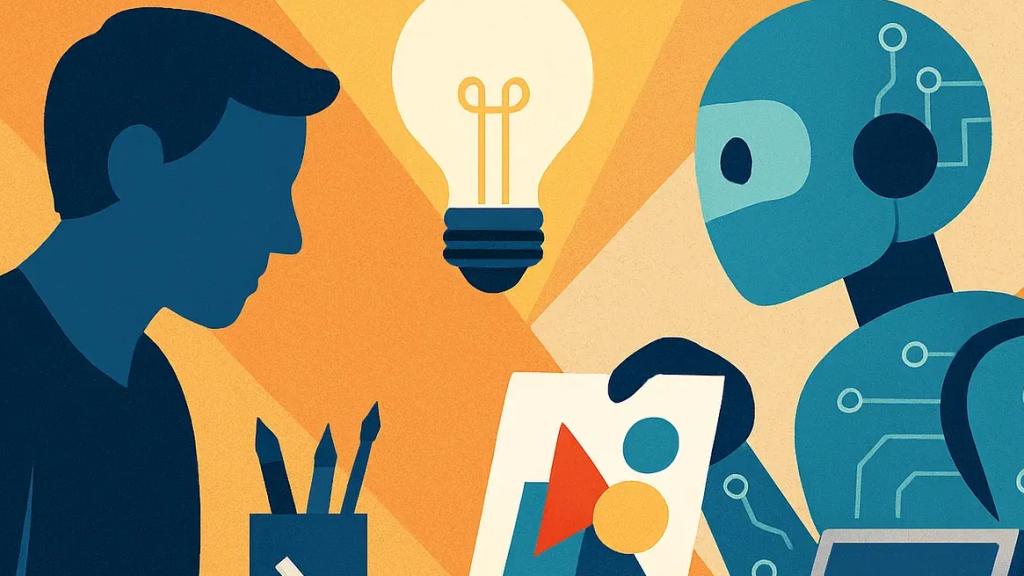
Artificial Intelligence is no longer a distant, futuristic concept and it has been actively reshaping how we create, think, and express ideas.
According to the International Journal of Research and Innovation In Social Science, AI has made notable contributions to the visual arts by employing generative algorithms and neural networks to create new forms of visual expression.
Algorithms such as Generative Adversarial Networks (GANs) have been used to generate original artworks by learning from vast datasets of existing images.
From AI-generated paintings and music compositions to automated scriptwriting and design tools, machines are now participating in spaces once considered exclusively human.
This rapid advancement has sparked a pressing question: Is AI replacing human creativity, or is it redefining and expanding it?
Creativity has always evolved alongside technology before the printing press transformed literature.
The camera reshaped visual art. Digital software revolutionized filmmaking and music production.
Now, AI represents the next major shift. Unlike previous tools, however, AI does more than assist, it can generate, analyze patterns, learn styles, and produce original outputs in seconds.
AI can generate innovative ideas by analyzing vast amounts of data and identifying patterns.
However, human creativity often stems from personal experiences, emotions, and intuition, leading to truly original and groundbreaking concepts.
While AI can produce novel combinations of existing ideas, it lacks the ability to experience emotions and draw from personal experiences.
This limitation means that AI-generated creativity may lack the depth and uniqueness that comes from human intuition and imagination.
Human creators can draw from their unique perspectives and life experiences to produce works that are deeply personal and original.
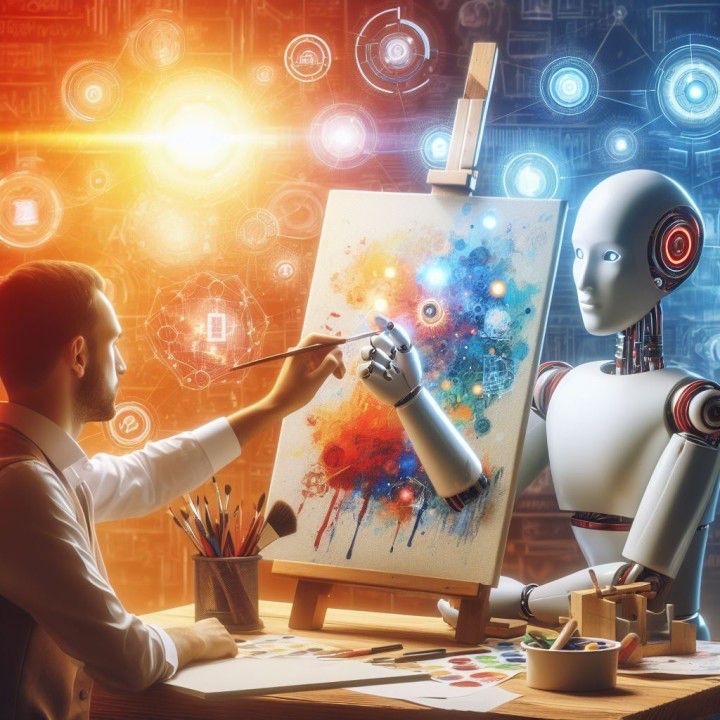
AI as a Creative Tool: Collaboration, Not Competition
At its core, AI operates by processing vast amounts of data and identifying patterns. In creative fields, this allows it to suggest melodies, generate artwork, assist in editing, or even draft written content.
However, these outputs are not born from emotion or lived experience; they are constructed from learned patterns.
In contrast, human art begins with emotion, life experience, and culture. It reflects personal stories and inspiration, often carrying deeper meaning for both the artist and the viewer.
For many creators, AI functions as an amplifier rather than a replacement.
Graphic designers use AI to speed up ideation, while the writers use it to overcome creative blocks and musicians experiment with AI-generated sounds to explore new genres.

In this sense, AI becomes comparable to past innovations like synthesizers in music or CGI in film — tools that expand creative possibility rather than eliminate human input.
The key distinction lies in intention. Humans still guide the vision, select the direction, and infuse meaning into the final work.
AI may generate options, but interpretation and emotional depth remain human contributions.
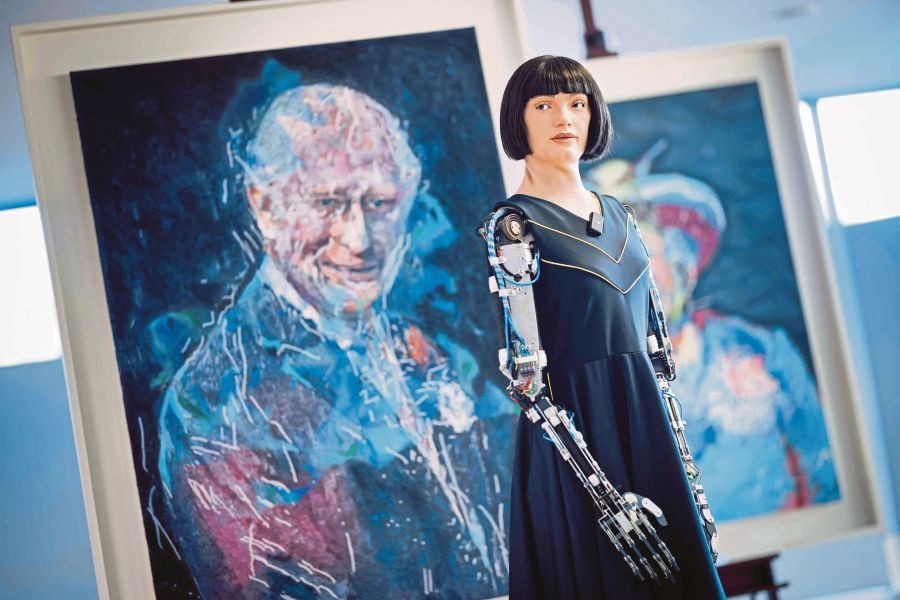
Disruption and Anxiety: The Fear of Replacement
Despite its benefits, AI’s rapid capabilities have created legitimate concerns.
If a machine can generate logos, compose music, or write articles within seconds, what happens to professionals in those industries?
Some companies already use AI to reduce costs in content creation and design. Automation threatens entry-level creative roles, particularly in areas involving repetitive tasks.
This has sparked debates about authorship, ownership, and intellectual property. Who owns AI-generated art? The programmer? The user? The dataset?
Despite its benefits, AI poses real risks to human creativity. Because AI lacks intuition and emotion, over-reliance on AI can lead to homogenized outputs, where originality and depth is sacrificed for efficiency.
Moreover, there is a danger that AI could discourage creative risk-taking.
If algorithms prioritize ideas based on past success or popularity, they may inadvertently suppress bold, unconventional thinking.
This is especially concerning in industries like journalism, filmmaking, and design, where innovation often comes from challenging norms.
However, history shows that technological disruption often eliminates certain roles while creating new ones.
Photography did not destroy painting; it pushed artists toward impressionism and abstraction. Similarly, AI may redefine creative jobs rather than erase creativity itself.
Redefining Creativity in the Age of Algorithms
AI forces us to confront a crucial question: What makes creativity truly human?
Machines can replicate style, structure, and aesthetic patterns but they do not experience heartbreak, joy, cultural identity, or personal struggle.
Human creativity is deeply rooted in emotion, memory, and social context which reflects lived reality.
In response to AI, we may see a shift toward valuing authenticity more than technical perfection as the audiences might seek art that feels personal, vulnerable, and distinctly human.
The creative process itself and the story behind the work which may become just as important as the final products.
Rather than replacing creativity, AI may push humans to explore deeper originality. It challenges creators to move beyond formulaic content and produce work that machines cannot replicate: work shaped by consciousness, empathy, and perspective.
Conclusion
Artificial Intelligence does not mark the end of human creativity. Instead, it marks a turning point.
Whether it becomes a threat or a transformative partner depends on how we choose to integrate it into our creative lives.
The future may not be about humans versus machines, but about how imagination evolves when technology becomes part of the artistic process itself.
Which may likely be a collaboration between humans and machines, where technology expands our tools, but the impulse to create remains undeniably human.