Why Every Nigerian Is a Storyteller, Even Without a Pen
Every Nigerian is a storyteller because every Nigerian experiences, interprets, and communicates life in a narrative form. You don’t need a pen to tell a story when your life itself is a narrative waiting to be shared.

Walk through any Nigerian street, market, or social gathering, and you’ll witness a subtle yet powerful truth: Nigerians are natural storytellers. It isn’t only in literature, music, or media; it’s in the way people narrate their experiences, opinions, and emotions. Every joke, complaint, exaggeration, and anecdote is a narrative, a story being told, consciously or not.
Psychologically, humans are wired to make sense of experiences through stories. In Nigeria, this instinct has been sharpened by social, economic, and political conditions. When the formal systems fail; schools, governance, healthcare, infrastructure storytelling becomes a mechanism to process reality. Citizens use narrative to structure chaotic experiences into meaning.
In a society where uncertainty is a daily reality, narratives serve as coping mechanisms. Consider the countless Nigerians navigating unreliable power, traffic gridlocks, or unstable jobs. Each challenge is recast into a story often humorous, sometimes dramatic as a way to make it bearable.
A street vendor recounting a day of lost sales or a commuter narrating a frustrating ride doesn’t just share facts, they process trauma, build empathy, and create social bonds. According to Psychology Today, telling stories allows humans to integrate experiences, improve mental health, and maintain resilience. In Nigeria, this is amplified by collective struggles and daily improvisation.
The Psychology Behind the Nigerian Narrative
Nigerians are wired to translate lived experiences into compelling accounts. Cognitive psychology suggests that humans remember events better when they are framed as narratives, rather than isolated facts. This explains why even casual conversations in Lagos or Kano often involve dramatization, exaggeration, or humor not to deceive, but to make experiences memorable and meaningful.
Moreover, storytelling fosters identity and belonging. Individuals share personal narratives to connect with communities, signal values, and create social cohesion. In Nigeria, where tribal, linguistic, and socio-economic diversity is immense, storytelling becomes a unifying practice, offering a sense of shared reality.
Social Commentary Embedded in Stories
Every story Nigerians tell carries a social subtext. Complaints about traffic jams, power outages, or government inefficiency are narratives about systemic failure, often disguised as humor or exaggeration. Even gossip, rumor, or urban legend serves as a lens to interpret societal norms, corruption, and injustice.

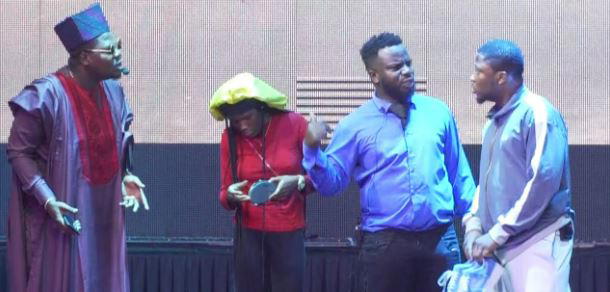
Consider social media trends: viral memes about politicians, economy, or social issues are not random jokes. They are modern-day oral narratives, psychologically serving the same function as traditional storytelling community reflection and critique. Platforms like Twitter/X or Nairaland amplify these narratives, allowing collective frustrations and observations to circulate widely, creating a shared social consciousness.
Exaggeration is a hallmark of Nigerian storytelling. A commuter stuck in traffic might describe the journey as “crossing the Sahara” or a vendor might say their sales are “enough to feed a nation.” Psychologically, hyperbole and humor reduce stress, make frustration relatable, and provide emotional relief.
This aligns with the concept of catharsis, first described by Aristotle: narrating and dramatizing experience allows emotions to be released safely. Nigerians, knowingly or not, use storytelling as emotional processing, turning struggles into narratives that entertain, educate, and heal.
Stories aren’t just personal; they’re collective tools. Narratives about shared experiences from elections to economic crises, shape public perception and identity. They allow Nigerians to form a mental map of society, understanding who is trustworthy, where risks lie, and how to navigate systemic failures.
In psychology, this aligns with the concept of social cognition, the process by which people interpret, analyze, and use information about their social world. Through storytelling, Nigerians develop informal knowledge networks that guide decision-making, survival, and social interaction.
Digital Storytelling: The Modern Stage
In the 21st century, storytelling has migrated online. Memes, Twitter threads, TikTok skits, and YouTube videos are extensions of the oral traditions that predate writing. While mediums change, the psychological purpose remains the same: expressing identity, coping with adversity, and connecting communities.
A viral video of a street scene, an office mishap, or a funny exchange in traffic is not mere entertainment, it’s a narrative that reflects societal realities, allowing viewers to interpret, laugh, empathize, and share. According to BBC Africa, these digital narratives often mirror real-life struggles while shaping public discourse, demonstrating storytelling’s enduring social power.
Social Insight
Navigate the Rhythms of African Communities
Bold Conversations. Real Impact. True Narratives.
From a psychological perspective, storytelling also serves therapeutic functions. It helps individuals externalize thoughts, reduce anxiety, and build resilience. In Nigeria, where systemic failures can feel overwhelming, turning experiences into stories gives control and agency.
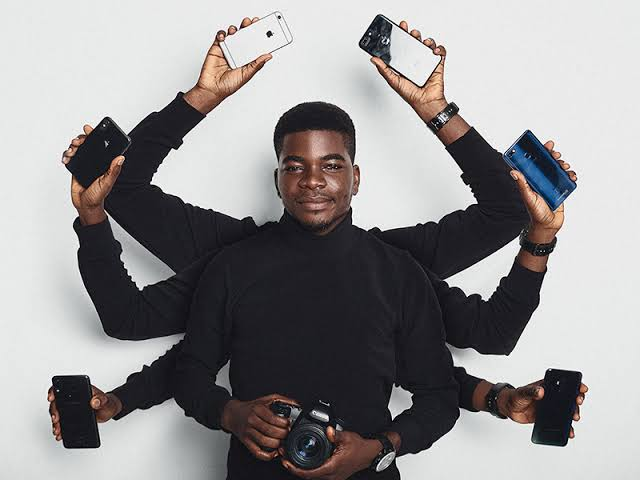
For instance, recounting political frustrations, personal hardships, or communal challenges allows Nigerians to process complex emotions collectively, rather than internalizing stress. Storytelling thus becomes a form of mental survival, where humor, exaggeration, and shared narratives act as emotional buffers.
Storytelling is intertwined with identity construction. Every Nigerian, consciously or unconsciously, narrates their life to define who they are and what they stand for. Oral narratives preserve memories, personal and collective, ensuring that experiences are remembered, learned from, and passed down.
Even in the absence of written documentation, Nigerians maintain a living archive of personal and societal history, creating continuity across generations. In psychological terms, these narratives serve as identity anchors, helping individuals navigate life transitions and societal changes.
Challenges of Modern Storytelling
Despite its power, modern Nigerian storytelling faces challenges. Urban migration, social media algorithms, and globalized culture sometimes flatten narratives, prioritizing entertainment over depth. Short attention spans and virality can reduce complex social realities into memes or punchlines.

However, this also creates opportunities. Educational institutions, cultural festivals, and creative initiatives are blending traditional storytelling with modern media, ensuring that narratives retain psychological and social relevance while reaching wider audiences.
Every Nigerian is a storyteller because life itself demands it. Whether it’s recounting a personal experience, narrating daily struggles, or sharing humor online, storytelling is a psychological necessity and a social instrument.
It is through these narratives that Nigerians make sense of adversity, construct identity, and build community. The pen may be absent, but the story persists, alive in voices, gestures, humor, and digital expression. In a nation where resilience is as much a social skill as an individual trait, storytelling is not optional; it is existential.
Every Nigerian carries a narrative, shaping their reality and the collective consciousness of the nation. Even without a pen, these stories define, heal, and connect a people who thrive on the power of shared experience.