Why Do Nigerians Blame Rape Victims? The Favour Agbro Case, Explained
The death of Favour Agbro has reignited a difficult conversation about rape culture and victim-blaming in Nigeria. Why do so many people scrutinize victims instead of alleged perpetrators, even when there is a reported confession?

A man confesses. A woman is dead. And somehow, the sentence Nigerians can't stop writing is about what she did wrong.
Favour Agbro and Odogwu of Asaba: What Happened
Favour Agbro was 20. She was a nursing student from Warri. She travelled to Asaba after a content creator known as Odogwu of Asaba promised to teach her how to monetise her TikTok and Facebook pages.
She had told him, in writing, that she was a virgin and wasn't interested in anything beyond the training. He took her to a hotel room instead.

What happened there ended with Favour recording a video detailing her ordeal, drinking a toxic substance, and dying.
Police arrested Ogbonna and he has reportedly confessed. He has also been filmed pleading for forgiveness, telling her family he was ready to "give everything."
By any normal accounting, that should be the story. A predator, a confession and a grieving family. Instead, a significant share of the online conversation has spent the week interrogating Favour.
How Nigerians Reacted to Favour Agbro's Death Online
Scroll through the reactions on X and a pattern emerges fast. One widely shared post argued that "men will always be men," so a woman visiting one "innocently" was naive enough to invite what followed, because men "must loose guard."
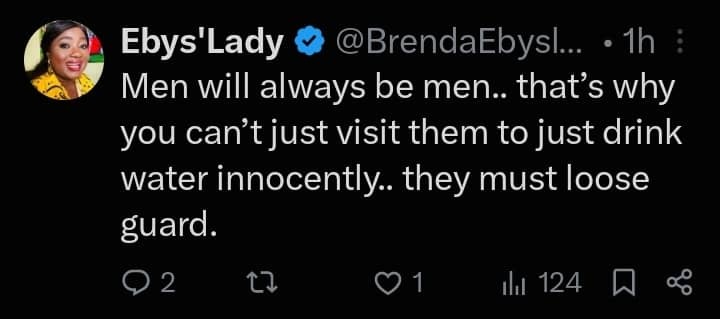
Another user framed the entire case as a matter of hearing "both sides," as though a 20-year-old's death and a suspect's confession occupy equal footing. A third mocked her claim to virginity outright, joking that anyone defending her would "cry" once they "see who say she be virgin."

A fourth dismissed the assault as something she brought on herself for asking Ogbonna for money afterward.
And in an older post resurfacing since her death, a man declared flatly that "a virgin doesn't move the way she was moving," as if grief, fear or trauma have a sorted-out choreography.
None of these posts deny that Favour is dead or dispute that Ogbonna invited her under false pretences. What they do is relocate the moral weight of the story from his actions to her judgment, her body and her supposed motives.
It is a reflex so consistent across Nigerian social media that it barely registers as strange anymore, and that is the problem.
Inside Nigeria's Victim-Blaming Culture on Social Media
This is not the first time. In February, Lagos-based content creator, Fems Thrift, said she and a friend were lured to an apartment with a fake modelling offer, tied up, assaulted at knifepoint and threatened with the release of footage if they spoke out.
Unlike Favour, Fems survived to fight her case in court, with witness statements, a medical report, a knife recovered from the suspect's home and digital evidence, plus public pressure that got her attacker arrested within days.
Social Insight
Navigate the Rhythms of African Communities
Bold Conversations. Real Impact. True Narratives.
By May, a Lagos court struck the case outentirely, ruling there was no case to answer. The man walked free without trial. Fems had done everything survivors are told to do and it still wasn't enough, because the system built to protect her was never really built for that.
The two cases are different in almost every detail except the one that matters most: a woman named her attacker, and the machinery around her, both online and offline, treated her credibility as the thing on trial.
Favour didn't get the chance to fight in court. Fems fought and still lost. Between them sits a pattern that has nothing to do with evidence and everything to do with what Nigerians are willing to believe a woman is owed.
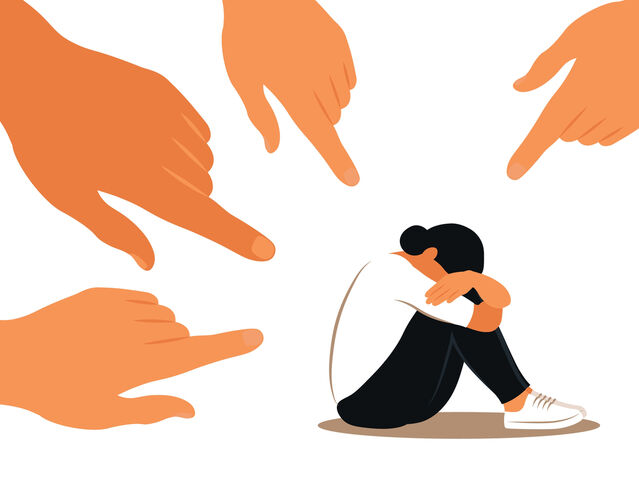
Why Nigerians Keep Blaming Rape Victims
Some of this is cultural residue. There is a long-standing suspicion of women's sexuality that treats modesty and caution as the real safeguards against harm, so that any woman who is hurt must have failed one of those tests.
Some of it is collective self-protection: if the victim did something to invite it, the rest of us are safe, because we would never make her mistakes.

Blaming her is, in a twisted way, more comforting than accepting that a confession video and a hotel room are all it takes.
Comfort is not the same as truth and the cost of this supposed reflex is expensive. It is measured in survivors who calculate, correctly, that coming forward will cost them their reputation before it costs their attacker his freedom.
It is measured in cases struck out for lack of will rather than lack of evidence.
It is measured, now, in a 20-year-old who is gone, whose last act was to leave a record of what was done to her and whose record is still being picked apart by strangers looking for the detail that will let them off the hook of caring.
A victim, watching this unfold, learns exactly what happens to a woman's name after she names her attacker. She learns that a confession may not be enough and that an X thread proving she said no in advance may not be enough, that even her own death may not be enough to stop strangers from auditing her choices instead of his.
That lesson does more to keep future cases silent than any threat an attacker could make himself.
Favour Agbro Deserved Better Than This
Nobody is asking Nigerians to suspend judgment forever or to treat every allegation as proven fact before a court has ruled. What the Favour Agbro case asks is for the default reaction to a woman's death to be grief and scrutiny of the man she died naming, not a search for the reason she deserved it.
Ogbonna has allegedly confessed and this is not a small detail to just overlook.
Favour wanted to build something with her life. She wanted views, an audience, a way to make her platforms work for her, the same ordinary ambition driving thousands of young Nigerians online right now.
She is dead, and the loudest thing many Nigerians can find to say is that she shouldn't have gone.