What If We Had One Global Currency for 24 Hours?
What if the world operated on a single currency for just one day? This thought experiment explores how currency, as a store of confidence, shapes trust, power, and global stability.
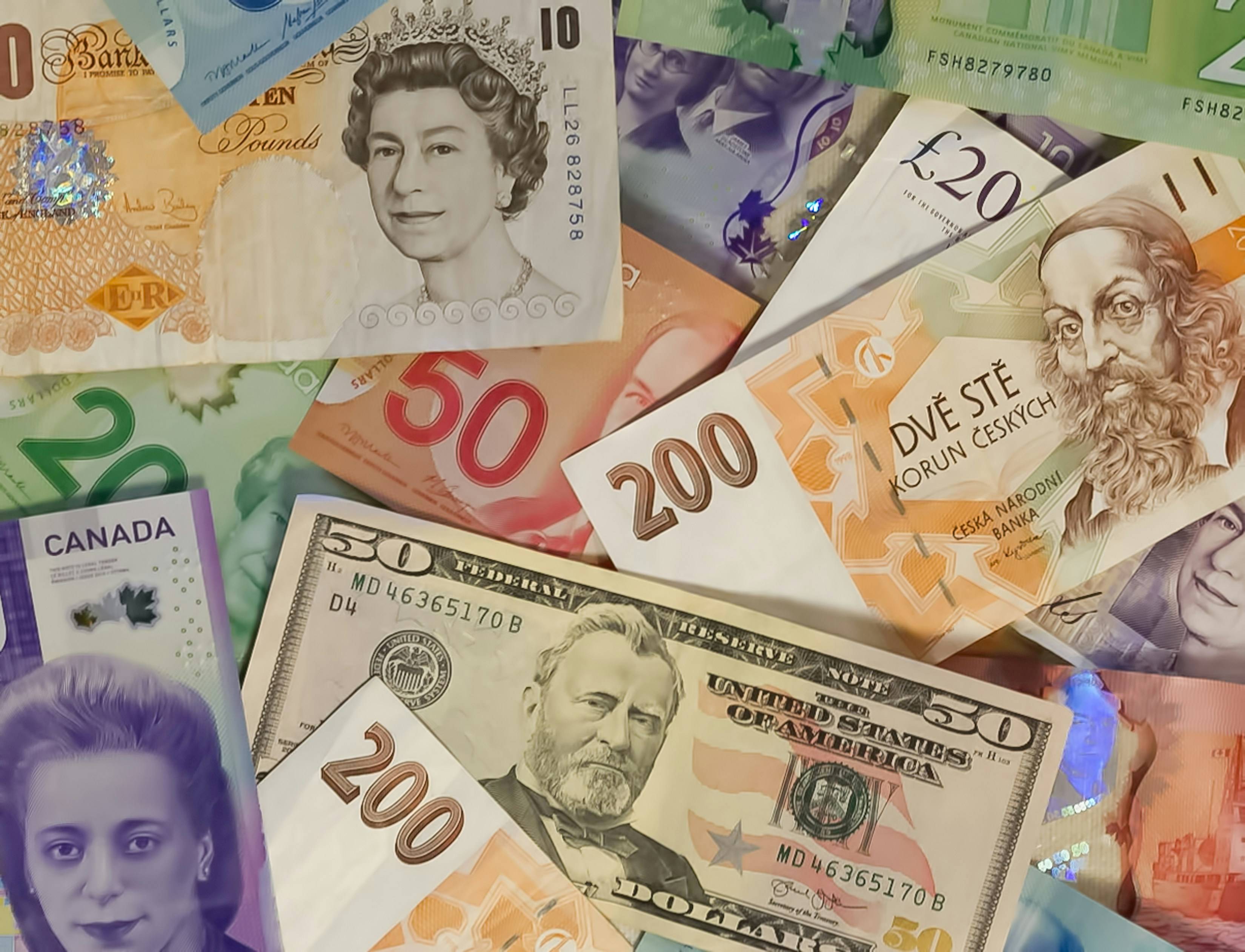
At 00:00 UTC, a quiet revolution begins. Across the globe, central banks synchronize their systems to a single, universal currency. From Buenos Aires to Bangkok, from Nairobi to New York, citizens, businesses, and governments wake up, or stay up—to find that for the next 24 hours, the world has one currency. No dollars or euros, no yen or pesos. Just one denomination, instantly integrated into every digital transaction, every price tag, every paycheck. It is, for a brief moment, a world without exchange rates.
This is, of course, a thought experiment. But imagining the world with a single currency, even for a day, reveals more about how our global financial systems work and fail, than we might expect. It also surfaces a deeper question: What is money, really, if not a shared illusion we agree to participate in?
The Dream of Oneness
The idea of a universal currency isn’t new. Economists, technocrats, and utopians have flirted with the concept for centuries. John Maynard Keynes proposed an international unit of account called the “bancor” after World War II. In more recent years, cryptocurrencies like Bitcoin have stirred fantasies of borderless money. The appeal is clear: One currency would eliminate exchange fees, speculative currency trading, and the economic distortions caused by fluctuating exchange rates. In theory, global trade would be smoother, tourism more predictable, remittances more efficient.
For 24 hours, the benefits would be immediate and tangible. Online shoppers in India could purchase products from Denmark without converting rupees to euros. A Brazilian freelance developer could invoice a client in South Korea without worrying about currency conversion losses. Even aid organizations transferring funds across borders during a crisis would enjoy newfound efficiency.
Markets would exhale. For one day, forex trading floors would fall silent, their frenzied algorithms dormant. The daily $7.5 trillion turnover in foreign exchange markets, larger than the global GDP every three days—would grind to a halt. Cross-border capital flows would accelerate as capital friction vanishes.
But what starts as an economic utopia quickly begins to fray at the edges in a matter of hours.
The Tyranny of Uniformity

Image Credit: Unsplash
The first problem is that currencies are not merely units of measure—they are instruments of national policy. They reflect the values, vulnerabilities, and strategic priorities of each economy. By replacing all currencies with one, even temporarily, we’re erasing these distinctions.
In practice, this would cause dislocations—some dramatic, some subtle. Consider a country like Argentina, where inflation has historically raged in double digits, and currency depreciation is a regular fact of life. For 24 hours, Argentine citizens might experience a kind of monetary calm they’ve never known. But would prices be frozen? Would landlords refuse rent payments in a currency that they believe will disappear tomorrow? Could a retailer raise prices knowing that the new global currency might favor foreign purchasing power?
Conversely, imagine Germany, a country accustomed to monetary stability and low inflation. For Germans, sharing a currency even briefly with unstable economies might feel like forced generosity. Exporters could be undercut by sudden shifts in competitive pricing, and domestic consumers might experience sticker shock as goods surge to reflect global, rather than local, value.
Who Sets the Price?

Image Credit: Unsplash
Pricing in a global currency demands a global consensus on value. But prices are a complex web of labor costs, supply chains, infrastructure, taxes, and demand—each varying wildly across borders. In a one-currency world, how would we determine the price of a loaf of bread in Lagos versus London? Would all prices recalibrate based on purchasing power parity? Or would the currency simply float, letting market forces determine new price points in real time?
In practice, we’d likely see chaos in retail and wholesale pricing. Prices would spike in some countries and collapse in others. Consumers would find themselves either flushed with unexpected purchasing power or suddenly impoverished. The price of gasoline in Venezuela might match that in the Netherlands—an economic shock no government would be ready to manage.
A Politically Impossible Dream
A single global currency also implies a single monetary authority—an entity responsible for interest rates, inflation targets, and crisis response. But who would run this global central bank? The IMF? A G20 consortium? A new supranational body accountable to no single electorate?
Even for 24 hours, the political ramifications would be enormous. Governments would cede a core element of sovereignty: the ability to control their money supply. Interest rates, a powerful tool of economic steering, would be frozen. If a local economy overheated or contracted, it would have no recourse. In many ways, this mirrors the Eurozone’s ongoing struggle: one currency, many divergent economies, and a central bank with no single national allegiance.
If even the European Union—a closely knit political and economic union—struggles to harmonize monetary policy, what chance would a global coalition have?
Technically Feasible, Humanly Complex


Image Credit: Unsplash
On a technical level, the experiment is increasingly plausible. With the rise of real-time payment systems, digital wallets, and programmable money, a coordinated currency shift could be executed with the right infrastructure. Cryptocurrencies, in particular, offer a proof of concept: decentralized, borderless, and immune (in theory) to national interference.
But the technological solution only underscores human complexity. Currency is not just code—it is confidence. It is trust in the issuing authority, in the institutions that back it, and in the future it promises. Even if every system toggled over to a global unit at midnight, would people trust it? Would shopkeepers accept it? Would savers believe it would hold value for even 24 hours?
Trust takes years to build and seconds to lose. Without the scaffolding of institutions and legal systems, a one-day global currency might collapse under its own symbolic weight.
The Value of the Thought Experiment
If the idea is so unworkable, why entertain it at all?
Because thinking through the consequences of a single global currency, if only for a day—forces us to examine the contradictions in our current system. It exposes how inefficient, arbitrary, and politically loaded the world of currency exchange really is. It shows how tightly sovereignty and money are intertwined. And it reveals that behind every coin and bill is a story: of inflation and austerity, of prosperity and collapse, of national pride and economic trauma.
In that sense, the experiment becomes not an argument for global unification, but for greater awareness. What if we made our current system more transparent, less extractive, more cooperative?
A single global currency for 24 hours might not solve our problems. But it might help us imagine a better kind of money.