What Does It Take to Belong in America? The Green Card Has Always Been More Than A Gate Pass
Why is the US making Green Cards harder to get? From international students and skilled workers to immigrant families and business owners, America’s latest USCIS rule is raising bigger questions about immigration, belonging, and the people who have spent years building their lives inside the country.
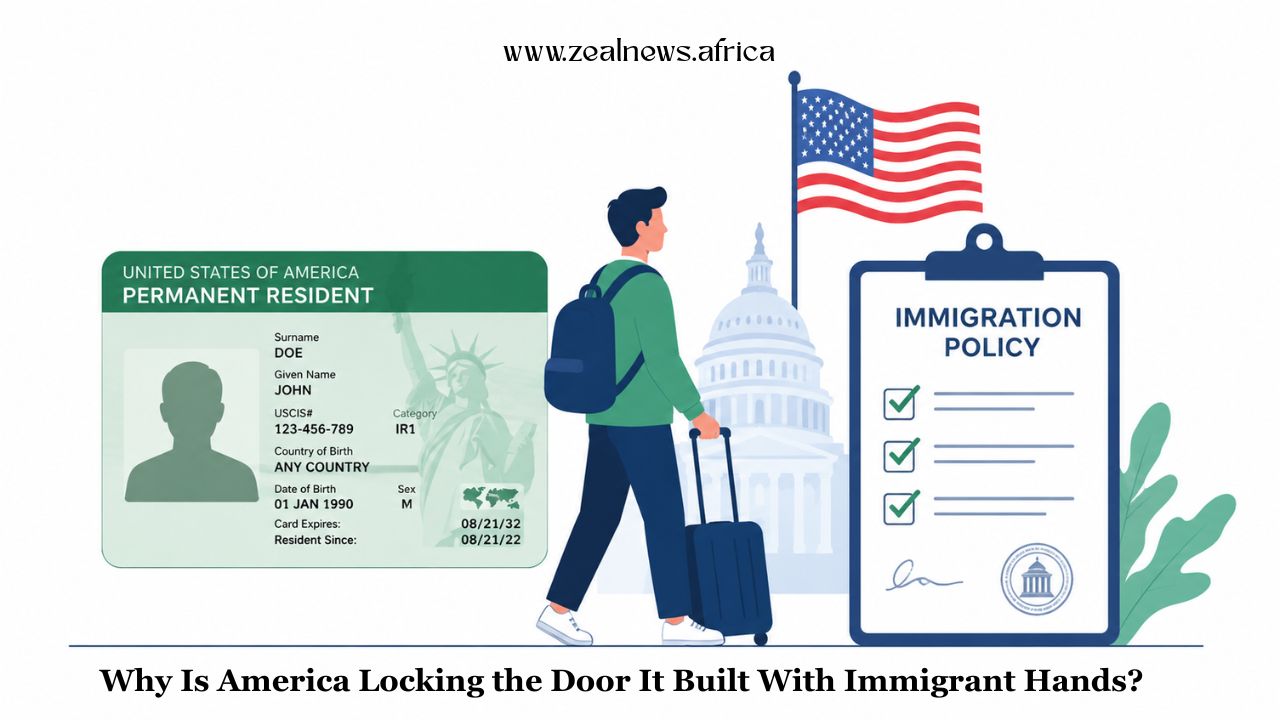
For decades, the United States successfully sold a particular idea to the world: that its borders, while regulated, were ultimately open to ambition and innovation.
So anyone could come for school, work or even for a better life and earn a place for themselves, if they were deemed worthy of it. That idea, which was more of a well-packaged mythology than policy in many cases, has always rested on one document above every other.
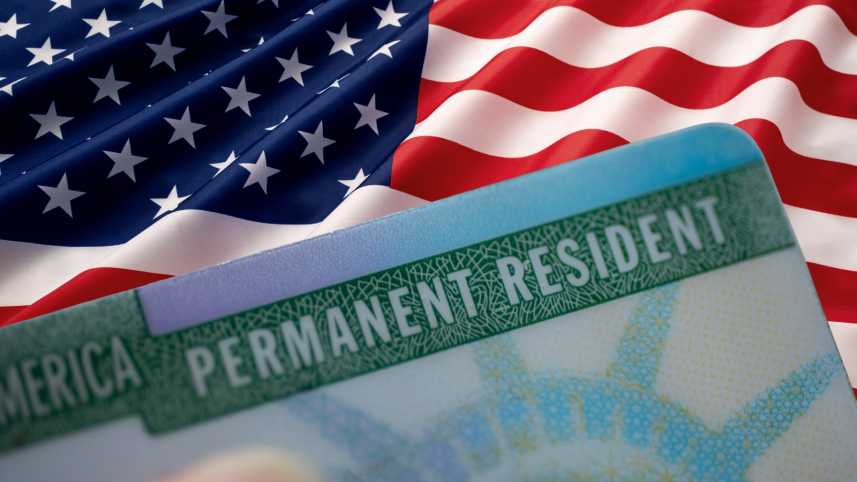
That document was and is still the Green Card. Officially known as the Permanent Resident Card for immigrants, it is the difference between living in America and belonging to it, at least legally.
And right now, with recent events unfolding, the United States government is making it harder to get, harder to keep, and harder to even apply for.
The latest move from the US Citizenship and Immigration Services requires temporary residents — tourists, students, business visitors — to return to their home countries before applying for permanent residency.
For any immigrant, this means flying back home to begin a process that was previously accessible from within the borders of the United States of America. But to view this new decision as a standalone policy announcement is to miss the bigger story.
This is not a new chapter; it is actually the loudest paragraph in a story that has been building for years.
What the Green Card Actually Means And Why People Need It

Before this new policy makes sense and settles fully in the consciousness of any immigrant, it will help to understand what a Green Card actually does for the person holding it in the US.
The Green card or the Permanent Resident Card, which gives Permanent residency in the United States, grants the holder the legal right to live and work anywhere in the country without restrictions tied to visa categories or expiration dates.
It opens access to federal benefits, in-state tuition at universities, the ability to sponsor family members for immigration, and, in many industries, it is the minimum credential required for employment.
Some federal jobs, defence contractor roles, and licensed professions will not consider applicants who are not permanent residents or citizens.
Beyond legality, the Green Card is psychological. It often projects the view of stability. An immigrant on a work visa lives with expiration dates hanging over every major life decision, whether to buy a house, whether to start a business, or whether to have children in a country they cannot guarantee they will remain in.
The Green Card removes that ceiling, or at least raises it significantly. Naturalisation, and therefore full citizenship, typically requires five years as a permanent resident. The Green Card is not the finish line; it is the gate to the starting point.
For Nigerians specifically, who make up one of the most educated and economically active immigrant groups in the US, permanent residency is not a luxury. It is the foundation under careers, families, and businesses built over years of legal residence.
The Pattern That Existed Before Donald Trump's Tenure
Diaspora Connect
Stay Connected to Home
From Lagos to London, Accra to Atlanta - We Cover It All.
It would be convenient and inaccurate to trace the current hostility toward immigrants solely to Donald Trump's second tenure. The restrictions did not just begin this year, they were already tightening before now.
During the Obama administration, deportations reached record levels, over three million removals across eight years, more than any previous administration.
The DACA programme, which protected undocumented immigrants who arrived as children, was itself a patch on a broken system that Congress repeatedly failed to fix. Under the first Trump administration, public charge rules were expanded, legal immigration pathways narrowed, and the relationship between immigration enforcement and local law enforcement intensified.
The Biden administration reversed several executive orders, but structural reform never came to light. The bipartisan immigration bill that reached the Senate floor in early 2024 collapsed under political pressure.
What this history tells us is that immigration restriction in the United States is not an aberration, it is a recurring feature. Individual administrations adjust the dial, but the underlying architecture, built around scarcity, surveillance, and suspicion, has remained largely intact for decades.

Trump's current approach is louder and faster, but it is running on infrastructure that was already in place.
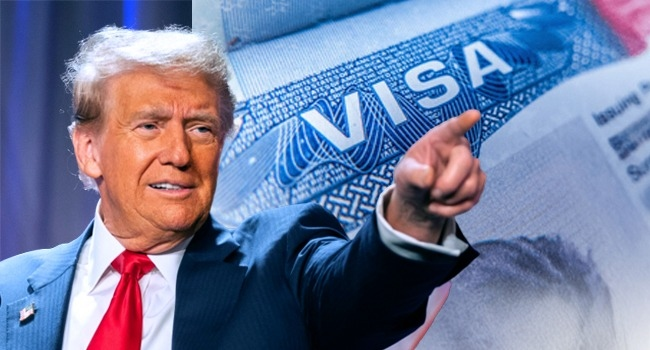
The specific escalation against Nigerian and African immigrants includes the 2024 shift to single-entry, three-month non-immigrant visas for Nigerian citizens. Social media vetting for student and exchange visa applicants.
The new requirement also includes listing all social media usernames and accounts from the past five years during applications. These are not isolated decisions; they form a coordinated narrowing of who qualifies, who gets scrutinised, and who gets turned away.
Who Actually Pays: The Real-Time Cost Nobody Is Talking About
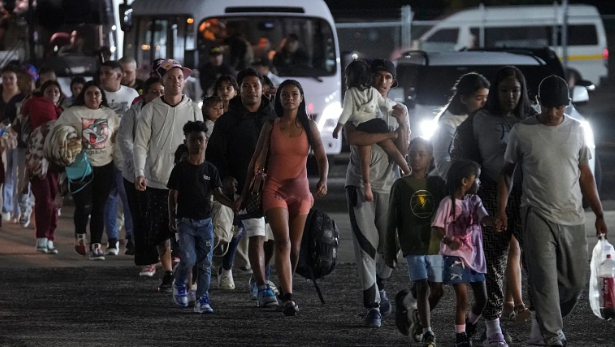
Policy discussions tend to stay abstract. Politicians debate numbers, analysts usually discuss trends, and media houses unveil the headline announcements.
What gets lost is the specific person caught in the mechanism at the exact wrong moment.
Consider the Nigerian student mid-degree at a US university when a visa complication or policy like this arises under the new vetting process, their F-1 status is automatically under review.
Classes will continue, tuition has already been paid, and the university has no obligation to pause because of one immigrant. That student either accrues debt for a semester they cannot complete or abandons a degree programme years in the making.
Neither of these options has a clean resolution. The loss is financial, yes, but also temporal, years of academic work that cannot simply be resumed from a different country without significant cost and delay.
Then there is the business owner, many immigrants in the US operate small and medium enterprises, restaurants, logistics companies, healthcare staffing agencies, and tech consultancies.
These businesses employ people, many of whom include both immigrants and American citizens. When an owner is forced to leave the country to reapply for permanent residency under the new USCIS rule, the business does not pause politely. Staff still need salaries, contracts still have deadlines, and leases still charge rent.
Diaspora Connect
Stay Connected to Home
From Lagos to London, Accra to Atlanta - We Cover It All.
The disruption is not a minor inconvenience. For a business operating on thin margins, a forced absence of weeks or months can be the difference between survival and closure.
And then there are the people stranded in the middle of family situations, parents who cannot return home because a child is in school, spouses separated across borders by paperwork backlogs, and elderly parents who travelled on visitor visas and now face the prospect of returning to countries where they have no remaining support system.
None of these situations makes the news, they are not statistics on any headline. They are simply lives that got complicated by a policy shift nobody asked them about.
The Harder Question: Restriction, Resentment, or Something Else?

Immigrants constitute a significant portion of the American workforce and economy, making up over 19% of the US workforce, according to USAFacts.
Studies consistently show that immigrant entrepreneurs start companies at higher rates than native-born Americans. Immigrants fill critical gaps in healthcare, agriculture, technology, and education.
The American economy, particularly in its current labour market, would not function at its current scale without immigrant labour at every level of the income spectrum. This is not a contested point, it is a documented statement.
So why the hostility and tight policies? The answer is not simple, and reducing it to racism, while tempting and in some cases accurate, does not capture the full picture.
There is genuine political anxiety about the pace and scale of demographic change in a country whose national identity has always been contested. There is economic anxiety that gets misdirected at immigrants rather than at the structural conditions — wage stagnation, housing costs, healthcare — that actually produce it.
There is also a longstanding American ambivalence about immigration: the country needs it, benefits from it, and periodically turns against it in cycles tied more to domestic politics than to any rational assessment of costs and benefits.
What the current policy environment reflects is that ambivalence tipping into active restriction. The Green Card requirement change is not designed to improve the immigration system.
It is designed to reduce successful applications by adding friction, distance, and cost to a process that was already difficult. Making people leave the country to apply means some of them will not return.
That is not a side effect of the policy. That may actually be the point that nobody is talking about at this point.
The broader immigrant community should read this moment clearly. The rules are changing in ways that favour those with money, flexibility, and clean administrative records.
Everyone else faces a system that is becoming less forgiving by design. That is not a gate; it is a full barricaded wall with better paperwork.