Unraveling Zelda's Genre-Defining Legacy in Gaming History!
Celebrating its 40th anniversary, The Legend Of Zelda remains a genre-defining title, influencing video games and achieving significant sales. The article explores its historical impact, technological innovations, and its role in bringing complex RPG mechanics to consoles, while also detailing its specific influences, like Namco's The Tower Of Druaga.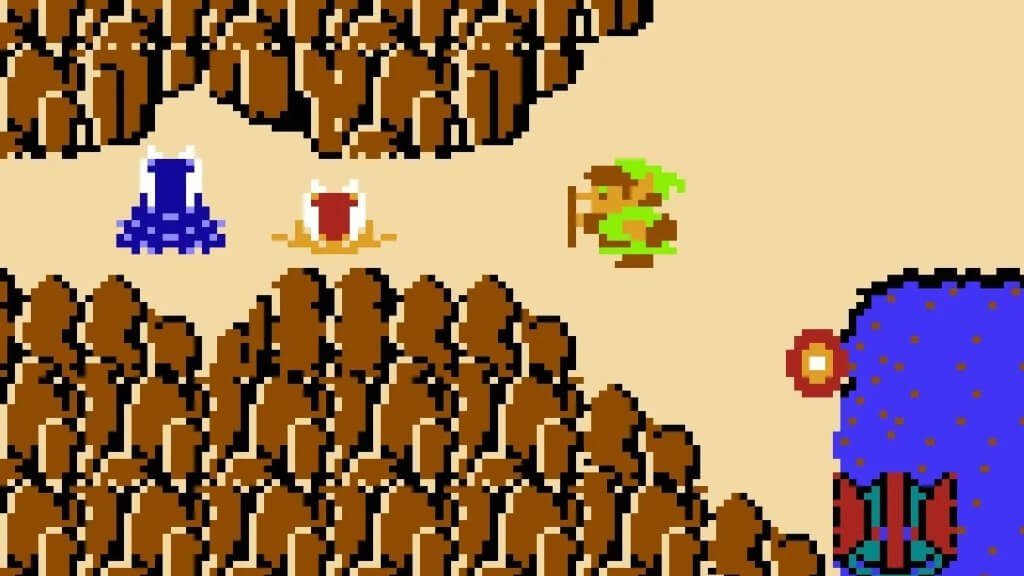
The Legend Of Zelda, a foundational title in video game history, marks its 40th anniversary since its original release in Japan. This Nintendo classic proved to be a significant success, standing as one of the few Zelda games to sell over one million copies in Japan alone. Globally, it became the third best-selling title on Nintendo’s original home console, achieving over 6.5 million units sold, a remarkable feat given it was not a pack-in game for the system. Its groundbreaking design earned it the distinction of being a genre-defining title, inspiring a wave of subsequent games often referred to as “Zelda clones” – a designation reserved for truly influential works like Tetris and DOOM.
Four decades later, the Legend Of Zelda series continues to thrive, showcasing unprecedented strength through highly successful mainline entries such as Breath Of The Wild and Tears Of The Kingdom, alongside popular spin-offs like Musou Hyrule Warriors: Age Of Imprisonment and the recently released Echoes Of Wisdom starring Zelda herself. The franchise's enduring popularity is further evidenced by plans for a live-action movie adaptation and persistent rumors of a dedicated theme park. While the vast and innovative titles that followed have, in some ways, overshadowed the original, the inaugural Legend Of Zelda remains a joy to play today, especially when understood within the context of its initial release.
Far from being simplistic, the original Legend Of Zelda was a technological marvel of its era. It boasted superior and smooth screen-to-screen scrolling, which was a significant advancement for its time. Its soundtrack expertly showcased the hardware improvements of the day and demonstrated clever techniques to overcome existing hardware limitations, pushing the boundaries of what was thought possible on a home console.
Perhaps the most crucial contribution of The Legend Of Zelda was its success in bringing the depth, complex gameplay, and challenging aspects of computer role-playing games (CRPGs) to a mass audience through consoles. It achieved this by presenting a brilliant, albeit streamlined, version of the CRPG experience. This was a similar feat to what Enix’s Dragon Quest accomplished in the same year, though with different inspirations. While Dragon Quest drew from turn-based RPGs like the Wizardry and Ultima series, The Legend Of Zelda found its influences in more action-oriented RPGs developed by companies such as Namco, Falcom, T&E Soft, and Cosmos Computer.
Dragon Quest’s massive shift in RPG development and its subsequent worldwide distribution (marketed as Dragon Warrior in America) inadvertently shaped a Western understanding of Japanese video game development. This led to the formation of a specific, well-defined genre known as the JRPG, or Japanese role-playing game. However, this Western perception told only half the story, as a significant audience for computer RPGs existed in Japan, with games developed for Japanese PCs like the X68000, PC-98, and MSX2 that were rarely localized or spread internationally. This incomplete narrative continues to influence Western ideas about Japanese role-playing games.
A similar categorization dynamic occurred with The Legend Of Zelda. Though now widely considered an “action-adventure” game, it was, and in some circles still is, perceived as an action RPG. Zelda, mirroring its action-oriented influences, masterfully blended arcade-style game design with the intricate rules and expansive breadth characteristic of computer role-playing games, forging an entirely new gaming experience. Namco’s seminal 1984 hit, The Tower Of Druaga, particularly had a profound impact on Nintendo and especially on Zelda creator Shigeru Miyamoto. Miyamoto even had a Druaga arcade cabinet in the office, and the initial design for The Legend Of Zelda drew extensively from it. Early plans for Zelda even reversed Druaga’s titular tower concept, envisioning a multi-floored descending dungeon system underneath a “Death Mountain” rather than an open-world surface. What the original Zelda did retain, and what has carried through to later versions, were Druaga’s emphasis on hidden secrets and the necessity of context-specific items and tools. While the original Zelda might seem challenging to navigate without a guide today, it was considerably more straightforward compared to Namco’s notoriously difficult arcade smash hit.