"Unlimited Mobile Data Doesn't Exist Anywhere in the World": So Why Is It Still Being Sold?
MTN Nigeria CEO Karl Toriola's claim that unlimited mobile data does not exist raises broader questions about telecom economics, marketing language, infrastructure limits, and why "unlimited" continues to shape consumer expectations despite structural constraints.
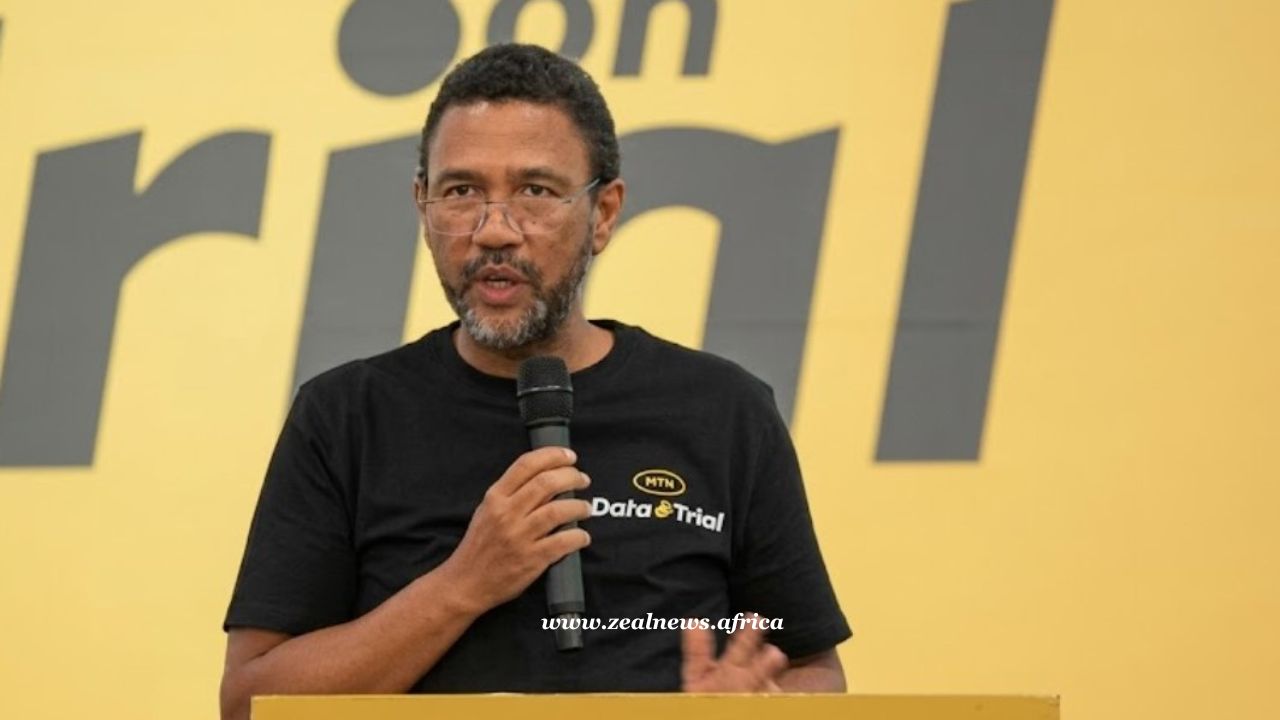
MTN Nigeria's CEO Karl Toriola, speaking during the Data On Trial event held last weekend, stated that "unlimited mobile data doesn't exist anywhere in the world." The comment landed with the kind of certainty that typically ends a debate.
But instead of closing the conversation, it opens a far more inconvenient one, a set of questions the industry has long circled without ever fully confronting.
At a technical level, mobile data is not a limitless commodity. It runs on finite spectrum, shared infrastructure, and congestion-sensitive networks. Every additional user competes for capacity, especially during peak demand, unless operators continue expanding infrastructure at high cost.
From that standpoint, Toriola's position is straightforward and understandable: because unlimited usage, in any strict sense, collides with the physical and economic realities of network design.
But that is precisely where the conversation gets uncomfortable. Because across markets, particularly in Nigeria, consumers routinely encounter "unlimited" data offerings in one form or another, even when fair usage policies, throttling mechanisms, or speed caps quietly define what those plans actually deliver.
Which raises the question that nobody in this industry seems willing to answer directly: if the limits are known, why does the language of "unlimited" continue to circulate so freely in the market? And who are we supposed to be asking, so we can get answers?
Why "Unlimited" Still Dominates Telecom Language
If unlimited data is structurally constrained, why does it remain one of the most persistent marketing terms in telecom ecosystems globally? The more pointed question is not how it got there, it is why nobody is not questioning it or demanding a reasonable explanation.
"Unlimited" functions beyond its technical meaning. It operates as a signal, of freedom, of simplicity, of escape from constant usage monitoring. It removes calculation from the consumer experience and flattens comparison in a fiercely competitive market.
Yet in practice, most so-called "unlimited" plans come bundled with embedded conditions: reduced speeds after usage thresholds, traffic prioritisation during congestion, and fair usage limits that quietly redefine what was promised at the point of sale.
This gap between language and infrastructure is not unique to Nigeria. But it becomes sharper in environments where affordability pressure is high, digital dependence is growing, and consumers have little institutional recourse when a plan underdelivers on its own marketing.
So the question is not really about semantics. It is about accountability. Is "unlimited" still a product description at all, or has it become a marketing necessity so entrenched that even its original meaning no longer applies? And if it no longer applies, why is it still being sold?
The Capacity Argument and What It Quietly Skips
The capacity argument is real and worth taking seriously. Mobile networks operate under constant strain from rising data consumption, streaming demand, and expanding digital dependency, these are not hypothetical pressures.
But the capacity argument does something else too: it shifts the conversation away from how "unlimited" is being used as a commercial tool and toward why infinite usage is technically impossible. Those are not the same discussion.
Comparing mobile data to systems like aviation, where unlimited access to flights would collapse operational logic, may hold technically, but it sidesteps the more direct question sitting in front of us.
Social Insight
Navigate the Rhythms of African Communities
Bold Conversations. Real Impact. True Narratives.
The issue is not whether limits exist. The issue is why a product is being marketed as limitless when those limits are already understood by the people doing the marketing.
Fibre broadband enters the conversation here as a contrasting model, offering higher throughput and more stable capacity. But fibre remains unevenly deployed across Nigeria and much of Africa, inaccessible to the majority of consumers who interact with mobile data as their primary means of connectivity.
Which makes the contradiction harder to ignore: users are sold an idea of continuity without constraint, while the infrastructure they're using operates under clearly defined physical limits. The gap between those two realities is not closing, and it has been profitable to keep it open.
What the "Unlimited" Debate Is Actually Asking
Strip away the pricing arguments and the engineering explanations, and the debate points somewhere more fundamental: how did consumer expectations evolve to assume continuity without constraint, and how much of that was deliberately engineered?
Digital platforms, streaming services, social media ecosystems, cloud-based tools, are built on models of constant engagement. Scarcity has no place in their design logic. The result is a behavioural environment where higher consumption is not just normal, it is expected, and where the idea of a limit reads as a deficiency rather than a structural reality.

Telecom operators did not create that expectation alone. But they have consistently marketed into it, using language that reinforces the idea of freedom from restriction even when the product being sold comes wrapped in restrictions.
So when a CEO says unlimited data does not exist anywhere in the world, the statement is technically accurate. But it is also a deflection. Because the more important observation is that the telecom industry has spent years suggesting otherwise, and no one with the authority to push back has done so with any consistency.
Is the real problem the absence of unlimited data? Or is it the persistence of a language that has been allowed to promise what the infrastructure cannot deliver, while the people responsible for honest communication look the other way?
In a system where consumption is designed to grow indefinitely, "limited" needs to mean something specific. Right now, in Nigeria's telecom market, it clearly does not.